


Theor Brume Orpin
At a glance
Is Theor Brume Orpin worth trying?
Theor by brume orpin is a Woody Floral Musk fragrance for women and men.
- Best match
- Evening wear in Fall
- Performance feel
- Good longevity with Moderate sillage
- Signature profile
- lactonic, marine, nutty with Algae, Milk, Almond
The first impression
Theor by brume orpin is a Woody Floral Musk fragrance for women and men. Theor was launched in 2024. The nose behind this fragrance is Leslie Gauthier. Top notes are Algae, Milk and Almond; middle notes are Wheat and Broom; base notes are Blonde Woods and Musk.
What shapes the scent
The perfumer behind it

Leslie Gauthier
Leslie Gauthier has composed fragrances for BY SHAMS PERFUMES, Boitown, Emanuel Ungaro, Eudora, Floris, L'Bel, and Nonfiction. Her work includes Scorpio, Plum & Black Tea, Emanuel Ungaro For Him, and Forget Me Not. She demonstrates range across zodiac-inspired, gourmand, and classic masculine scents.
Notes pyramid
Top Notes
First impression · 15-30 min
 Algae
Algae
 Milk
Milk
 Almond
Heart Notes
Core character · 2-4 hours
 Wheat
Wheat
 Broom
Broom
Base Notes
Lasting impression · 4+ hours
 Blonde Woods
 Musk
Musk
The mood it creates
The Sage Archetype: Portrait of Theor Brume Orpin
Essence
The person who favors Theor Brume Orpin is one who seeks meaning beyond the surface-a mind drawn to the interplay of light and shadow, clarity and mystery. This fragrance, with its ethereal yet grounded composition, reflects a soul attuned to wisdom, introspection, and quiet authority. They embody the Sage archetype, the seeker of truth, the one who values knowledge not as mere accumulation but as a path to deeper understanding.
Their presence is neither loud nor domineering, but it lingers-like the scent itself-subtle yet impossible to ignore. They move through life with a measured grace, observing before acting, listening before speaking. Their philosophy is one of discernment: they believe that wisdom is not found in certainty but in the willingness to question, to refine, to see the world through multiple lenses.
Style & Aesthetic
Their style is deliberate, neither ostentatious nor austere. They favor textures that suggest depth-soft wool, aged leather, linen that carries the weight of time. Their wardrobe is a curated archive of muted tones, with occasional flashes of unexpected color, like a rare book with gilded edges.
In art, they are drawn to the abstract yet intentional-works that demand interpretation rather than passive consumption. A Rothko painting, a Tarkovsky film, a piece of ambient music that unfolds slowly-these are their touchstones. They appreciate craftsmanship, but not for its own sake; they seek the thought behind the creation.
Their home is a sanctuary of order and contemplation. Bookshelves are organized not by genre but by thematic resonance. A single candle burns, not for fragrance alone, but for the ritual of light in darkness.
They thrive in environments that allow for both solitude and engagement-a quiet café, a private study, a forest path at dawn. Routine is sacred to them, not out of rigidity, but because structure creates space for thought. They may practice meditation, journaling, or long walks-rituals that sharpen the mind and temper the noise of the world.
Professionally, they are often researchers, writers, philosophers, or artists-any vocation that rewards patience and insight. They disdain the hurried, the superficial, the performative. But this can manifest as a reluctance to act, to commit, to step out of contemplation and into the fray.
Philosophy & Values
They reject dogma, yet they are not a skeptic for skepticism’s sake. Their pursuit of truth is tempered by humility-they know that knowledge is provisional, that every answer begets new questions. They value intellectual honesty above all, despising those who wield knowledge as a weapon rather than a tool for illumination.
Their morality is not rigid but adaptive, shaped by context and consequence. They believe in nuance, in the gray spaces where most people see only black and white. This can make them seem detached, even cold, but their detachment is not indifference-it is the discipline of seeing clearly before passing judgment.
Relationships
They are not the life of the party, nor do they wish to be. Their friendships are few but profound, built on mutual respect rather than convenience. They listen more than they speak, and when they do speak, their words carry weight.
Romantically, they are drawn to those who match their depth but challenge their solitude. They do not seek a mirror but a counterpoint-someone who brings warmth to their cool rationality, who reminds them that wisdom without feeling is sterile. Yet, their independence can become a barrier; they retreat into their mind when emotions grow too turbulent, leaving partners to wonder if they are truly present.
Shadow
The Sage’s greatest strength is also their greatest weakness: their mind. When unbalanced, they become paralyzed by analysis, mistaking endless questioning for wisdom. They may withdraw into intellectualism as a shield against vulnerability, dismissing emotions as irrational rather than integrating them into their understanding.
Their pursuit of truth can turn into arrogance, a quiet conviction that they see what others cannot. They may grow impatient with those who do not share their depth, forgetting that wisdom must sometimes bend to meet people where they are.
Conclusion
Theor Brume Orpin is not a scent for those who seek instant gratification. It is for the thinker, the observer, the one who knows that true understanding is a slow burn. The Sage who wears it is both luminous and elusive-a guide who does not lead but illuminates the path for those willing to walk it.
They are not without flaws, but their flaws are the inverse of their virtues: their clarity can become coldness, their wisdom can become isolation. Yet, when balanced, they embody the rare harmony of thought and presence-a mind that knows when to speak, when to listen, and when to simply let the silence speak for itself.
If you like this, try these
Fragrances with a comparable profile - shared accords, notes, and character.
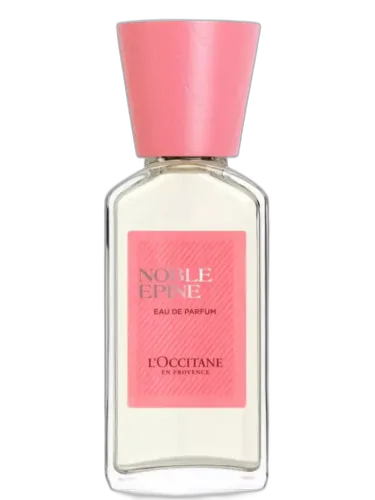
L'Occitane en Provence
Noble Epine L'occitane En Provence
Shared top notes: almond
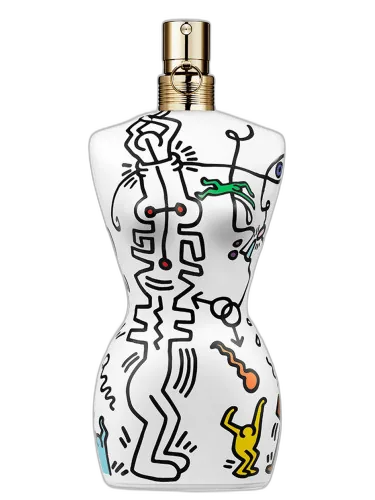
Jean Paul Gaultier
Classique Pride 2024 Jean Paul Gaultier
Shared base notes: blonde woods, musk

Kensie
Buttercup Babe Kensie
Shared base notes: blonde woods, musk
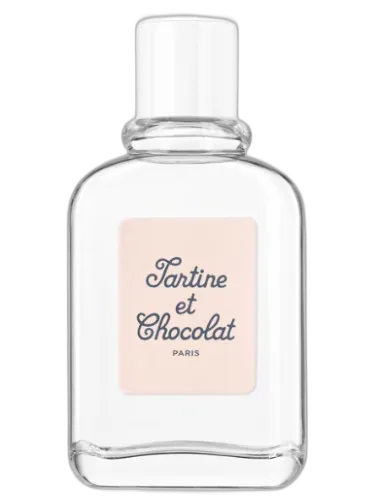
Tartine et Chocolat
Tartine & Chocolate Ptimusc Tartine Et Chocolat
Shared top notes: almond

Brown Girl Jane
Dusk Brown Girl Jane
Shared top notes: almond, milk