
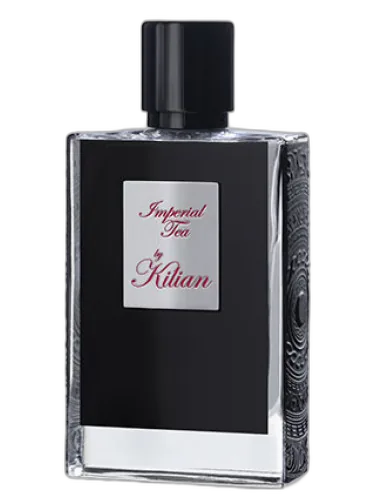

Imperial Tea By Kilian
At a glance
Is Imperial Tea By Kilian worth trying?
Imperial Tea by By Kilian is a Aromatic Green fragrance for women and men.
- Best match
- Casual wear in Spring, Summer
- Performance feel
- Moderate longevity with Moderate sillage
- Signature profile
- white floral, green, fresh with Tea, Jasmine
The first impression
Imperial Tea by By Kilian is a Aromatic Green fragrance for women and men. Imperial Tea was launched in 2014. The nose behind this fragrance is Calice Becker.
What shapes the scent
The perfumer behind it

Calice Becker
Calice Becker is a renowned French perfumer who has worked with major houses like Avon and Bath & Body Works. Her creations include Arquiste's Almond Suede and Indigo Smoke, as well as Avon's Far Away Gold. She is celebrated for her ability to craft both commercial and artistic fragrances with a refined, elegant touch.
Notes pyramid
All Notes
Complete scent profile
 Tea
Tea
 Jasmine
The mood it creates
The Sage Archetype: Portrait of Imperial Tea By Kilian
Essence
Imperial Tea is a fragrance of quiet sophistication-a delicate balance of bergamot, jasmine, and green tea, evoking the serenity of a secluded garden at dawn. It is neither loud nor ostentatious; it whispers refinement. The person who chooses this scent does not seek to dominate the senses of others but to invite them into a space of contemplation. They are drawn to the subtle, the understated, the intellectually stimulating.
Above all, this individual embodies the Sage-the seeker of wisdom, the lover of knowledge, the one who values truth over spectacle. The Sage thrives in the realm of ideas, finding beauty in precision and depth in silence. They are not ruled by impulse but by reflection, not by passion but by understanding. Their mind is their sanctuary, and their greatest pleasure lies in the unraveling of complexity.
Yet, like all archetypes, the Sage has a shadow. Their pursuit of wisdom can become a retreat from life itself-an over-intellectualization that distances them from raw, unfiltered experience. They may mistake detachment for enlightenment, coldness for objectivity.
Style & Aesthetic
Their tastes are refined but never gaudy. They prefer minimalist design-clean lines, muted colors, spaces that breathe rather than suffocate. Their wardrobe leans toward structured silhouettes, natural fabrics, and a palette of neutrals with occasional subdued accents. They appreciate craftsmanship, whether in a well-bound book, a hand-thrown ceramic cup, or the precise composition of a Bach fugue.
In art, they gravitate toward the abstract, the symbolic, the works that demand interpretation rather than passive consumption. A Rothko painting speaks to them more than a hyperrealist portrait; a haiku resonates deeper than an epic poem. They are drawn to the spaces between words, the meanings hidden in negative space.
Their days are structured, not out of rigidity but efficiency. They rise early, savoring the quiet hours with tea and a book. Their workspace is uncluttered, their habits deliberate. They may practice meditation, not as a spiritual ritual but as a tool for mental clarity.
They are drawn to professions that reward deep thought-academia, research, writing, or the arts. They disdain the superficial, the hurried, the thoughtless. Yet this can manifest as disdain for those who live differently, a quiet arrogance that they alone truly see.
Philosophy & Values
Truth is their guiding principle, but not in the dogmatic sense. They seek it as an ever-receding horizon, knowing that absolute certainty is an illusion. They are skeptics by nature, questioning assumptions, dissecting arguments, and valuing intellectual honesty above comfort.
Their morality is not rigid but fluid, shaped by reason rather than tradition. They believe in the power of dialogue, the necessity of doubt, and the virtue of patience. Yet, this can make them appear aloof or indecisive-paralyzed by the weight of nuance when others demand action.
Relationships
They are not the life of the party, nor do they wish to be. They prefer intimate gatherings where conversation has weight, where ideas are exchanged like rare coins. Their friendships are few but deep, built on mutual respect and intellectual kinship. Romantic partners must engage their mind before their heart; passion without understanding feels hollow to them.
Yet their detachment can be a barrier. They analyze emotions before feeling them, turning love into a puzzle to solve rather than an experience to surrender to. Their partners may crave warmth, spontaneity-qualities the Sage struggles to provide without deliberate effort.
Shadow
The Sage’s greatest flaw is their retreat from the messiness of life. They can become so enamored with the world of ideas that they neglect the world of flesh and blood. Their skepticism may harden into cynicism, their love of nuance into indecision.
To grow, they must learn that wisdom is not only found in books but in lived experience-that sometimes, one must act without perfect knowledge, love without full understanding. The fragrance they wear, Imperial Tea, is a reminder: even the most delicate notes must eventually dissipate into the air, becoming part of the world rather than remaining sealed in a vial.
Conclusion
The lover of Imperial Tea is neither conqueror nor martyr. They are the thinker, the observer, the one who finds solace in the spaces between words. Their life is a pursuit of meaning, a refusal to accept the world at face value.
Yet the challenge remains: to step out of the library, to let the tea grow cold sometimes, to embrace the unscripted, the irrational, the beautifully uncertain. For wisdom, in the end, is not just knowing-it is living.
If you like this, try these
Fragrances with a comparable profile - shared accords, notes, and character.
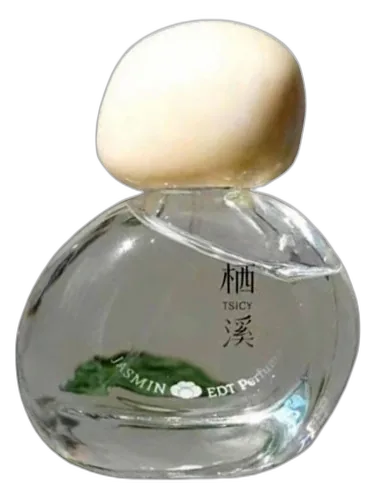
Qixi Tsicy
Jasmine Heart Qixi Tsicy
Shared top notes: jasmine, tea
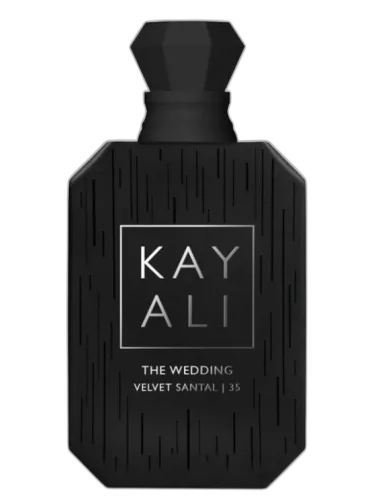
Kayali Fragrances
The Wedding Velvet Santal | 35 Kayali Fragrances
Shared top notes: jasmine, tea

Jil Sander
Style Pastels Tender Green Jil Sander
Shared top notes: jasmine, tea

Alkemia Perfumes
The De Ceylon (tea) Alkemia Perfumes
Shared top notes: tea

Hilde Soliani
Acquiilssssima Hilde Soliani
Shared top notes: jasmine, tea