


Sacred Wood By Kilian
At a glance
Is Sacred Wood By Kilian worth trying?
Sacred Wood by By Kilian is a Oriental Woody fragrance for women and men.
- Best match
- Evening, Special Occasion wear in Fall, Winter
- Performance feel
- Very Good longevity with Moderate sillage
- Signature profile
- woody, powdery, warm spicy with Ambrette (Musk Mallow), Carrot Seeds, Pink Pepper
The first impression
Sacred Wood by By Kilian is a Oriental Woody fragrance for women and men. Sacred Wood was launched in 2014. The nose behind this fragrance is Calice Becker. Top notes are Ambrette (Musk Mallow), Carrot Seeds and Pink Pepper; middle notes are Sandalwood, Milk, Amyris, Copahu Balm, elemi and Caraway; base notes are Atlas Cedar, Myrrh, Tolu Balsam, Incense, Mysore Sandalwood and Amber.
What shapes the scent
The perfumer behind it

Calice Becker
Calice Becker is a renowned French perfumer who has worked with major houses like Avon and Bath & Body Works. Her creations include Arquiste's Almond Suede and Indigo Smoke, as well as Avon's Far Away Gold. She is celebrated for her ability to craft both commercial and artistic fragrances with a refined, elegant touch.
Notes pyramid
Top Notes
First impression · 15-30 min
 Ambrette (Musk Mallow)
 Carrot Seeds
 Pink Pepper
Heart Notes
Core character · 2-4 hours
 Sandalwood
 Milk
Milk
 Amyris
 Copahu Balm
 elemi
elemi
 Caraway
Base Notes
Lasting impression · 4+ hours
 Atlas Cedar
 Myrrh
Myrrh
 Tolu Balsam
 Incense
 Mysore Sandalwood
 Amber
Amber
The mood it creates
The Sage Archetype: Portrait of Sacred Wood By Kilian
Essence
The one who chooses Sacred Wood by Kilian is drawn to the scent of ancient wisdom-sandalwood, cedar, and a whisper of incense, evoking the quiet solitude of a temple or the stillness of an untouched forest. This person is most closely aligned with the Sage, the Jungian archetype of the seeker of truth, the philosopher who values knowledge, introspection, and the sacred.
The Sage does not merely consume knowledge; they distill it, turning experience into insight. They are the quiet observer, the one who listens more than they speak, whose presence carries weight without the need for dominance. Yet, like all archetypes, the Sage has a shadow-the risk of detachment, of becoming lost in thought while life passes by.
Relationships
They do not collect friends; they cultivate them. Their relationships are few but profound, built on mutual respect and intellectual kinship. They are not the life of the party, but the one in the corner engaged in a conversation that lingers long after the night ends. Romantic partners must understand their need for solitude-not as rejection, but as necessary renewal.
Yet, their shadow emerges here. Their love of wisdom can become a shield against vulnerability. They may rationalize emotions rather than feel them, retreating into thought when faced with conflict. Their partners may accuse them of being distant, even cold, when in truth they are merely turning inward to process what others express outwardly.
Shadow
The Sage’s greatest strength-their ability to detach and observe-can also be their undoing. When unbalanced, they risk becoming the Hermit, so absorbed in their own mind that they forget to live. They may dismiss the irrational, the chaotic, the messy beauty of human imperfection, favoring the purity of ideas over the flawed reality of people.
They must learn that wisdom without application is mere vanity. The scent of sandalwood is not just for meditation halls-it lingers in the streets, in laughter, in the sweat of labor. The true Sage knows when to step out of the forest and into the world.
Conclusion
Their tastes are deliberate, never accidental. They prefer the understated over the ostentatious-a well-worn leather-bound book over a flashy gadget, a minimalist room with a single piece of art that speaks volumes. Their wardrobe is structured yet organic: linen, wool, perhaps a tailored jacket that suggests both discipline and ease. They do not follow trends but curate an existence that reflects their inner world.
Philosophy is not an abstract exercise for them but a lived experience. They may be drawn to Stoicism, Zen Buddhism, or the writings of Jung himself-systems that prize self-awareness and the mastery of one’s own mind. They value silence as much as speech, understanding that some truths cannot be spoken, only felt.
If you like this, try these
Fragrances with a comparable profile - shared accords, notes, and character.

By Kilian
Sacred Wood Anniversary Edition By Kilian
Shared top notes: ambrette (musk mallow), carrot seeds
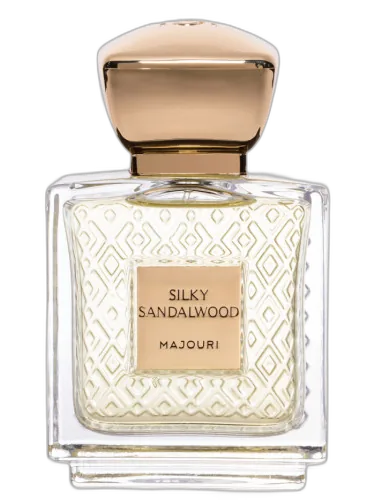
Majouri
Silky Sandalwood Majouri
Shared top notes: pink pepper

Natura
Essencial Mirra Natura
Shared top notes: pink pepper
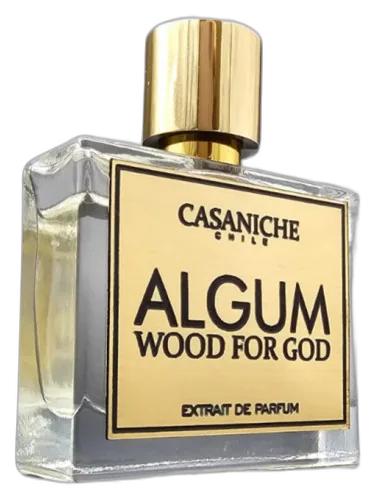
Casaniche
Algum Wood For God Casaniche
Shared heart notes: amyris, sandalwood

Jil CROQUET Parfum
Library Of Alexandria Jil Croquet Parfum
Shared top notes: pink pepper