
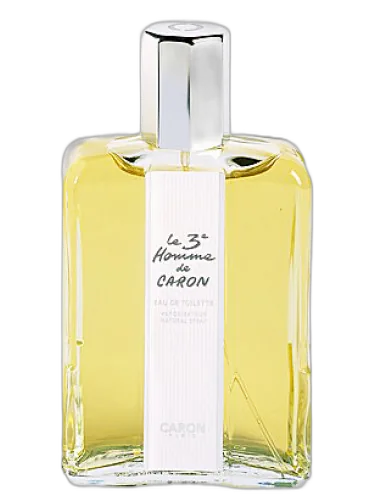

Le 3e Homme De Caron Caron
At a glance
Is Le 3e Homme De Caron Caron worth trying?
Le 3e Homme de Caron by Caron is a Woody Aromatic fragrance for men.
- Best match
- Evening wear in Fall
- Performance feel
- Good longevity with Moderate sillage
- Signature profile
- aromatic, citrus, earthy with Lavender, Amalfi Lemon, Bergamot
The first impression
Le 3e Homme de Caron by Caron is a Woody Aromatic fragrance for men. Le 3e Homme de Caron was launched in 1985. Le 3e Homme de Caron was created by Akiko Kamei and Francoise Caron. Top notes are Lavender, Amalfi Lemon, Bergamot, Anise and Rosemary; middle notes are Coriander, Carnation, Geranium, Jasmine and Rose; base notes are oak moss, Vetyver, Vanilla, Tonka Bean, Cedar, Patchouli and Musk.
What shapes the scent
The perfumer behind it

Akiko Kamei
Akiko Kamei is a Japanese perfumer who has worked with major houses including Hermès, Diptyque, and Caron. Her style often balances luminous citrus notes with soft, elegant florals and musks, as seen in Hermès' Rouge Hermès and Diptyque's Oyedo. She is known for creating refined, wearable scents that feel both modern and timeless, such as L'Artisan Parfumeur's Mure Et Musc Cologne.
Notes pyramid
Top Notes
First impression · 15-30 min
 Lavender
 Amalfi Lemon
 Bergamot
 Anise
Anise
 Rosemary
Heart Notes
Core character · 2-4 hours
 Coriander
 Carnation
 Geranium
 Jasmine
 Rose
Rose
Base Notes
Lasting impression · 4+ hours
 oak moss
Vetyver
oak moss
Vetyver
 Vanilla
 Tonka Bean
 Cedar
Cedar
 Patchouli
 Musk
Musk
The mood it creates
The Archetype Archetype: Portrait of Le 3e Homme De Caron Caron
Essence
The one who chooses Le 3e Homme de Caron is a modern incarnation of the Sage-an archetype rooted in wisdom, discernment, and quiet authority. This fragrance, with its intricate balance of spice, citrus, and woody warmth, mirrors their mind: layered, refined, and contemplative. They do not seek to dominate but to understand, to dissect the world with precision rather than brute force. The Sage is not a loud prophet but a patient observer, one who knows that truth is often found in the margins, in the interplay of contradictions.
Relationships
They do not collect friends; they cultivate them. Their circle is small but meaningful, composed of those who can engage in the kind of dialogue that lingers past midnight. Romantic partners must be their intellectual equals-someone who can spar with them in debate, then dissolve into laughter at the absurdity of it all. Their love is not possessive but expansive, built on mutual respect rather than need.
Yet, this selectivity has its shadow. They can be slow to trust, sometimes mistaking skepticism for wisdom. Their standards, though high, may border on the exclusionary, leaving little room for the messiness of human imperfection.
Shadow
The Sage’s greatest strength-their ability to observe, analyze, and remain composed-can also be their undoing. When life becomes too chaotic, they retreat into their mind, intellectualizing emotions rather than feeling them. They may dismiss passion as irrational, vulnerability as weakness. This detachment, though protective, can make them seem aloof, even cold, to those who crave warmth.
At their worst, they risk becoming the Hermit, isolated in their own brilliance, mistaking solitude for superiority. The world, in all its raw, unfiltered beauty, may pass them by while they remain lost in thought.
Conclusion
Their tastes are deliberate, never accidental. They prefer the understated elegance of a well-tailored blazer over ostentatious fashion, the quiet intensity of a Bergman film over blockbuster spectacle. Their home is a sanctuary of books, art, and carefully selected objects-each piece a conversation, a fragment of a larger intellectual mosaic. Music is either classical or jazz, something that rewards deep listening, something that unfolds over time rather than demanding immediate attention.
Philosophy is not an abstract exercise for them but a lived discipline. They might lean toward Stoicism, appreciating its emphasis on self-mastery, or Nietzschean individualism, valuing the courage to question inherited values. They do not preach their beliefs but embody them, letting their choices speak where words might fail.
If you like this, try these
Fragrances with a comparable profile - shared accords, notes, and character.
Rochas
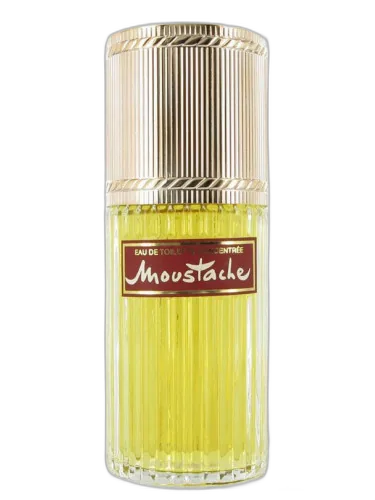
Moustache Eau De Toilette Concentree Rochas
Shared top notes: bergamot, lavender

Pierre Cardin
Enigme Pierre Cardin
Shared top notes: bergamot, lavender

O Boticário
Acqua Di Colonia Lavanda O Boticário
Shared top notes: amalfi lemon, bergamot, lavender
The Perfume Atelier
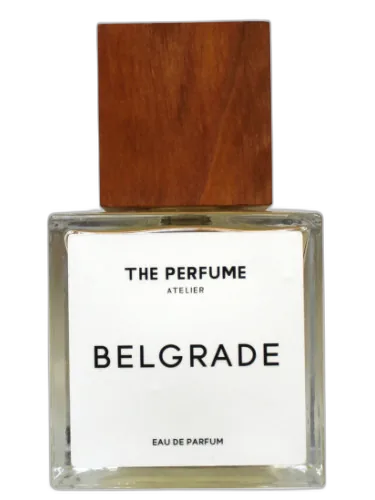
Belgrade The Perfume Atelier
Shared top notes: bergamot, lavender

Art Deco Perfumes
Lancelot Of The Lake Art Deco Perfumes
Shared top notes: bergamot, lavender, rosemary