


Under The Arbor Cb I Hate Perfume
At a glance
Is Under The Arbor Cb I Hate Perfume worth trying?
Under the Arbor by CB I Hate Perfume is a Chypre fragrance for women and men.
- Best match
- Casual wear in Fall
- Performance feel
- Moderate longevity with Intimate sillage
- Signature profile
- earthy, woody, fruity with Soil Tincture, Woodsy Notes, oak moss
The first impression
Under the Arbor by CB I Hate Perfume is a Chypre fragrance for women and men. Under the Arbor was launched in 2007. The nose behind this fragrance is Christopher Brosius.
What shapes the scent
The perfumer behind it

Christopher Brosius
Christopher Brosius is an American perfumer and founder of CB I Hate Perfume, known for his unconventional, narrative-driven scents. His portfolio includes fragrances like 2nd Cumming, At the Beach 1966, and Beautiful Launderette, which evoke specific memories and atmospheres. He also created Cumming for actor Alan Cumming, blending personal storytelling with olfactory art.
Notes pyramid
All Notes
Complete scent profile
Soil Tincture
Woodsy Notes
oak moss
 Grape leaves
The mood it creates
The Lover Archetype: Portrait of Under The Arbor Cb I Hate Perfume
Essence
This person is most closely aligned with the Seeker archetype-a wanderer of the mind and senses, forever in pursuit of the elusive, the subtle, the overlooked. They do not wear fragrance to announce themselves but to commune with something deeper, something almost forgotten. Under The Arbor-a scent of damp earth, crushed leaves, and the quietude of hidden places-speaks to their soul because it is not a perfume in the traditional sense. It is an experience, a memory, a whisper.
The Seeker is driven by curiosity and a refusal to accept the mundane. They reject the loud, the obvious, the mass-produced. Instead, they are drawn to the spaces between things-the scent of rain before it falls, the quiet rustle of branches in an empty garden.
Style & Aesthetic
Their tastes are not governed by trends but by texture, resonance, and the faint pulse of nostalgia. They prefer:
- Books with yellowed pages and marginalia, secondhand novels that carry the ghosts of previous readers.
- Music that feels like a secret-field recordings, ambient soundscapes, or forgotten folk songs.
- Clothing that is worn-in, unstructured, as if it has lived a life before them. Linen, raw cotton, wool that still smells faintly of lanolin.
They do not decorate their home; they curate it. A single dried branch in a vase, a stone from a riverbed, a stack of notebooks filled with half-formed thoughts. Their space is not minimalist but essentialist-everything must carry meaning, or it does not belong.
They do not live by routine but by rhythm. Their days are shaped by mood, weather, and intuition. They might spend an afternoon lying in the grass watching clouds, or they might walk for hours with no destination.
Work is secondary to experience-they are drawn to vocations that allow freedom: writing, photography, gardening, or restoring old things. They are not ambitious in the conventional sense, but they are deeply disciplined in their own way.
Philosophy & Values
They believe the world is too loud, too fast, too eager to fill silence with noise. Their philosophy is one of attentiveness-a refusal to let beauty go unnoticed. They find holiness in the way light filters through leaves, in the scent of old books, in the quiet hum of a nearly empty café at dusk.
They value:
- Authenticity over polish. A cracked teacup is more beautiful to them than a flawless one.
- Solitude as a necessity, not a retreat. They are not antisocial, but they require stillness to feel alive.
- Impermanence. They are drawn to things that fade, decay, or change-because these things remind them that life is not static.
Yet, this reverence for the ephemeral can sometimes make them reluctant to commit-to people, to places, to decisions. They fear that permanence might dull the magic.
Relationships
They love deeply but quietly. Their affections are not grand gestures but small, almost invisible acts-a carefully chosen book left on a friend’s doorstep, a single wildflower pressed between pages. They do not crave constant companionship but meaningful connection.
Yet, their shadow emerges here: they can be elusive, even to those who love them. Their need for solitude sometimes reads as detachment. They may disappear for days, lost in thought or wandering some half-forgotten path, leaving others to wonder if they care at all.
Shadow
Their greatest strength-their relentless pursuit of depth-can also be their undoing. They risk becoming lost in the search, always chasing the next fleeting beauty, never fully present. They may romanticize solitude to the point of isolation, or become so enamored with the past that they neglect the future.
At their worst, they can be indecisive, paralyzed by the fear of choosing wrong. Or they might grow disillusioned, resenting a world that seems too shallow to understand them.
But when balanced, they are a rare soul-one who reminds us that the most profound beauty is often hidden in plain sight, waiting only for someone to pause and notice.
Conclusion
To love Under The Arbor is to love what others might overlook-the scent of wet soil, the quiet of an empty garden. This person does not wear fragrance; they inhabit it. And in doing so, they teach us that the world is richer when we slow down, when we listen to the whispers beneath the noise.
They are not here to be seen. They are here to see.
If you like this, try these
Fragrances with a comparable profile - shared accords, notes, and character.

Parfums et Senteurs du Pays Basque
Da I Niet Parfums Et Senteurs Du Pays Basque
Shared top notes: soil tincture
Solstice Scents
Foxcroft Solstice Scents
Shared top notes: soil tincture, woodsy notes
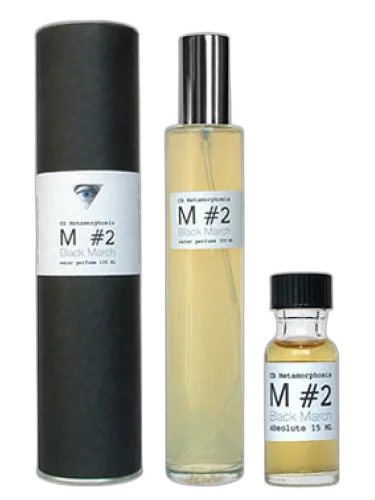
CB I Hate Perfume
M2 Black March Cb I Hate Perfume
Shared top notes: oak moss, soil tincture, woodsy notes

Neil Morris
Intimate Jasmine Neil Morris
Shared top notes: oak moss

DSH Perfumes
Firefly Dsh Perfumes
Shared accords: earthy, green, mossy