


Wet Pavement London Cb I Hate Perfume
At a glance
Is Wet Pavement London Cb I Hate Perfume worth trying?
Wet Pavement London by CB I Hate Perfume is a Aromatic Aquatic fragrance for women and men.
- Best match
- Casual wear in Fall
- Performance feel
- Moderate longevity with Moderate sillage
- Signature profile
- aquatic, asphault, ozonic with Rain Notes, Asphalt
The first impression
Wet Pavement London by CB I Hate Perfume is a Aromatic Aquatic fragrance for women and men. Wet Pavement London was launched in 2014. The nose behind this fragrance is Christopher Brosius.
What shapes the scent
The perfumer behind it

Christopher Brosius
Christopher Brosius is an American perfumer and founder of CB I Hate Perfume, known for his unconventional, narrative-driven scents. His portfolio includes fragrances like 2nd Cumming, At the Beach 1966, and Beautiful Launderette, which evoke specific memories and atmospheres. He also created Cumming for actor Alan Cumming, blending personal storytelling with olfactory art.
Notes pyramid
All Notes
Complete scent profile
 Rain Notes
 Asphalt
The mood it creates
The Wanderer Archetype: Portrait of Wet Pavement London Cb I Hate Perfume
Essence
This person is most closely aligned with the Wanderer archetype-a figure who finds meaning not in arrival, but in the journey itself. The scent of wet pavement is their anthem: it carries the melancholy of transience, the sharpness of urban solitude, and the quiet beauty of impermanence. They are drawn to what others overlook-the scent of rain on concrete, the way light fractures in puddles, the muted hum of a city exhaling after a storm. Their soul is restless, not out of dissatisfaction, but because stillness feels like surrender.
Style & Aesthetic
They dress as if they are always on the verge of departure. Their wardrobe is a study in muted tones-charcoal, slate, deep navy-colors that absorb light rather than reflect it. Their clothing is functional but never utilitarian; there is always an undercurrent of quiet defiance in their choices. A well-worn leather jacket, boots that have known many streets, a scarf that seems to carry the memory of every place it has been.
Their presence is both magnetic and elusive. They do not seek attention, yet they command it effortlessly-not through charm, but through an aura of quiet intensity. When they speak, their words are deliberate, often laced with dry wit or unexpected insight. They are not one for small talk, but when they engage, it is with a depth that startles those unprepared for it.
Philosophy & Values
They do not believe in permanence, at least not in the way most do. Their philosophy is rooted in the fleeting-the way moments dissolve, how memories blur at the edges. They find comfort in the idea that nothing lasts, not even sorrow. This is not nihilism, but a deep reverence for the temporary. They value authenticity above all else, despising anything that feels contrived or performative. Their moral compass is intuitive rather than dogmatic; they trust their gut over tradition.
Their tastes reflect this. They prefer raw, unfiltered experiences-black-and-white films with unresolved endings, music that lingers in minor keys, books that leave questions unanswered. They are drawn to textures: the roughness of unpolished wood, the weight of linen, the chill of metal against skin. Their aesthetic is minimalist but never sterile-every object they own has a story, even if it’s one they’ll never tell.
Relationships
They love deeply but never possessively. Their relationships are built on mutual freedom-they do not cling, and they resent being clung to. They are drawn to people who understand solitude, who do not mistake distance for indifference. Their partners and friends are often fellow wanderers, artists, or thinkers who appreciate the spaces between words.
Yet, this very strength is also their shadow. Their fear of stagnation can make them emotionally evasive. They may disappear without warning, not out of malice, but because they fear the weight of expectation. Those who love them must accept that they will always need room to breathe, that their heart is a place one visits but never owns.
Shadow
For all their wisdom, they are not immune to their own contradictions. Their love of impermanence can curdle into detachment, leaving them stranded in a self-imposed exile. They may romanticize loneliness, mistaking it for independence. There are moments when even they tire of their own restlessness, when the scent of wet pavement no longer feels poetic-just cold.
Their greatest challenge is learning that roots do not always mean captivity. That staying does not always mean suffocating. That sometimes, the bravest thing a wanderer can do is pause long enough to let the world leave its mark on them.
Conclusion
They are the kind of person who walks through life as if it were an endless city after rain-alive to every sensation, every shift in the air. They do not seek answers so much as they savor the questions. Their flaws are inseparable from their beauty, their solitude both their armor and their wound.
In the end, they are not running from anything. They are simply moving toward something they may never name-a horizon that recedes with every step, a destination that exists only in the walking itself.
If you like this, try these
Fragrances with a comparable profile - shared accords, notes, and character.

AzherOud
Geeli Mitti Azheroud
Shared top notes: rain notes
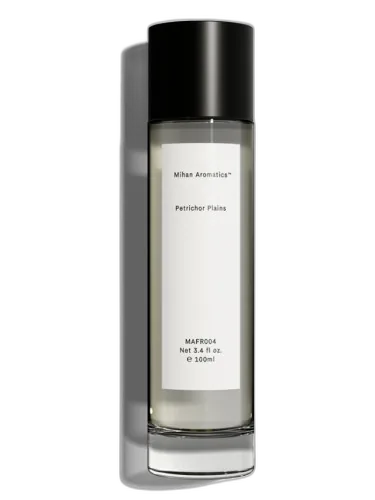
Mihan Aromatics
Petrichor Plains Mihan Aromatics
Shared top notes: asphalt, rain notes

Issey Miyake
A Drop D'issey Eau De Parfum Fraiche Issey Miyake
Shared top notes: rain notes

H&M
Rain H&m
Shared top notes: rain notes

Juniper Ridge
Redwood Mist Cologne Juniper Ridge
Shared top notes: rain notes