
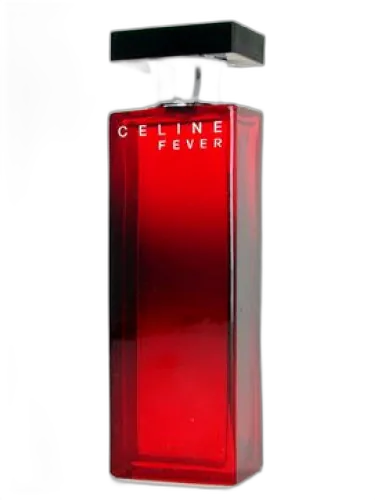

Fever Celine
At a glance
Is Fever Celine worth trying?
Fever by Celine is a Oriental Vanilla fragrance for women.
- Best match
- Evening, Special Occasion wear in Fall, Winter
- Performance feel
- Good longevity with Moderate sillage
- Signature profile
- citrus, floral, vanilla with Blood Orange, Mandarin Orange, Frangipani
The first impression
Fever by Celine is a Oriental Vanilla fragrance for women. Fever was launched in 2005. The nose behind this fragrance is Beatrice Piquet. Top notes are Blood Orange and Mandarin Orange; middle notes are Frangipani and Indian Jasmine; base notes are Vanilla, Sandalwood and Amber.
What shapes the scent
The perfumer behind it

Beatrice Piquet
Beatrice Piquet is a French perfumer who has worked with major houses including Givaudan. Her style often balances fresh, floral, and woody elements with a clean, modern sensibility. She created fragrances such as Bvlgari Rose Essentielle and Burberry The Beat, known for their refined and wearable compositions.
Notes pyramid
Top Notes
First impression · 15-30 min
 Blood Orange
 Mandarin Orange
Heart Notes
Core character · 2-4 hours
 Frangipani
 Indian Jasmine
Base Notes
Lasting impression · 4+ hours
 Vanilla
 Sandalwood
 Amber
Amber
The mood it creates
The Enigmatic Seductress Archetype: Portrait of Fever Celine
Essence
The person who favors Fever by Celine is most closely aligned with the Siren-an archetype of magnetic allure, primal sensuality, and controlled mystery. Like the fragrance itself, which balances smoky leather with powdery florals, this individual thrives in the tension between revelation and concealment. The Siren does not merely seduce; she compels fascination through an aura of self-possession, drawing others into her orbit without ever fully surrendering herself.
Style & Aesthetic
Her presence is an exercise in precision-each gesture, each glance, each choice of fabric and silhouette is deliberate. She favors structured tailoring softened by draped silks, sharp lines interrupted by a single undone button. Her palette is rich but restrained: deep burgundies, matte blacks, the occasional flash of gold. She understands that true allure lies not in excess but in suggestion-the way light catches the curve of a collarbone, the faintest trace of perfume left on a lover’s pillow.
Her home is an extension of this philosophy: dimly lit, with plush textures and sparse but striking decor. A single antique mirror, a well-worn leather armchair, a bookshelf lined with dog-eared poetry and philosophy. She surrounds herself with objects that whisper rather than shout.
Philosophy & Values
She does not believe in love as surrender but as a mutual exchange of power. To her, desire is not weakness but a force to be wielded-an acknowledgment of the body’s intelligence. She rejects sentimentality in favor of intensity, preferring a fleeting but electrifying connection over the slow burn of domestic comfort.
Her values are rooted in autonomy. She refuses to be defined by another’s gaze, yet she knows the power of being seen. She is neither cruel nor indifferent, but she is cautious-trust is not given, only earned. Those who mistake her warmth for vulnerability soon learn their error.
Relationships
She attracts effortlessly, but she does not linger where she is not wanted-or where she does not want to stay. Her lovers remember her long after she has gone, not because she was cruel, but because she was unforgettable. She does not play games, but she understands the rules of engagement.
Friendship, for her, is a rarer and more sacred bond than romance. She keeps a small circle, but those within it know her depths-her dry humor, her quiet loyalty, the way she listens with an almost unsettling focus. She does not offer comfort in platitudes, but in the rare moments she chooses to intervene, her words cut straight to the heart of the matter.
Shadow
For all her magnetism, she is not without her contradictions. The same self-possession that makes her compelling can curdle into detachment. She risks becoming a spectator in her own life, observing passion rather than surrendering to it. There is a danger in loving control too much-in mistaking invulnerability for strength.
At times, she withdraws too far, leaving even those closest to her grasping at smoke. The Siren’s greatest weakness is her own myth-the fear that if she steps out of the role, she will cease to be desired.
Conclusion
She is not a paradox but a harmony of opposites-warmth and restraint, presence and mystery. Fever is her signature because it, too, refuses to be easily categorized: it is both tender and fierce, both classic and subversive.
To know her is to understand that seduction is not deception but an art form-an invitation to look closer, to question, to feel more deeply. And if she sometimes slips away before you can fully grasp her, that, too, is part of the enchantment.
If you like this, try these
Fragrances with a comparable profile - shared accords, notes, and character.
Oscar de la Renta
Tropicale Oscar De La Renta
Shared top notes: mandarin orange
Ayala Moriel
Ayala Ayala Moriel
Shared top notes: blood orange

Alexandra Gluck
Pushkinskaya (пушкинская) Alexandra Gluck
Shared top notes: blood orange, mandarin orange
Sospiro Perfumes
Verde Accento Sospiro Perfumes
Shared top notes: mandarin orange

Spirit
Spirit Of Sexy Moments Spirit
Shared top notes: mandarin orange