


Eye, Hatshepsut Charenton Macerations
At a glance
Is Eye, Hatshepsut Charenton Macerations worth trying?
Eye, Hatshepsut by Charenton Macerations is a Oriental Floral fragrance for women and men.
- Best match
- Evening wear in Fall
- Performance feel
- Very Good longevity with Moderate sillage
- Signature profile
- woody, musky, powdery with Musk, Papyrus, Blue Lotus
The first impression
Eye, Hatshepsut by Charenton Macerations is a Oriental Floral fragrance for women and men. Eye, Hatshepsut was launched in 2016. The nose behind this fragrance is Cecile Hua.
What shapes the scent
The perfumer behind it

Cecile Hua
Cecile Hua has composed fragrances for 4711, Amouroud, Arielle Shoshana, and Atelier Cologne. Her work ranges from fresh citrus blends like 4711 Acqua Colonia Pink Pepper & Grapefruit to deeper floral and woody creations such as Dark Orchid. She is known for her ability to balance clarity with complexity across different styles.
Notes pyramid
All Notes
Complete scent profile
 Musk
Musk
 Papyrus
 Blue Lotus
 Red Wine
Orris
Red Wine
Orris
 Smoke
Smoke
 Cinnamon
 Patchouli
 Incense
 Labdanum
The mood it creates
The Alchemist Archetype: Portrait of Eye, Hatshepsut Charenton Macerations
Essence
To wear Hatshepsut by Charenton Macerations is to embrace an olfactory paradox-ancient yet modern, austere yet opulent, vegetal yet resinous. This is not a fragrance for those who seek comfort in familiarity; it is a scent for the seeker, the philosopher, the one who walks between worlds. The person who chooses this fragrance is an Alchemist-the Jungian archetype of transformation, experimentation, and the pursuit of hidden truths.
Shadow
Every archetype has its dark reflection, and the Alchemist is no exception. Their relentless pursuit of transformation can become a form of escapism-an avoidance of the mundane realities of life. They may grow impatient with those who cannot keep up with their intellectual pace, dismissing simpler pleasures as naïve.
Their detachment, while a strength in contemplation, can manifest as emotional coldness. They may rationalize their way out of vulnerability, treating relationships as experiments rather than commitments. At their worst, they become the Trickster-manipulating perceptions, playing with others' emotions in the name of some grand philosophical game.
Conclusion
Hatshepsut is not merely a fragrance to them-it is a sigil, a distillation of their essence. Its green resins and smoky undertones mirror their own duality: the scholar and the mystic, the architect and the wanderer. They wear it as a reminder that beauty lies in the tension between opposites, that the self is not fixed but forged.
And so they continue their work-the endless experiment of becoming.
If you like this, try these
Fragrances with a comparable profile - shared accords, notes, and character.
SWITCH Perfumes
№ 4 Switch Perfumes
Shared top notes: incense, labdanum, patchouli
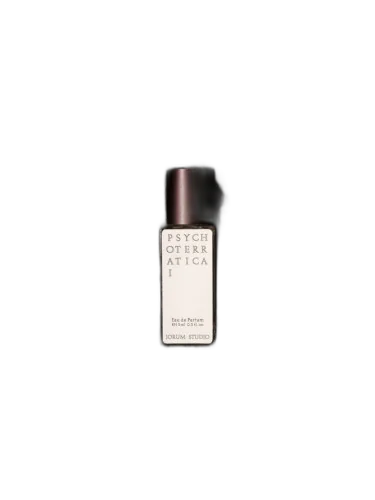
Jorum Studio
Psychoterratica I 2020 Jorum Studio
Shared top notes: labdanum, musk, orris
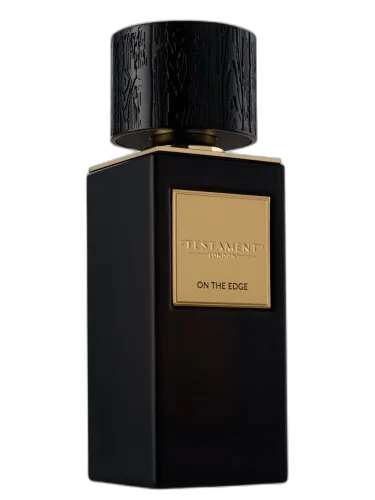
Testament London
On The Edge Testament London
Shared top notes: incense, smoke
Parfumerie Particulière
Type Writer Parfumerie Particulière
Shared top notes: incense, labdanum, papyrus
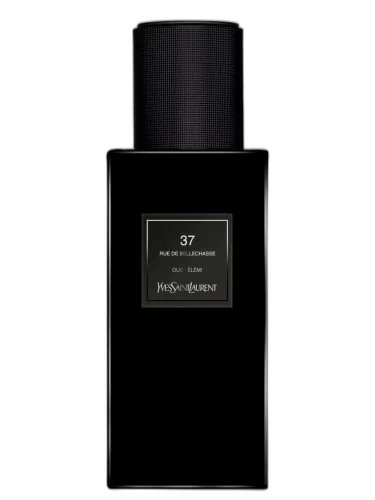
Yves Saint Laurent
37 Rue De Bellechasse Yves Saint Laurent
Shared top notes: incense, musk