


Cedro E Vinho Charme Essência
Fragrance Story
Cedro e Vinho by Charme Essência is a Oriental Woody fragrance for women and men. Cedro e Vinho was launched in 2015. The nose behind this fragrance is Fabiano JS. Top notes are Sweet Orange and Bergamot; middle notes are Red Wine and Cedar; base notes are Myrrh, Patchouli and Cedar.
Composition Profile
About the Perfumer

Fabiano JS
Fabiano JS is a Brazilian perfumer known for his work with the Charme Essência brand. His catalog includes a diverse range of fragrances such as Cedro E Vinho, Diarum Black, Elegans, and Encanto D'charme. These creations often explore woody, aromatic, and sensual accords, reflecting a modern and accessible style.
Fragrance Notes
Top Notes
First impression · 15-30 min
 Sweet Orange
 Bergamot
Heart Notes
Core character · 2-4 hours
 Red Wine
 Cedar
Cedar
Base Notes
Lasting impression · 4+ hours
 Myrrh
Myrrh
 Patchouli
Cedar
Patchouli
Cedar
Cedro E Vinho Charme Essência by Charme Essência offers a distinctive olfactory experience that stands out from other fragrances in its category.
Crafted with the finest ingredients and a blend of traditional and modern perfumery techniques, this fragrance represents the pinnacle of the perfumer's art.
Cedro E Vinho Charme Essência embodies the distinctive style of Charme Essência while adding a unique chapter to their fragrance portfolio.
Character Profile
The Sage Archetype: Portrait of Cedro E Vinho Charme Essência
Essence
This person is defined by the Sage archetype, the seeker of truth and wisdom. The fragrance they adore-Cedro E Vinho Charme Essência-embodies their essence: a blend of intellectual depth (cedar’s earthy stability) and sensual refinement (wine’s intoxicating allure). Like the Sage, they are drawn to knowledge, contemplation, and the subtle interplay between reason and passion. They do not merely consume wisdom; they distill it, savoring insights like a rare vintage.
Yet, the Sage is not without shadows. Their relentless pursuit of understanding can become a labyrinth of overanalysis, and their love for refinement may slip into elitism. They walk the line between enlightened thinker and detached observer, always at risk of withdrawing too far into the mind’s sanctum.
Style & Aesthetic
Their tastes are curated, deliberate-never accidental. They prefer dark, rich textures: mahogany bookshelves, leather-bound volumes, the deep crimson of aged wine in a crystal glass. Their wardrobe leans toward timeless elegance-tailored blazers, cashmere scarves, perhaps a vintage watch with a story. They appreciate art that demands interpretation, whether a Bergman film, a Pessoa poem, or a jazz composition that unfolds like a philosophical argument.
Food and drink are rituals, not mere sustenance. They might linger over a slow-cooked osso buco, paired with a bold Amarone, dissecting its flavors as one would a novel’s themes. Their home is a sanctuary of controlled chaos: a desk strewn with annotated manuscripts, a record player spinning Miles Davis, the faint scent of cedarwood lingering in the air.
They thrive in solitude, yet they are not reclusive. They might be a professor, a writer, a sommelier, or a consultant-any role where insight is currency. Their days are structured yet fluid: mornings spent with espresso and a philosophy text, afternoons in deep work, evenings in dimly lit bars where conversation flows like wine.
They are drawn to cities with history-Lisbon, Prague, Buenos Aires-places where the past whispers through cobblestone streets. Travel is not escapism but a way to absorb new layers of truth. Yet, their shadow lurks in overindulgence-too much wine, too many books, too many hours lost in thought while life passes by.
Philosophy & Values
They believe truth is layered, never absolute. Their mind is a prism, refracting ideas into nuanced shades. They value intellectual honesty above comfort, often playing devil’s advocate-not out of contrarianism, but to test the strength of an argument. They distrust dogma, whether in religion, politics, or even fashion.
Yet, their love for wisdom can become a burden. They may overanalyze emotions, dissecting love or grief until it loses its visceral power. Their pursuit of knowledge can isolate them; not everyone wishes to debate Kierkegaard over dinner. At their worst, they grow cynical, mistaking detachment for wisdom.
Relationships
They attract others with their magnetic depth, but intimacy is a slow-burning flame. They prefer conversations that pierce the superficial-discussing Jungian symbolism in dreams, the melancholy of a Chopin nocturne, the ethics of a Nietzschean Übermensch. Their friendships are few but profound, built on mutual respect for intellect and authenticity.
Romantically, they are drawn to complexity. A partner must be both a muse and a sparring partner-someone who can match their wit but also pull them out of their head and into the rawness of life. Their shadow emerges here: they may intellectualize love, treating it as a puzzle to solve rather than a force to surrender to.
Shadow
The Sage’s greatest weakness is the illusion of mastery. They may believe that understanding a thing is the same as experiencing it. They can grow arrogant, dismissing simpler joys as beneath them. Their detachment, once a strength, may calcify into emotional sterility.
To evolve, they must learn that not all truths are found in books-some are written in the body, in laughter, in the reckless abandon of dancing at 2 AM. The cedar must remember it was once a living tree, not just polished furniture. The wine must sometimes be drunk, not just analyzed.
Conclusion
They are neither sage nor fool, but both-a seeker who knows that wisdom is a journey, not a destination. Their fragrance, Cedro E Vinho Charme Essência, mirrors them perfectly: structured yet sensual, intellectual yet intoxicating. They walk the line between observer and participant, always searching, always savoring.
And perhaps, in the quiet moments between thoughts, they realize: the deepest truths are not found in the mind alone, but in the heart’s silent knowing.
Similar Fragrances
Fragrances with a comparable profile - shared accords, notes, and character.
Charme Essência
Cedro E Vinho Charme Essência
Shared accords: amber, aromatic, balsamic

Unique'e Luxury
Zen’gi Unique'e Luxury
Shared accords: amber, aromatic, citrus
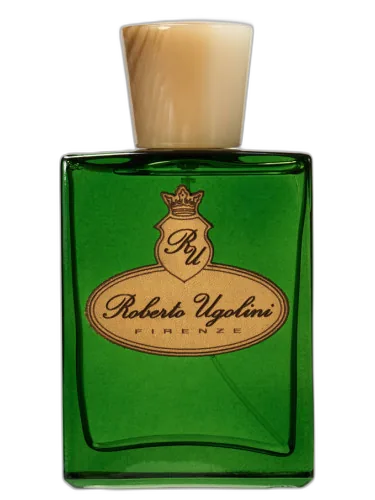
Roberto Ugolini
Loafer Roberto Ugolini
Shared accords: amber, aromatic, balsamic
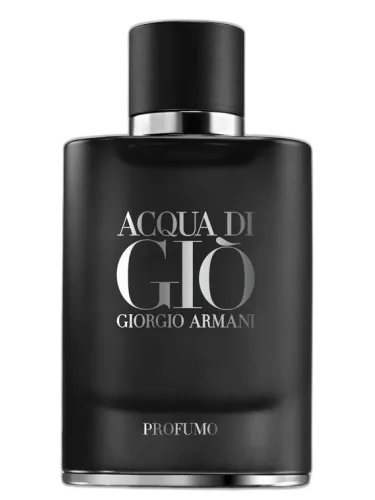
Giorgio Armani
Acqua Di Giò Profumo Giorgio Armani
Shared accords: amber, aromatic, balsamic

Amouage
Lineage Amouage
Shared accords: amber, aromatic, balsamic