
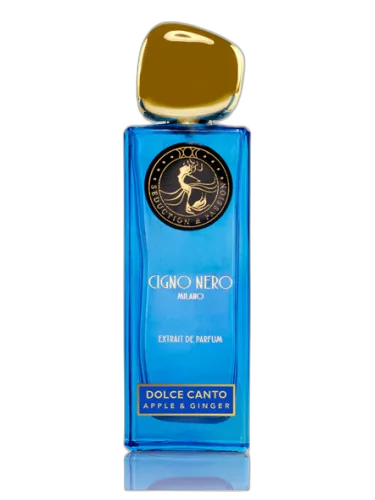
Dolce Canto Cigno Nero
At a glance
Is Dolce Canto Cigno Nero worth trying?
Dolce Canto by Cigno Nero is a Aromatic Fruity fragrance for women and men.
- Best match
- Evening wear in Fall
- Performance feel
- Very Good longevity with Strong sillage
- Signature profile
- fruity, woody, warm spicy with Dried Apple Crisp, Black Currant, Driftwood
The first impression
Dolce Canto by Cigno Nero is a Aromatic Fruity fragrance for women and men. Dolce Canto was launched in 2020. The nose behind this fragrance is Cristian Calabro. Top notes are Dried Apple Crisp and Black Currant; middle notes are Driftwood, Cardamom, Ginger and Jasmine; base notes are Sandalwood, Cedar and Musk.
What shapes the scent
The perfumer behind it

Cristian Calabro
Cristian Calabro is a perfumer known for his work with Antonio Maretti, creating provocative scents like Almost A Virgin, Dominant, and Nymphomania. His compositions often explore bold, sensual themes with rich, leathery, and gourmand accords. Calabro's style is characterized by its daring and narrative-driven approach.
Notes pyramid
Top Notes
First impression · 15-30 min
 Dried Apple Crisp
 Black Currant
Heart Notes
Core character · 2-4 hours
 Driftwood
 Cardamom
 Ginger
 Jasmine
Base Notes
Lasting impression · 4+ hours
 Sandalwood
 Cedar
Cedar
 Musk
Musk
The mood it creates
The Sovereign Archetype: Portrait of Dolce Canto Cigno Nero
Essence
The person who adores Dolce Canto Cigno Nero is ruled by the Sovereign archetype, embodying an innate sense of authority, refinement, and magnetism. Like the fragrance itself-dark, opulent, and commanding-they move through life with a quiet but undeniable presence. The Sovereign is not merely about power for its own sake, but about the responsibility of shaping one’s world with intention. They are drawn to the scent’s deep, velvety notes of black swan (a symbol of transformation and rarity) because it mirrors their own duality-elegant yet mysterious, structured yet fluid.
Style & Aesthetic
Their tastes are deliberate, favoring the interplay of shadow and light. They may be drawn to gothic architecture, Baroque music, or the stark minimalism of modern design-anything that balances grandeur with precision. Their wardrobe is a curated collection of timeless pieces: tailored black coats, silk blouses, perhaps a single piece of antique jewelry that carries a story. They appreciate craftsmanship, not as a display of wealth, but as an assertion of discernment.
In art, they are drawn to works that evoke both melancholy and transcendence-Caravaggio’s chiaroscuro, the poetry of Rilke, the haunting compositions of Arvo Pärt. They do not indulge in sentimentality, but they do seek depth, the kind that lingers in the mind long after the experience has passed.
Their daily life is a carefully orchestrated balance between structure and indulgence. They rise early, savoring the silence of dawn with black coffee and a book. Their work is purposeful-they thrive in roles where they can influence, create, or lead without being stifled by bureaucracy. They may be drawn to fields like law, design, or the arts, where vision and authority intersect.
Yet, they are not ascetics. They understand the necessity of pleasure-fine wine, slow dinners, the occasional late-night escapade-but these are never indulgences of excess. Even in leisure, there is a sense of ritual.
Philosophy & Values
They believe in the sovereignty of the individual-that one must carve their own path with unwavering resolve. Their philosophy is not one of rebellion, but of mastery: they do not reject tradition, but they refuse to be bound by it unless it serves their vision. They value discipline, not as a constraint, but as the foundation of true freedom.
Yet, this self-possession comes with a burden. They are acutely aware of the masks they wear, the roles they must play in different spheres of life. There is a tension between their desire for authenticity and the necessity of performance-a duality they navigate with both grace and occasional exhaustion.
Relationships
They are not easily known. Their relationships are built on mutual respect rather than effusive affection. They attract others effortlessly-their magnetism is undeniable-but they are selective in whom they let close. Their love is not possessive, but it is demanding: they expect loyalty, intelligence, and a shared commitment to growth.
Their shadow emerges in moments of emotional detachment. They may withdraw when vulnerability threatens their sense of control, leaving others feeling shut out. They must learn that true sovereignty is not isolation, but the wisdom to rule one’s own heart without fearing its fragility.
Shadow
The Sovereign’s greatest danger is the slide into tyranny-when their need for control becomes oppressive, both to themselves and others. They may grow impatient with perceived weakness, dismissive of those who lack their discipline. There is a coldness that can emerge, a rigidity that stifles spontaneity and joy.
To transcend this, they must remember that true power lies not in dominance, but in the ability to elevate others without diminishing oneself. The black swan is not just a symbol of mystery, but of transformation-they must allow themselves to evolve beyond their own expectations.
Conclusion
The lover of Dolce Canto Cigno Nero is a study in contrasts: strength and sensitivity, control and surrender, presence and enigma. They are not merely wearing a fragrance-they are embodying it, allowing its essence to mirror their own journey toward self-mastery. Their life is not without struggle, but it is one of intention, depth, and, above all, sovereignty-over their world, their choices, and ultimately, themselves.
If you like this, try these
Fragrances with a comparable profile - shared accords, notes, and character.

Edgardio Chilini
Bergamot Sorbet Edgardio Chilini
Shared heart notes: cardamom, ginger, jasmine

Rochas
Girl Blooming Rochas
Shared top notes: black currant
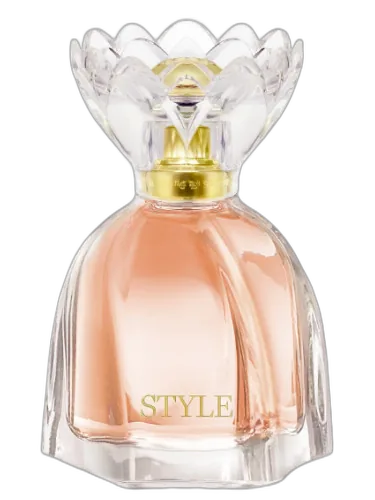
Princesse Marina De Bourbon
Royal Style Princesse Marina De Bourbon
Shared top notes: black currant

Roccobarocco
Souvenir D'italie Roccobarocco
Shared top notes: black currant

Isole Mediterranee
Aria Isole Mediterranee
Shared top notes: black currant