


Whisper Of Mirage Clair De Lune
At a glance
Is Whisper Of Mirage Clair De Lune worth trying?
Whisper of Mirage by Clair de Lune is a fragrance for women and men.
- Best match
- Evening wear in Fall
- Performance feel
- Very Good longevity with Moderate sillage
- Signature profile
- leather, sweet, animalic with Honey, Pink Pepper, Saffron
The first impression
Whisper of Mirage by Clair de Lune is a fragrance for women and men. This is a new fragrance. Whisper of Mirage was launched in 2024. Top notes are Honey, Pink Pepper, Saffron, Bergamot and Fig; middle notes are Chestnut, Rose, Jasmine and Osmanthus; base notes are Leather, Raspberry, Laotian Oud, Cedar, Cinnamon, Amber and Vanilla.
What shapes the scent
The perfumer behind it

Unknown Perfumer
Notes pyramid
Top Notes
First impression · 15-30 min
 Honey
Honey
 Pink Pepper
 Saffron
 Bergamot
 Fig
Fig
Heart Notes
Core character · 2-4 hours
 Chestnut
 Rose
Rose
 Jasmine
 Osmanthus
Base Notes
Lasting impression · 4+ hours
 Leather
 Raspberry
 Laotian Oud
 Cedar
Cedar
 Cinnamon
 Amber
Amber
 Vanilla
The mood it creates
The Lover Archetype: Portrait of Whisper Of Mirage Clair De Lune
Essence
The one who wears Whisper of Mirage Clair de Lune is not merely drawn to fragrance-they are drawn to the intangible, the ephemeral, the whispers of the unseen. Their soul aligns most closely with the Mystic, an archetype that seeks meaning beyond the material, that dwells in the liminal spaces between reality and reverie. The Mystic does not simply perceive the world; they interpret it, decode its hidden symbols, and listen for the murmurs of the divine in the mundane.
This fragrance-soft, elusive, luminous-mirrors their essence. It is not loud, nor does it demand attention. Instead, it lingers like a half-remembered dream, a suggestion of something just beyond reach. The Mystic does not conquer the world; they dissolve into it, becoming part of its mystery.
Relationships
They do not love easily, nor do they love carelessly. Their relationships are built on depth, not volume. They are the confidant who listens more than they speak, the lover who understands that silence can be more intimate than words. But this very quality can become their shadow-their reluctance to fully inhabit the present, their tendency to romanticize detachment.
They may idealize love from a distance, preferring the idea of a person to the messy reality. Their partners may feel as though they are chasing a ghost, never quite able to hold their attention fully. The Mystic’s love is deep but often diffuse, like moonlight-beautiful, but impossible to grasp.
Shadow
For all their wisdom, the Mystic is not immune to delusion. Their greatest flaw is their capacity to retreat too far into their own inner world, mistaking solitude for enlightenment and avoidance for transcendence. They may grow so accustomed to living in the realm of ideas that they neglect the demands of the tangible-responsibilities, commitments, the raw edges of human connection.
At their worst, they become the Escapist, using their sensitivity as an excuse to avoid confrontation, growth, or the hard work of being present. They may spin elaborate philosophies to justify their passivity, convincing themselves that detachment is a virtue rather than a defense.
Conclusion
Their tastes are refined but never ostentatious. They prefer the quiet luxury of worn books, the texture of handmade paper, the muted hues of twilight. Their home is a sanctuary-sparse but deliberate, filled with objects that carry meaning rather than mere function. A single candle flickers on a wooden desk; a dried flower rests between the pages of a journal. They are drawn to art that suggests rather than declares-impressionist paintings, ambient music, poetry that leaves space for the reader’s own thoughts to breathe.
Their philosophy is one of quiet seeking. They do not preach, nor do they claim to possess absolute truths. Instead, they wander through ideas like a traveler through an unfamiliar city, collecting fragments of wisdom without the need to assemble them into dogma. They believe in the sacredness of the ordinary-that a cup of tea, a shaft of morning light, or the scent of rain can be as profound as any scripture.
If you like this, try these
Fragrances with a comparable profile - shared accords, notes, and character.
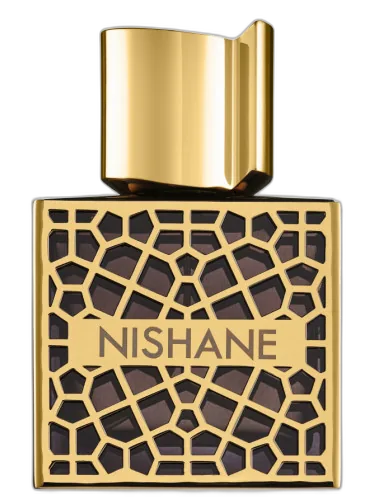
Nishane
Nefs Nishane
Shared top notes: fig, honey, saffron

Omanluxury
Paramour Omanluxury
Shared top notes: bergamot, saffron
Parfums d'Elmar
Yara Parfums D'elmar
Shared top notes: bergamot, pink pepper, saffron

Bottega Veneta
Bottega Veneta Eau De Velours Bottega Veneta
Shared top notes: bergamot, pink pepper

Ggema
Moonlight Ggema
Shared top notes: pink pepper