
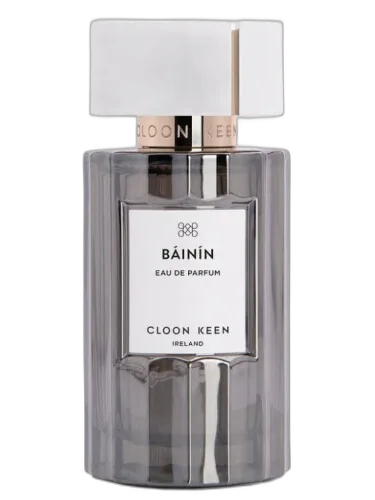

Báinín Cloon Keen Atelier
Fragrance Story
Báinín by Cloon Keen Atelier is a Chypre Floral fragrance for women and men. This is a new fragrance. Báinín was launched in 2024. Top notes are Neroli, Thyme, Bergamot, Lemon, Clary Sage, Mandarin Orange and Peppermint; middle notes are Broom, Wool, Jasmine Sambac, Violet, Pear and Black Currant; base notes are Musk, Sandal, Cedarwood and Coumarin.
Composition Profile
About the Perfumer

Unknown Perfumer
Fragrance Notes
Top Notes
First impression · 15-30 min
 Neroli
 Thyme
Thyme
 Bergamot
 Lemon
Lemon
 Clary Sage
 Mandarin Orange
 Peppermint
Heart Notes
Core character · 2-4 hours
Broom
 Wool
Jasmine Sambac
Wool
Jasmine Sambac
 Violet
 Pear
Pear
 Black Currant
Base Notes
Lasting impression · 4+ hours
 Musk
Sandal
Cedarwood
Musk
Sandal
Cedarwood
 Coumarin
Báinín Cloon Keen Atelier by Cloon Keen Atelier offers a distinctive olfactory experience that stands out from other fragrances in its category.
Crafted with the finest ingredients and a blend of traditional and modern perfumery techniques, this fragrance represents the pinnacle of the perfumer's art.
Báinín Cloon Keen Atelier embodies the distinctive style of Cloon Keen Atelier while adding a unique chapter to their fragrance portfolio.
Character Profile
The Weaver Of Silence Archetype: Portrait of Báinín Cloon Keen Atelier
Essence
The person who favors Báinín by Cloon Keen Atelier is most closely aligned with the Sage-a seeker of truth, a quiet observer who distills wisdom from the subtleties of life. The fragrance itself, with its clean linen, salt, and musk, evokes an almost monastic purity, a scent that does not impose but lingers like an unspoken thought. The Sage does not clamor for attention; they are drawn to the spaces between words, the pauses in conversations, the moments where meaning is felt rather than declared.
This person is not merely intellectual but deeply contemplative, valuing clarity and precision in all things. They are the one who listens more than they speak, who absorbs the world before forming an opinion. Their wisdom is not loud, but it is undeniable-like the scent of freshly laundered linen, it is both simple and profound.
Relationships
They do not collect friends; they cultivate them slowly, with the care of a gardener tending a single, fragile bloom. Their relationships are built on mutual understanding rather than forced intimacy. They are the confidant, the one who hears secrets not because they ask for them, but because others sense they will hold them without judgment.
Romantically, they are drawn to those who appreciate silence as much as speech. They do not love loudly, but their love is steady, like the tide-always present, even when it recedes. Their partner must understand that their solitude is not rejection but a necessary retreat, the way a monk returns to his cell to pray.
Shadow
Yet the Sage’s greatest strength is also their greatest flaw. Their love of silence can become a fortress, their introspection a form of withdrawal. They may mistake solitude for wisdom, forgetting that some truths are only found in the messiness of human connection. At their worst, they grow detached, observing life as if through glass-present but untouched.
They may also struggle with perfectionism, dismissing anything that does not meet their exacting standards. Their pursuit of purity can become a rejection of life’s inherent chaos, leaving them brittle, even disdainful, of those who embrace spontaneity.
Conclusion
Their tastes are deliberate, almost ascetic in their restraint. They prefer neutral tones-soft whites, muted grays, the occasional deep blue-as if their external world must mirror their internal stillness. Their home is uncluttered, filled with well-worn books, handmade ceramics, and perhaps a single vase of dried grasses. They are drawn to textures that reward patience: raw linen, unpolished wood, cold stone.
Philosophically, they reject excess. They believe in the elegance of necessity, in the idea that truth is found in reduction rather than accumulation. They might quote Marcus Aurelius or Simone Weil, but never pretentiously-only when the words align perfectly with their own silent convictions.
Similar Fragrances
Fragrances with a comparable profile - shared accords, notes, and character.
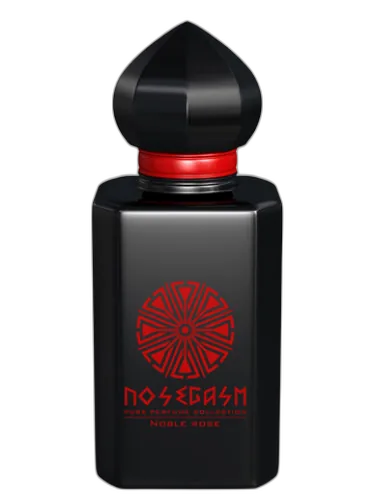
Nosegasm
Noble Rose Nosegasm
Shared accords: aromatic, citrus, fresh spicy
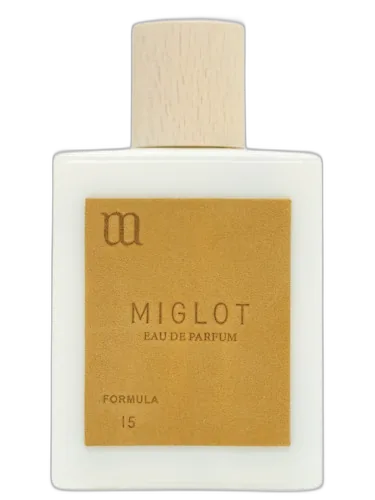
Miglot
Formula 15 Miglot
Shared accords: aromatic, citrus, fresh spicy

Eaux Parfums
Eau Irrésistible Eaux Parfums
Shared accords: aromatic, citrus, fresh

Maison Label
Ylang Ylang & Musk Maison Label
Shared accords: aromatic, citrus, fresh
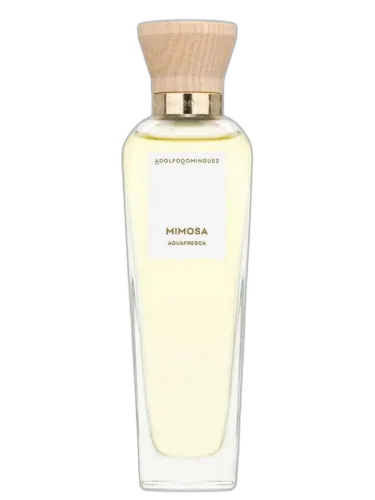
Adolfo Dominguez
Agua Fresca De Mimosa Coriandro Adolfo Dominguez
Shared accords: aromatic, citrus, fresh spicy