
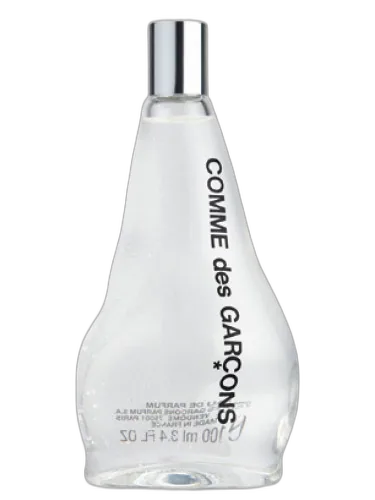

Comme Des Garcons 2011 Comme Des Garcons
At a glance
Is Comme Des Garcons 2011 Comme Des Garcons worth trying?
Comme des Garcons 2011 by Comme des Garcons is a Floral fragrance for women and men.
- Best match
- Evening wear in Fall
- Performance feel
- Good longevity with Moderate sillage
- Signature profile
- industrial glue, brown scotch tape, aldehydic with Aldehydes, Saffron, Leather
The first impression
Comme des Garcons 2011 by Comme des Garcons is a Floral fragrance for women and men. Comme des Garcons 2011 was launched in 2011. The nose behind this fragrance is Antoine Lie. Top notes are Aldehydes, Saffron and Leather; middle notes are Lilac, Musk, Styrax and Hawthorn; base notes are Industrial glue and Brown Scotch Tape.
What shapes the scent
The perfumer behind it

Antoine Lie
Antoine Lie is a French perfumer trained at Givaudan and known for his work with brands like Burberry and Avon. His style often blends bold contrasts, pairing fresh or woody accords with unexpected gourmand or metallic touches. He created the earthy, resinous Sequoia for Abbott New York City and the spicy, incense-laced Sword for CZAR, showcasing his skill with complex, atmospheric compositions.
Notes pyramid
Top Notes
First impression · 15-30 min
 Aldehydes
 Saffron
 Leather
Heart Notes
Core character · 2-4 hours
 Lilac
Lilac
 Musk
Musk
 Styrax
 Hawthorn
Base Notes
Lasting impression · 4+ hours
 Industrial glue
 Brown Scotch Tape
The mood it creates
The Alchemist Archetype: Portrait of Comme Des Garcons 2011 Comme Des Garcons
Essence
The person who gravitates toward Comme Des Garçons 2011 is, at their core, a Creator-an archetype defined by imagination, originality, and a relentless drive to reshape reality. They are not content with the mundane; they seek to dissolve boundaries and reassemble the world in their own image. The scent itself-a bold, unconventional blend of aldehydes, pepper, and metallic notes-mirrors their psyche: sharp, intellectual, and unapologetically avant-garde.
Style & Aesthetic
Their tastes are not merely preferences but manifestos. They favor the asymmetrical, the deconstructed, the deliberately imperfect. In fashion, they might wear Rei Kawakubo’s designs-garments that challenge form-or pair vintage military surplus with high-tech fabrics. Their home is a curated collision of Brutalist architecture and surrealist art, where nothing is merely decorative; everything is a statement.
Music is an experiment-industrial noise, avant-garde jazz, or glitchy electronica-anything that defies conventional harmony. They read philosophy (Deleuze, Baudrillard) but also obscure sci-fi, finding truth in the speculative. Their palate leans toward the unexpected: bitter amaros, smoky mezcals, or umami-rich dishes that unsettle before they delight.
Their life is a perpetual workshop. They might be an artist, a designer, a tech disruptor, or simply someone who treats their daily routine as an act of rebellion. They wake early, not out of discipline but because their mind refuses to idle. Their workspace is chaotic but purposeful-sketches, half-finished prototypes, books dog-eared at passages that sparked epiphanies.
They travel not for relaxation but for dislocation, seeking places that unsettle their perspective. A derelict factory in Berlin, a neon-lit alley in Tokyo-anywhere that feels like the future is being written in real time.
Philosophy & Values
They believe reality is malleable, a canvas awaiting their intervention. Tradition is not sacred but raw material to be dismantled and reassembled. Their guiding principle is "What if?"-not as idle curiosity but as a challenge to the status quo. They value intellectual courage above all, despising complacency in thought or aesthetics.
Yet, their disdain for the ordinary can border on elitism. They may dismiss anything mainstream as "boring," mistaking obscurity for depth. Their relentless innovation can become a form of restlessness, leaving them unable to appreciate simplicity or tradition.
Relationships
They attract those who crave intellectual or artistic stimulation, but their relationships are not built on warmth alone-they demand engagement. Partners and friends must be co-conspirators, willing to question, debate, and create alongside them. Their love language is collaboration: a shared project, a late-night manifesto-writing session, a mutual reshaping of each other’s minds.
Yet, their intensity can be isolating. They may struggle with emotional accessibility, preferring ideas over vulnerability. Their partners might feel like participants in an experiment rather than equals in intimacy. Their shadow here is detachment-a fear that deep emotional bonds might dull their creative edge.
Shadow
Their greatest strength-their refusal to accept the given-can become their prison. When creativity becomes compulsion, they risk exhaustion, forever chasing the next idea without fulfillment. Their disdain for convention can harden into cynicism, leaving them unable to appreciate beauty in the ordinary.
At their worst, they may become the Destroyer-not out of malice, but because they cannot stop dismantling, even when creation is no longer the goal. They must learn that reinvention is meaningless without moments of stillness, that even the avant-garde must sometimes rest.
Conclusion
The wearer of Comme Des Garçons 2011 is a philosopher-artist, a alchemist of the senses. They are neither entirely at home in the world nor entirely alienated from it-they exist to remake it. Their life is a testament to the belief that identity is not fixed but forged, again and again, in the fires of their own imagination.
Yet, like all creators, they must remember: even the most radical visions must sometimes be lived in, not just dreamed.
If you like this, try these
Fragrances with a comparable profile - shared accords, notes, and character.

Mugler
Mirror Mirror Collection - Miroir Des Secrets Mugler
Shared top notes: aldehydes

Jusbox
No Rules Jusbox
Shared top notes: aldehydes, saffron

Guerlain
Les Absolus D'orient Musc Noble Guerlain
Shared top notes: aldehydes, saffron
Oneiros
Water Moon Oneiros
Shared top notes: aldehydes, saffron
Nicolai Parfumeur Createur
Poudre De Musc Intense Nicolai Parfumeur Createur
Shared top notes: aldehydes