


Zero Comme Des Garcons
At a glance
Is Zero Comme Des Garcons worth trying?
Zero by Comme des Garcons is a Woody Floral Musk fragrance for women and men.
- Best match
- Evening wear in Fall
- Performance feel
- Good longevity with Moderate sillage
- Signature profile
- woody, musky, powdery with Bergamot, Varnish Accord, Rose Oxide
The first impression
Zero by Comme des Garcons is a Woody Floral Musk fragrance for women and men. This is a new fragrance. Zero was launched in 2022. The nose behind this fragrance is Fanny Bal. Top note is Bergamot; middle notes are Varnish Accord, Rose Oxide and Haitian Vetiver; base notes are Cedar, Cashmeran and Musk.
What shapes the scent
The perfumer behind it

Fanny Bal
Fanny Bal is a perfumer who has contributed to multiple brands, including 4711 and Al-Jazeera Perfumes. For 4711, she created Acqua Colonia Intense Pure Breeze Of Himalaya and Peony & Sandalwood. For Al-Jazeera Perfumes, she composed 97 Élysées, Carnaval, Coup Du Monde, Damascus Musk, London, and Marbella, showcasing her ability to craft both fresh and opulent scents.
Notes pyramid
Top Notes
First impression · 15-30 min
 Bergamot
Heart Notes
Core character · 2-4 hours
 Varnish Accord
 Rose Oxide
Haitian Vetiver
Rose Oxide
Haitian Vetiver
Base Notes
Lasting impression · 4+ hours
 Cedar
Cedar
 Cashmeran
 Musk
Musk
The mood it creates
The Alchemist Archetype: Portrait of Zero Comme Des Garcons
Essence
To wear Zero by Comme Des Garçons is to embrace absence as presence, to find meaning in the void. This fragrance-a stark, mineralic composition of aldehydes, pepper, and incense-does not seduce or flatter. It distills essence into abstraction, stripping scent down to its skeletal form. The person who chooses it is not one who seeks to be understood through conventional beauty but through radical simplicity. They are the Alchemist, an archetype defined by transformation, intellectual rigor, and a relentless pursuit of purity.
The Alchemist lives in the liminal space between the tangible and the conceptual. They are drawn to ideas that challenge perception, to art that demands interpretation rather than passive consumption. Their tastes are refined but never ostentatious-minimalist architecture, avant-garde cinema, the sparse poetry of a single brushstroke on raw canvas. They do not decorate their life; they curate it, removing excess until only the essential remains.
Their philosophy is one of distillation. They believe that truth is found not in accumulation but in reduction. In conversation, they speak deliberately, weighing each word as if it were a rare element to be measured precisely. They are not cold, but they are exacting-friendship with them is earned through intellectual resonance, not casual familiarity.
Shadow
Yet the Alchemist’s pursuit of purity carries its own perils. Their disdain for the superficial can harden into contempt for those who do not share their exacting standards. They risk becoming the hermit, isolated by their own intellect, mistaking solitude for superiority.
Their precision can curdle into rigidity. Where others adapt, they resist, clinging to their principles even when flexibility would serve them better. They may dismiss emotion as messy, as an impurity to be distilled away-yet in doing so, they deny a fundamental part of human experience.
At their worst, they become the Recluse, retreating into abstraction, losing touch with the warmth of lived connection. Their philosophy, once a lens for clarity, becomes a barrier between themselves and the world.
Conclusion
The Alchemist’s greatest strength is their ability to see beyond the surface. Where others perceive emptiness, they find potential. Their mind operates like a crucible, refining raw experience into insight. They are drawn to disciplines that require patience and precision-mathematics, experimental music, the slow craft of handmade ceramics.
In relationships, they are loyal but selective. They do not seek companionship for its own sake; they seek those who can engage in the alchemy of thought, who can transmute idle chatter into meaningful exchange. Their love is not effusive but profound-a quiet intensity that reveals itself in acts of deep understanding rather than grand gestures.
Their style mirrors their philosophy: monochromatic, structured, devoid of frivolity. They favor garments that are architectonic, fabrics that feel like a second skin-raw linen, stiff cotton, unadorned leather. Their aesthetic is not one of austerity but of discipline, a refusal to be swayed by trends.
If you like this, try these
Fragrances with a comparable profile - shared accords, notes, and character.

Ex Nihilo
In Paradise Riviera Ex Nihilo
Shared top notes: bergamot
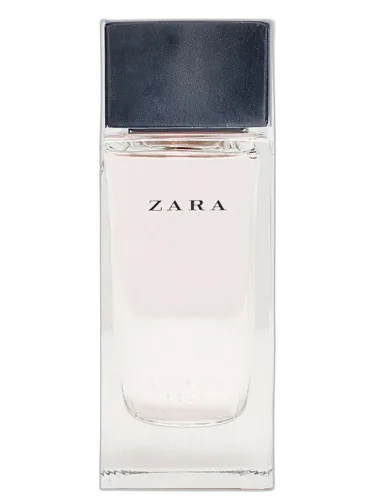
Zara
Sunrise Rose Zara
Shared top notes: bergamot
Le Couvent Maison de Parfum
Vetivera Le Couvent Maison De Parfum
Shared top notes: bergamot

Floraïku
In The Rain Floraïku
Shared top notes: bergamot
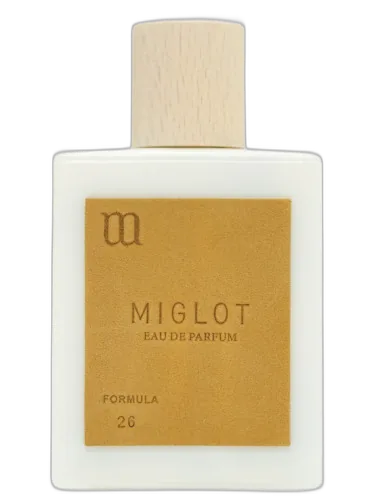
Miglot
Formula 26 Miglot
Shared top notes: bergamot