
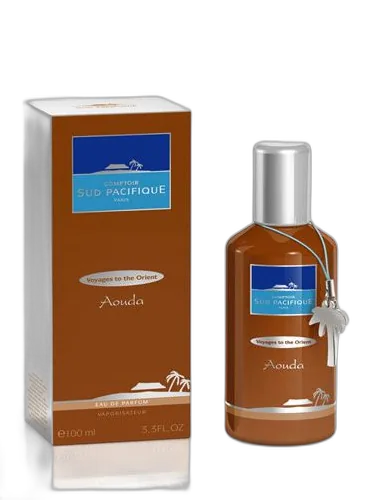

Aouda Comptoir Sud Pacifique
At a glance
Is Aouda Comptoir Sud Pacifique worth trying?
Aouda by Comptoir Sud Pacifique is a fragrance for women and men.
- Best match
- Evening wear in Winter
- Performance feel
- Very Good longevity with Strong sillage
- Signature profile
- amber, aromatic, balsamic with Geranium, Chamomile, Rose
The first impression
Aouda by Comptoir Sud Pacifique is a fragrance for women and men. Aouda was launched in 2009. Top notes are Geranium, Chamomile and Rose; middle notes are Copahu Balm, Amyris, Virginia Cedar and Myrtle; base notes are Tolu Balsam, Agarwood (Oud) and Patchouli.
What shapes the scent
The perfumer behind it

Notes pyramid
Top Notes
First impression · 15-30 min
 Geranium
 Chamomile
 Rose
Rose
Heart Notes
Core character · 2-4 hours
 Copahu Balm
 Amyris
 Virginia Cedar
 Myrtle
Base Notes
Lasting impression · 4+ hours
 Tolu Balsam
 Agarwood (Oud)
 Patchouli
The mood it creates
The Lover Archetype: Portrait of Aouda Comptoir Sud Pacifique
Essence
The person who cherishes Aouda by Comptoir Sud Pacifique is not one to be confined by the mundane. Their soul is restless, drawn to the unfamiliar, the rich, the intoxicating. They embody the Explorer archetype, a seeker of depth and sensation, forever chasing the horizon where the known dissolves into mystery. Aouda-with its deep, woody oud, spiced with saffron and rose-is not merely a fragrance but a declaration: I am not of the ordinary world.
This archetype thrives on novelty, but not superficially; they crave experiences that transform them. They are not tourists but travelers, not consumers but connoisseurs. Yet, like all explorers, they risk becoming lost in their own quest, mistaking movement for meaning.
Shadow
Yet, the Explorer’s shadow is their inability to stay. Their quest for the next experience can become an addiction, leaving them perpetually unsatisfied. They may grow impatient with routine, dismissing stability as stagnation. Relationships suffer when their partners feel like waystations rather than homes.
There is also a danger of aestheticism overtaking substance. They may begin to mistake the exotic for the profound, collecting experiences like trophies without ever truly absorbing them. At their worst, they become jaded, always searching but never finding, their once-boundless curiosity dulled by overstimulation.
Conclusion
Their tastes are an extension of their hunger for the extraordinary. They prefer textures that tell a story-handwoven silks, aged leather, the roughness of unpolished gemstones. Their home is a carefully curated museum of their journeys: incense from Marrakech, a hand-carved Balinese mask, a first edition of The Sheltering Sky. They do not merely collect objects; they absorb their essence.
Philosophically, they reject the banalities of modern life-the nine-to-five grind, the tyranny of convenience. They believe in the sacredness of experience, in the idea that life must be felt rather than merely lived. Their values are rooted in authenticity; they despise pretense, though they are not immune to it themselves.
In relationships, they are magnetic but elusive. They attract those who long for adventure, yet they struggle with permanence. Love, for them, is a journey, not a destination-a series of intense encounters rather than a settled state. Their partners must either keep pace or accept that they will sometimes wander alone.
If you like this, try these
Fragrances with a comparable profile - shared accords, notes, and character.
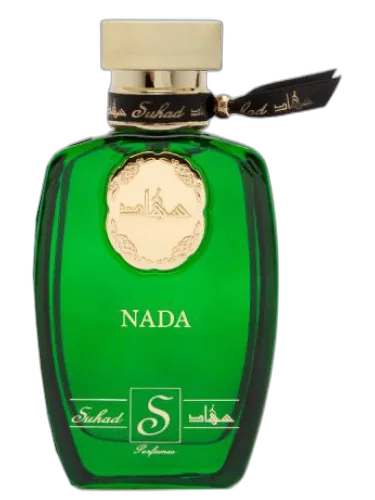
Suhad Perfumes
Nada Suhad Perfumes
Shared top notes: rose
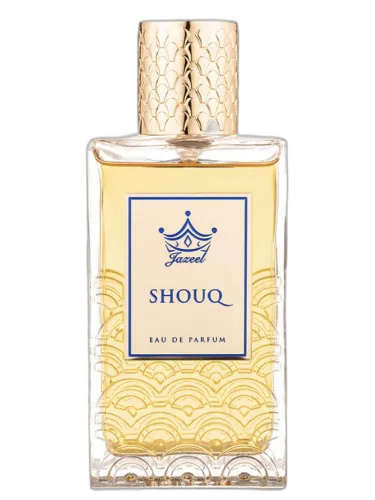
Jazeel
Shouq Jazeel
Shared top notes: geranium, rose
Serge Lutens
Zellige Limited Edition: La Fille De Berlin Serge Lutens
Shared top notes: geranium, rose

ORN
Maya Orn
Shared top notes: geranium

Suhad Perfumes
Fawah Al-khaleej Suhad Perfumes
Shared top notes: geranium, rose