


Moon Light Cosmogony
At a glance
Is Moon Light Cosmogony worth trying?
Moon Light by Cosmogony is a Floral Woody Musk fragrance for women.
- Best match
- Casual wear in Spring, Summer
- Performance feel
- Good longevity with Moderate sillage
- Signature profile
- floral, powdery, aromatic with Melon, Mint, Cardamom
The first impression
Moon Light by Cosmogony is a Floral Woody Musk fragrance for women. Moon Light was launched in 2017. The nose behind this fragrance is Bertrand Duchaufour. Top notes are Melon, Mint, Cardamom, Freesia and Pink Pepper; middle notes are Sea Notes, Lotus, Peony, Mimosa, Iris Flower, Violet, Orange Blossom and Rose; base notes are Musk, Amber, Oakmoss and Vetiver.
What shapes the scent
The perfumer behind it

Bertrand Duchaufour
Bertrand Duchaufour is a renowned French perfumer with a prolific career spanning many brands. He has created fragrances for Acqua di Parma, including Blu Mediterraneo - Cipresso Di Toscana and Colonia Assoluta, as well as for Aedes de Venustas, such as Café Tabac and Copal Azur. His style is known for its complexity and use of natural ingredients.
Notes pyramid
Top Notes
First impression · 15-30 min
 Melon
Melon
 Mint
Mint
 Cardamom
 Freesia
 Pink Pepper
Heart Notes
Core character · 2-4 hours
 Sea Notes
 Lotus
Lotus
 Peony
Peony
 Mimosa
Iris Flower
Mimosa
Iris Flower
 Violet
 Orange Blossom
 Rose
Rose
Base Notes
Lasting impression · 4+ hours
 Musk
Musk
 Amber
Amber
 Oakmoss
 Vetiver
The mood it creates
The Mystic Archetype: Portrait of Moon Light Cosmogony
Essence
To wear Moon Light Cosmogony is to embrace the liminal-the space between dusk and dawn, where reality blurs into reverie. This fragrance, with its ethereal blend of cool florals, lunar musk, and a whisper of something intangible, suits one who dwells in the twilight of thought. The person who chooses it is not merely drawn to scent, but to symbolism-each note a fragment of a deeper cosmology they seek to understand.
They are, at their core, a Mystic-the archetype that bridges the seen and unseen, the rational and the numinous. Like the moon, they reflect light they do not generate, absorbing the mysteries of the world and refracting them into intuition. Their life is a pilgrimage toward meaning, not through dogma, but through the quiet revelation of patterns, synchronicities, and half-glimpsed truths.
Shadow
Yet every light casts a shadow. Their detachment, while a source of wisdom, can become a prison. They sometimes mistake observation for participation, watching their own life as if it were a story unfolding before them. This can lead to passivity, a reluctance to act because they are too busy interpreting.
Their idealism can also turn into disillusionment. When reality fails to match their inner vision, they may withdraw, mistaking the mundane for the meaningless. They risk becoming the prophet who refuses to enter the city, speaking in riddles no one understands.
Conclusion
Their tastes are refined but never ostentatious. They prefer the understated elegance of flowing fabrics, silver jewelry that catches the light like moonbeams, and spaces that feel both intimate and infinite-dimly lit rooms with bookshelves that stretch toward the ceiling, or open windows where the night air carries the scent of distant rain.
Philosophy is not an abstract exercise for them, but a lived experience. They are drawn to thinkers who dance on the edge of the ineffable-Nietzsche’s aphorisms, Jung’s archetypes, the poetry of Rilke. They believe in the unseen architecture of the soul, the idea that every choice, every dream, every fleeting emotion is part of a larger design.
Relationships are both their sanctuary and their challenge. They crave depth, often forming bonds that feel fated, as if the other person were a character in a myth they are living out. Yet they struggle with the mundane-the small talk, the daily compromises, the way love sometimes demands presence rather than symbolism. Their closest companions are those who understand their need for solitude, who do not mistake their quietude for coldness.
If you like this, try these
Fragrances with a comparable profile - shared accords, notes, and character.

Cosmogony
Other Side Cosmogony
Shared top notes: cardamom, melon, mint

Etienne Aigner
Aigner White Man Etienne Aigner
Shared top notes: cardamom
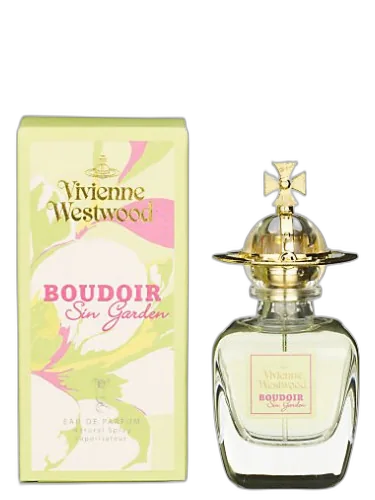
Vivienne Westwood
Boudoir Sin Garden Vivienne Westwood
Shared top notes: freesia, pink pepper

Edgardio Chilini
Soul Power Edgardio Chilini
Shared top notes: mint

Monart Parfums
Bogema Monart Parfums
Shared top notes: melon, pink pepper