
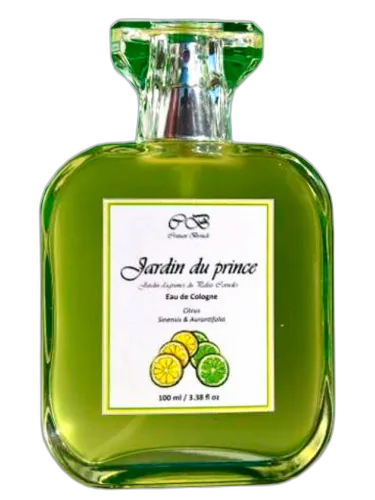

Jardin Du Prince Cristian Brinck
At a glance
Is Jardin Du Prince Cristian Brinck worth trying?
Jardin Du Prince by Cristian Brinck is a fragrance for women and men.
- Best match
- Evening wear in Spring
- Performance feel
- Good longevity with Moderate sillage
- Signature profile
- citrus, aromatic, amber with Lime, Sweet Orange, Pink Grapefruit
The first impression
Jardin Du Prince by Cristian Brinck is a fragrance for women and men. Jardin Du Prince was launched in 2018. The nose behind this fragrance is Cristian Brinck. Top notes are Lime, Sweet Orange, Pink Grapefruit and Lemon; middle notes are Ravensara, Romanian Sage and Lemon Verbena; base notes are Cetalox and Ambroxan.
What shapes the scent
The perfumer behind it

Notes pyramid
Top Notes
First impression · 15-30 min
 Lime
Lime
 Sweet Orange
Pink Grapefruit
Sweet Orange
Pink Grapefruit
 Lemon
Lemon
Heart Notes
Core character · 2-4 hours
 Ravensara
Romanian Sage
Ravensara
Romanian Sage
 Lemon Verbena
Base Notes
Lasting impression · 4+ hours
 Cetalox
 Ambroxan
The mood it creates
The Sovereign Archetype: Portrait of Jardin Du Prince Cristian Brinck
Essence
To wear Jardin Du Prince by Cristian Brinck is to carry oneself with an air of quiet authority, a knowing elegance that does not shout but lingers like the scent of aged parchment and rare woods. This fragrance-aristocratic, refined, yet never ostentatious-belongs to one who embodies the Sovereign archetype, the ruler not of others but of their own domain, the architect of a life built on discernment and self-possession.
Style & Aesthetic
Their taste is deliberate, never accidental. They favor tailored garments that suggest heritage rather than trend, fabrics that age gracefully-cashmere, aged leather, linen worn soft by time. Their home is a curated sanctuary: shelves lined with philosophy and art monographs, a single antique desk where letters are still written by hand. They drink aged whiskey or Darjeeling tea from porcelain cups, not out of pretension, but because they understand that ritual dignifies the mundane.
Music is either Baroque or jazz-structured yet improvisational, mirroring their own duality of discipline and spontaneity. They appreciate the slow unfurling of a fugue as much as the raw honesty of a blues lament. In art, they are drawn to the Old Masters, not for their grandeur, but for the way light falls on a face in a Rembrandt, revealing the weight of lived wisdom.
Philosophy & Values
They do not believe in fate, only consequence. Every decision is measured, not out of fear, but out of respect for the weight of existence. Their philosophy is stoic at its core-what happens to them matters less than how they respond. Yet beneath this discipline lies a romanticism, a belief in the sublime hidden in the ordinary. A well-set table, a perfectly timed silence in conversation, the way dusk turns a city street golden-these are their sacraments.
They value loyalty but do not demand it blindly. Their friendships are few, deep, and often lifelong. They are the confidant to whom others bring their unspoken fears, for they listen without judgment but also without indulgence. Love, for them, is a covenant-not of possession, but of mutual elevation. They seek a partner who is neither subordinate nor rival, but an equal in the quiet battle to live meaningfully.
Shadow
Yet sovereignty, when unchecked, becomes tyranny-not over others, but over the self. Their greatest flaw is the prison of their own standards. They can mistake control for virtue, forgetting that life’s richest moments often come unplanned. Their disdain for mediocrity sometimes hardens into impatience with those who do not share their exacting nature.
They may also fall prey to isolation, believing that to rely on others is to show weakness. Their self-sufficiency, though admirable, can calcify into emotional detachment. The Sovereign must remember that even kings need counsel, that the strongest trees bend in the storm.
Conclusion
To encounter them is to feel both challenged and at ease. They do not fill a room with noise, but their presence is undeniable-like the fragrance they wear, subtle yet impossible to ignore. They are not without contradictions: rigorous yet sensual, guarded yet deeply feeling. Their life is not one of grand conquests, but of quiet victories-the mastery of self, the cultivation of beauty, the refusal to let the world make them small.
In the end, the Sovereign’s greatest triumph is not in ruling, but in knowing when to lay the crown aside and simply breathe in the garden they have spent a lifetime tending.
If you like this, try these
Fragrances with a comparable profile - shared accords, notes, and character.

Coisy B.
Shades Coisy B.
Shared top notes: lemon, lime
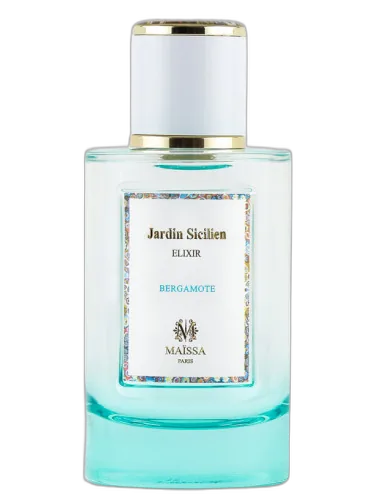
Maïssa Parfums
Jardin Sicilien Maïssa Parfums
Shared top notes: lime

Mercedes-Benz
Mercedes-benz Sign Your Attitude Mercedes-benz
Shared base notes: cetalox
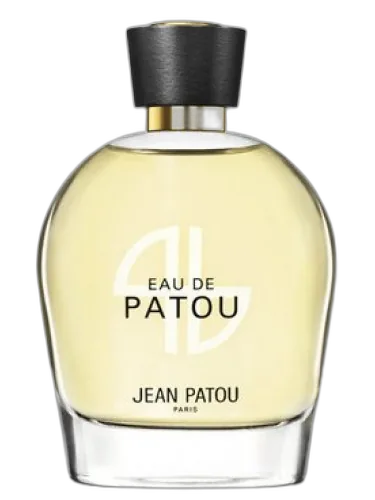
Jean Patou
Collection Heritage Eau De Patou Jean Patou
Shared top notes: lemon, lime, sweet orange

Courrèges
Slogan Courrèges
Shared base notes: ambroxan