


Vittoria Alata Cristian Cavagna
At a glance
Is Vittoria Alata Cristian Cavagna worth trying?
Vittoria Alata by Cristian Cavagna is a fragrance for women and men.
- Best match
- Evening, Special Occasion wear in Spring, Summer
- Performance feel
- Very Good longevity with Moderate sillage
- Signature profile
- fresh, aldehydic, green with Aldehydes, Banana Leaf, Ginger
The first impression
Vittoria Alata by Cristian Cavagna is a fragrance for women and men. This is a new fragrance. Vittoria Alata was launched in 2023. Vittoria Alata was created by Arturetto Landi and Cristian Cavagna. Top notes are Aldehydes, Banana Leaf and Ginger; middle notes are Raspberry, Metallic notes, Tuberose and Iris; base notes are Frankincense, Musk, Amber and Vanilla.
What shapes the scent
The perfumer behind it

Arturetto Landi
Arturetto Landi is an Italian perfumer known for his work with brands like Adjiumi and Al-Jazeera Perfumes. His style balances classic structure with bold contrasts, often blending rich resins with unexpected floral or gourmand notes. Notable creations include the complex 1918 Parfum National series and the intense, darkly sweet Adjiumi Incubo.
Notes pyramid
Top Notes
First impression · 15-30 min
 Aldehydes
 Banana Leaf
 Ginger
Heart Notes
Core character · 2-4 hours
 Raspberry
Metallic notes
Raspberry
Metallic notes
 Tuberose
 Iris
Iris
Base Notes
Lasting impression · 4+ hours
Frankincense
 Musk
Musk
 Amber
Amber
 Vanilla
The mood it creates
The Vittoria Alata Soul Archetype: Portrait of Vittoria Alata Cristian Cavagna
Essence
The person who cherishes Vittoria Alata by Cristian Cavagna is not merely drawn to a fragrance-they are called to it, as if by an unseen force. This scent, with its luminous blend of bergamot, jasmine, and sandalwood, evokes something sacred, something beyond the material. The wearer is most closely aligned with the Priestess archetype, the keeper of hidden wisdom and the seeker of transcendence. They are not satisfied with the surface of things; they crave depth, meaning, and a connection to the unseen.
Yet, like all archetypes, the Priestess has her shadow. Where there is devotion, there can be dogmatism; where there is intuition, there can be detachment from the tangible world. The Vittoria Alata soul walks the line between enlightenment and escapism, between wisdom and self-deception.
To wear this fragrance is to declare a quiet allegiance to the unseen. It is for those who know that beauty is not just in what is visible, but in what is felt, intuited, and half-remembered. The Vittoria Alata soul is both priestess and pilgrim, forever seeking, forever devoted-not to a god, but to the sacred pulse of life itself.
And if they sometimes lose their way? That, too, is part of the journey.
Style & Aesthetic
Their tastes are refined but never ostentatious. They prefer the quiet luxury of well-made things-linen shirts that age beautifully, leather-bound journals, a single piece of antique jewelry with a story. Their home is a sanctuary: soft light, books stacked with intention, perhaps a single incense holder on a wooden table. They do not follow trends; they follow whispers of beauty that resonate with something deeper within them.
Philosophically, they are drawn to mysticism, but not in a superficial way. They may study Jung, Rumi, or the Tao Te Ching, not as intellectual exercises but as guides for living. They believe in synchronicity, in the idea that the universe speaks in symbols. Yet they are not naive-they know that meaning is something one must wrestle with, not passively receive.
Their days are structured around rituals-morning tea in silence, evening walks under the fading light. They find comfort in repetition, in the way small acts can become sacred. But they are not rigid; there is an undercurrent of rebellion in them. They reject blind conformity, and if society demands they abandon their inner truth, they will quietly but firmly refuse.
Professionally, they thrive in roles that allow them to explore meaning-writers, therapists, artists, scholars. They are not motivated by wealth or status, but by the sense that their work aligns with something greater. Yet their shadow may manifest as impracticality, a reluctance to engage with the mundane necessities of life.
Relationships
They do not have many friends, but the ones they do have are bound by unspoken understanding. Their love is intense, almost devotional-when they care for someone, they do so with a quiet ferocity. But this can also make them demanding, expecting others to match their depth. Their shadow emerges when they withdraw into solitude, mistaking isolation for enlightenment.
Romantically, they are drawn to those who seem to carry a mystery within them. They are not interested in surface charm; they want a partner who feels like a riddle worth solving. Yet this can lead to idealization-they may love the idea of someone more than the flawed reality.
Shadow
When the Priestess falls into her shadow, she becomes the Exile-someone so lost in the realm of ideas that she forgets how to live. She may grow disillusioned, seeing the world as too crude for her refined sensibilities. She may become dogmatic, insisting that her way of seeing is the only true way. Or she may simply withdraw, mistaking her solitude for wisdom when it is really fear-fear of being misunderstood, fear of the messiness of human connection.
But even in her shadow, there is potential. The Exile must learn that true wisdom is not found in escaping the world, but in engaging with it-fully, fiercely, and with open eyes.
If you like this, try these
Fragrances with a comparable profile - shared accords, notes, and character.
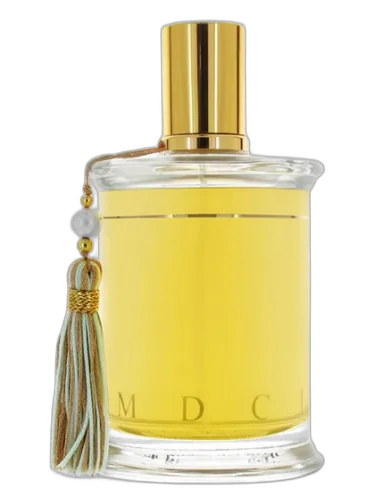
MDCI Parfums
Le Rivage Des Syrtes Mdci Parfums
Shared heart notes: tuberose

Mith
Love In The Air Mith
Shared top notes: aldehydes
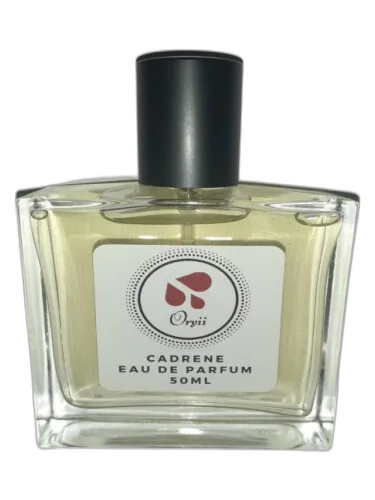
Oryii
Cadrene Oryii
Shared top notes: ginger
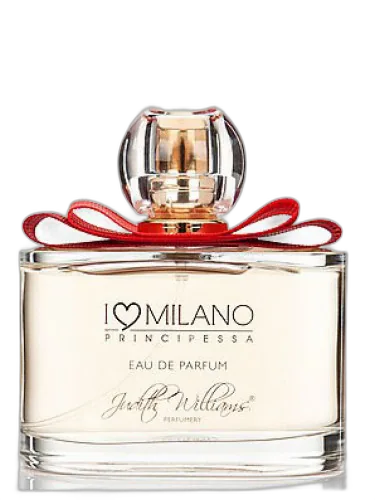
Judith Williams
I Love Milano Principessa Judith Williams
Shared heart notes: tuberose

Baruti
Oh My Deer! Baruti
Shared top notes: aldehydes