
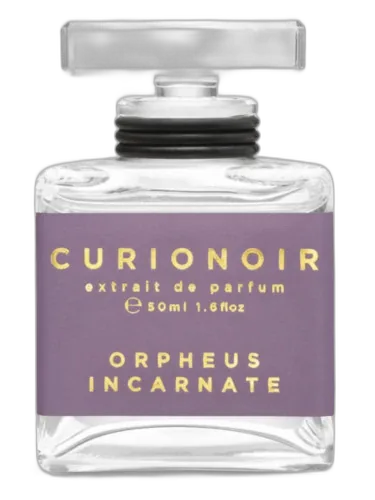

Orpheus Incarnate Curionoir
At a glance
Is Orpheus Incarnate Curionoir worth trying?
Orpheus Incarnate by Curionoir is a fragrance for women and men.
- Best match
- Evening wear in Fall
- Performance feel
- Very Good longevity with Strong sillage
- Signature profile
- powdery, floral, iris with Carnation, Orris Root, Musk
The first impression
Orpheus Incarnate by Curionoir is a fragrance for women and men. Orpheus Incarnate was launched in 2019.
What shapes the scent
The perfumer behind it

Unknown Perfumer
Notes pyramid
All Notes
Complete scent profile
 Carnation
 Orris Root
 Musk
Musk
 Fig
Fig
 White Tobacco
 Pimento Leaf
 Tonka Bean
 Heliotrope
 Licorice
The mood it creates
The Wanderer Archetype: Portrait of Orpheus Incarnate Curionoir
Essence
To wear Orpheus Incarnate is to embrace an olfactory paradox-smoke and spice, darkness and light, a fragrance that lingers like an unanswered question. The person who chooses this scent is not one to walk well-trodden paths; they are drawn instead to the liminal, the places where meaning flickers at the edges of perception. Their soul is restless, their mind a labyrinth-not of confusion, but of deliberate exploration.
The Seeker is the eternal wanderer, driven by an insatiable hunger for truth, beauty, and self-discovery. Like Orpheus descending into the underworld, they are willing to risk everything for a glimpse of something deeper, something beyond the mundane. Their journey is not one of conquest, but of revelation-each step forward is also a step inward.
Yet the Seeker is not without shadows. Their quest can become an evasion, a way to avoid settling into the ordinary rhythms of life. They may grow impatient with those who do not share their hunger, dismissing them as complacent. And when the answers they seek remain elusive, they may slip into disillusionment, mistaking the journey’s difficulty for futility.
Style & Aesthetic
Their tastes are as layered as their fragrance-dark, complex, with an undercurrent of warmth. They are drawn to art that unsettles as much as it enchants: the poetry of Rilke, the films of Tarkovsky, the music of Nick Cave. Their wardrobe leans toward the timeless rather than the trendy-structured leather jackets, well-worn boots, fabrics that carry the weight of experience.
They prefer dimly lit spaces where conversation can unfold without distraction-a quiet bar with aged whiskey, a library corner where the scent of old paper lingers. They do not decorate their home for others, but for themselves: shelves lined with philosophy and myth, a record player spinning vinyl that sounds richer with each listen.
They move through the world with quiet purpose, never fully at home in any one place. They may travel often, not for leisure, but for the sake of displacement-because they learn best when unmoored. Their work, if they have settled on one, is less a career than a calling-something that allows for both solitude and expression.
They are not reckless, but they are not cautious either. They take risks not for thrill, but because safety feels like stagnation. They drink deeply, think deeply, and sometimes disappear for days without explanation.
Philosophy & Values
They believe life is not meant to be merely endured, but interrogated. Their philosophy is one of relentless curiosity-not in the academic sense, but as a lived practice. They ask not just what things are, but why they are, and whether they must remain so.
Truth, to them, is not a fixed point but a shifting horizon. They value authenticity above all, though they know it is never fully attained-only approached. They despise dogma, yet they are not nihilists; they believe in meaning, but only the kind that is wrestled from the depths, not handed down.
Relationships
Their relationships are intense but often transient. They attract others with their depth, but few can match their pace. They do not suffer small talk gladly, and they grow restless in the company of those who mistake comfort for contentment.
Romantically, they are drawn to those who mirror their own complexity-partners who are not afraid of shadows, who understand that love, like truth, is not found in certainty but in the willingness to keep searching. Yet their idealism can become a barrier; they may discard connections too quickly, mistaking imperfection for inadequacy.
Shadow
The Seeker’s greatest strength is also their greatest peril. Their refusal to accept easy answers can become a refusal to accept any answers at all. They may grow so accustomed to the search that they forget to live in the present, always chasing the next revelation, the next layer of meaning.
Their independence can curdle into isolation. Their disdain for the superficial may harden into contempt. And if they are not careful, they may become like Orpheus in the end-always looking back, always losing what they love because they cannot bear to stop searching.
Yet even in their flaws, there is something noble. They would rather be lost than complacent. They would rather wander in darkness than pretend the light is where it is not. And perhaps, in time, they will learn that the journey and the arrival are not so different-that the truth they seek is not at the end of the path, but woven into every step.
If you like this, try these
Fragrances with a comparable profile - shared accords, notes, and character.
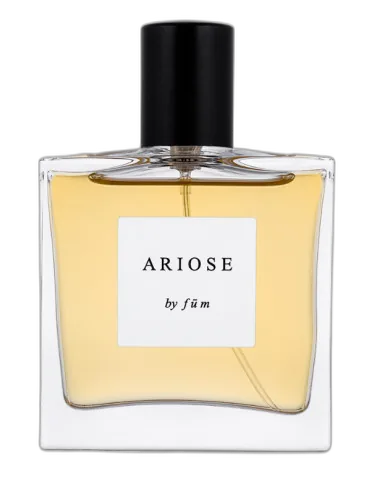
fūm
Ariose Fūm
Shared top notes: carnation, musk, orris root

Alkemia Perfumes
Shameless Alkemia Perfumes
Shared top notes: carnation, musk, orris root
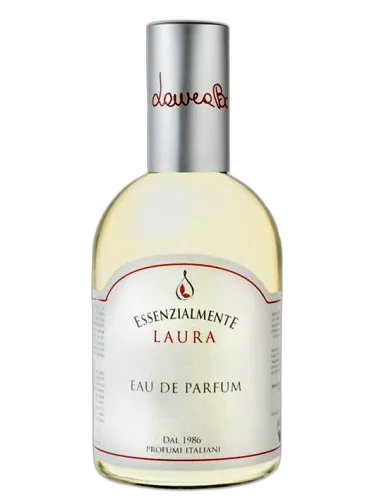
Essenzialmente Laura
Bellatrix Essenzialmente Laura
Shared top notes: musk, tonka bean
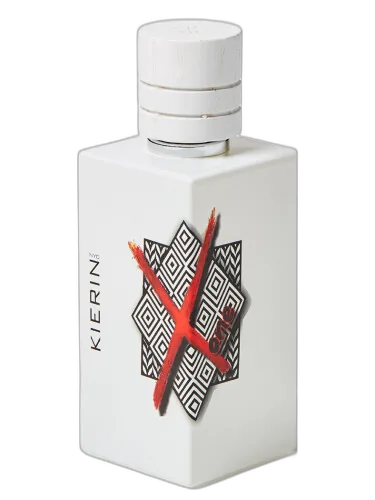
Kierin
Scentxone Kierin
Shared top notes: orris root
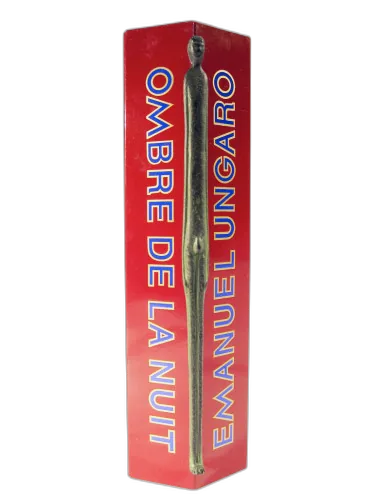
Emanuel Ungaro
Ombre De La Nuit Emanuel Ungaro
Shared top notes: carnation, musk, tonka bean