
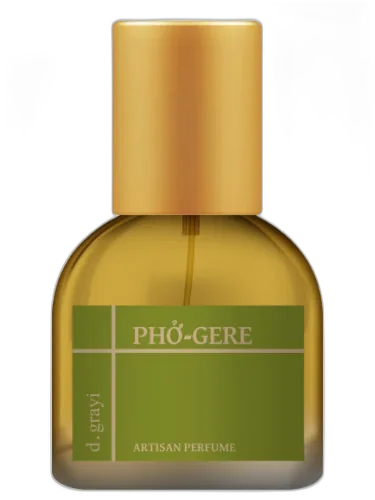
Phở-gere D.grayi
Fragrance Story
PHỞ-GERE by d.grayi is a Aromatic Fougere fragrance for women and men. This is a new fragrance. PHỞ-GERE was launched in 2024. The nose behind this fragrance is James Nguyen. Top notes are Herbal Notes, Basil and Soybean; middle notes are Spices, Star Anise and Cinammon; base notes are Civet and Vietnamese Oud.
Composition Profile
About the Perfumer

James Nguyen
James Nguyen is a perfumer associated with KST SCENT and d.grayi, creating fragrances that often reference cultural themes. His KST SCENT works include Gay Oppa, Pocha Bar, and Rice Cake, while for d.grayi he composed (super) Sexy Skunk and Alter Oud. Nguyen's scents are noted for their playful and distinctive character.
Fragrance Notes
Top Notes
First impression · 15-30 min
 Herbal Notes
 Basil
Basil
 Soybean
Heart Notes
Core character · 2-4 hours
Spices
 Star Anise
Cinammon
Star Anise
Cinammon
Base Notes
Lasting impression · 4+ hours
 Civet
Civet
 Vietnamese Oud
Phở-gere D.grayi by d.grayi offers a distinctive olfactory experience that stands out from other fragrances in its category.
Crafted with the finest ingredients and a blend of traditional and modern perfumery techniques, this fragrance represents the pinnacle of the perfumer's art.
Phở-gere D.grayi embodies the distinctive style of d.grayi while adding a unique chapter to their fragrance portfolio.
Character Profile
The Alchemist Archetype: Portrait of Phở-gere D.grayi
Essence
To wear Phở-gere D.grayi is to embrace contradiction-an olfactory paradox of smoky, animalic depth softened by the warmth of star anise and simmering broth. This is not a fragrance for those who seek simplicity; it is for the one who thrives in the liminal space between chaos and refinement, between the primal and the intellectual. Their soul is that of the Alchemist, the eternal seeker who transmutes the raw into the profound.
Shadow
Yet for all their brilliance, the Alchemist is not without flaw. Their obsession with depth can blind them to the beauty of simplicity. They may dismiss joy as frivolous, mistaking melancholy for wisdom. Their relentless self-examination can become self-absorption, and their disdain for convention may harden into contrarianism for its own sake.
Worse still, their alchemical pursuits can lead to self-destruction. Just as the historical alchemists poisoned themselves with mercury in search of gold, this person may court ruin in the name of transformation-burning bridges, indulging excess, mistaking suffering for enlightenment. Their greatest challenge is to temper their hunger for the profound with an acceptance of the mundane.
Conclusion
This person is drawn to the obscure, the layered, the things that demand interpretation. Their mind is a crucible where ideas, sensations, and memories are distilled into meaning. They are not content with surface pleasures-they crave the marrow of experience. Their tastes reflect this: they prefer films that unsettle, music that lingers like a half-remembered dream, books that refuse easy resolution.
Their style is an experiment in controlled dissonance. Perhaps they wear a tailored coat over a shirt that has known too many late nights, or a single piece of jewelry that carries personal mythos-a ring passed down, a pendant found in a flea market. They do not dress to impress but to provoke thought, even if only their own.
Philosophically, they reject dogma but are drawn to systems-alchemy, Jungian psychology, esoteric traditions-not as doctrines to follow, but as maps to be redrawn. They believe in transformation, in the possibility that the self is not fixed but a work in progress. Their values are fluid, yet anchored by a deep respect for authenticity. They despise pretense but are not immune to it-their greatest fear is becoming what they critique.
Similar Fragrances
Fragrances with a comparable profile - shared accords, notes, and character.
d.grayi
Phở-gere D.grayi
Shared accords: animalic, anis, aromatic
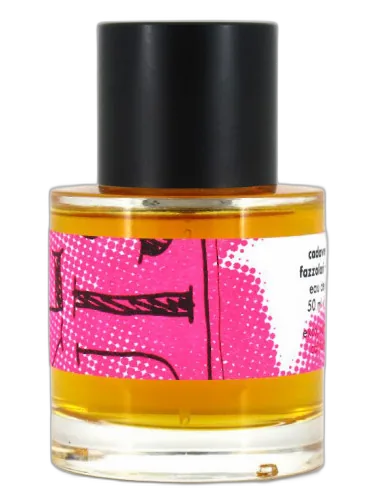
FZOTIC
Cadavre Exquis Fzotic
Shared accords: animalic, anis, musky

Frank Los Angeles
Frank No.1 Frank Los Angeles
Shared accords: aromatic, fresh spicy, green

Il Profumiere
Anice Galbano Il Profumiere
Shared accords: anis, aromatic, fresh spicy
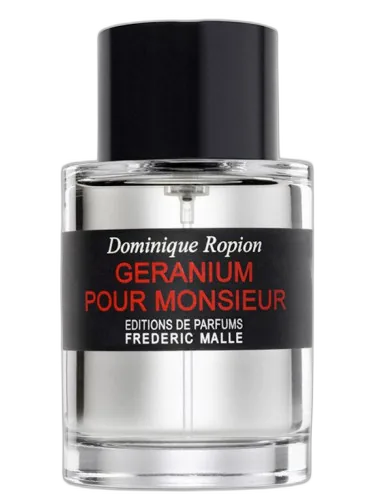
Frederic Malle
Geranium Pour Monsieur Frederic Malle
Shared accords: anis, aromatic, fresh spicy