


Hana Matsuri Di Ser
At a glance
Is Hana Matsuri Di Ser worth trying?
Hana Matsuri by DI SER is a fragrance for women and men.
- Best match
- Special Occasion wear in Spring
- Performance feel
- Good longevity with Moderate sillage
- Signature profile
- woody, earthy, floral with Pine Tree, Oakmoss, Yuzu
The first impression
Hana Matsuri by DI SER is a fragrance for women and men. Hana Matsuri was launched in 2021. The nose behind this fragrance is Yasuyuki Shinohara.
What shapes the scent
The perfumer behind it

Yasuyuki Shinohara
Yasuyuki Shinohara is a Japanese perfumer who has crafted numerous fragrances for the Di Ser brand. His extensive catalog includes Adameku, Akanesasu, Diana, Hana Matsuri, Hana No Oto, Hasunoito, Hikaru Daichi, and Hoshi Tsukiyo. Shinohara's work is characterized by natural, botanical ingredients and a deep connection to Japanese aesthetics.
Notes pyramid
All Notes
Complete scent profile
 Pine Tree
 Oakmoss
 Yuzu
Yuzu
 Violet Leaf
 Vetiver
 Japanese pepper
 Japanese Cherry Blossom
 Patchouli
 Agarwood (Oud)
 Magnolia
 Citruses
 Jasmine
The mood it creates
The Lover Archetype: Portrait of Hana Matsuri Di Ser
Essence
To wear Hana Matsuri Di Ser is to embrace an olfactory sonnet-delicate yet profound, floral yet earthy, fleeting yet eternal. The person who cherishes this fragrance is one who seeks beauty not as ornamentation, but as a vital force. They are drawn to the ephemeral, the transient, the moments that shimmer before dissolving into memory. Their soul resonates with the Lover archetype-an individual for whom passion, sensuality, and aesthetic devotion are not mere preferences, but the very fabric of existence.
They do not merely perceive the world; they feel it. The scent of cherry blossoms, the whisper of spring rain, the warmth of sunlit petals-these are not passive experiences but intimate dialogues. Their senses are heightened, their emotional landscape vast. They live in a state of perpetual wonder, where even the smallest detail can evoke rapture.
Style & Aesthetic
Their tastes are refined but never ostentatious. They prefer the understated elegance of handcrafted ceramics over mass-produced luxury, the quiet melancholy of a Chopin nocturne over bombastic symphonies. Their wardrobe is a study in subtlety-soft linens, muted tones, garments that move with the body rather than constrain it. They are not trend-driven; their style is an extension of their inner world, a carefully curated expression of harmony.
Philosophically, they are drawn to mono no aware-the Japanese concept of the pathos of things, the bittersweet awareness of impermanence. They do not fear transience; they revere it. Their values are rooted in authenticity, emotional richness, and the pursuit of meaning through beauty. They despise the vulgar, the crass, the hurried. For them, life must be felt, not merely endured.
Relationships
In love, they are both tender and demanding. They seek a connection that transcends the mundane-a bond that is poetic, almost sacred. Their relationships are marked by deep emotional investment, but also by a tendency to romanticize. They may fall in love with the idea of a person rather than the reality, leading to disillusionment when the fantasy fades.
Their friendships are few but profound. They do not engage in shallow social rituals; they crave conversations that linger into the night, shared silences that speak more than words. They are drawn to kindred spirits-those who, like them, find ecstasy in a sunset, a poem, or the scent of rain on warm stone.
Shadow
Yet, the Lover is not without their darkness. Their sensitivity, while a gift, can also be a curse. When reality fails to meet their ideals, they retreat-into nostalgia, into daydreams, into the refuge of art and beauty. They may struggle with melancholy, a quiet sorrow born from the knowledge that all things must fade.
Their pursuit of the sublime can sometimes border on escapism. They may avoid the grit of life, the necessary conflicts and compromises that come with existence. In their desire to preserve beauty, they risk becoming detached from the raw, unpolished truth of human experience.
Conclusion
To know them is to understand that they are not merely living, but communing-with the world, with others, with themselves. Their flaw is their strength: their refusal to accept a life devoid of wonder. In embracing the Lover archetype, they walk a path of both rapture and sorrow, forever chasing the sublime, forever aware that it will slip through their fingers-only to bloom again, like cherry blossoms in spring.
If you like this, try these
Fragrances with a comparable profile - shared accords, notes, and character.

Anna Zworykina Perfumes
Currant Mood Anna Zworykina Perfumes
Shared top notes: jasmine, oakmoss, vetiver

Victor
Silvestre Victor
Shared accords: aromatic, citrus, conifer

Motif Olfactif
Atelier Vêtu De Vert Motif Olfactif
Shared top notes: jasmine, oakmoss, patchouli
Le Ré Noir
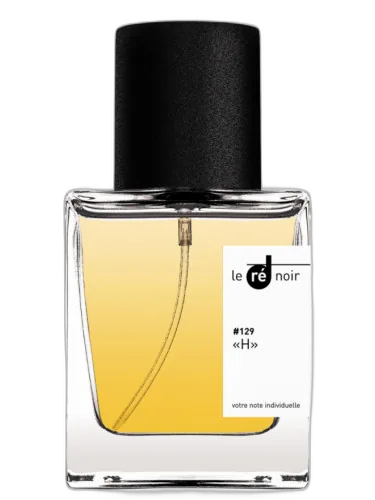
#129 «h» Le Ré Noir
Shared top notes: oakmoss, patchouli, vetiver

Vero Profumo
Mito Eau De Parfum Vero Profumo
Shared top notes: citruses, jasmine, magnolia