


Kagiroi Di Ser
At a glance
Is Kagiroi Di Ser worth trying?
Kagiroi by DI SER is a fragrance for women and men.
- Best match
- Evening wear in Fall
- Performance feel
- Good longevity with Moderate sillage
- Signature profile
- aromatic, woody, citrus with Shiso, Yuzu, Hinoki Wood
The first impression
Kagiroi by DI SER is a fragrance for women and men. Kagiroi was launched in 2020. The nose behind this fragrance is Yasuyuki Shinohara.
What shapes the scent
The perfumer behind it

Yasuyuki Shinohara
Yasuyuki Shinohara is a Japanese perfumer who has crafted numerous fragrances for the Di Ser brand. His extensive catalog includes Adameku, Akanesasu, Diana, Hana Matsuri, Hana No Oto, Hasunoito, Hikaru Daichi, and Hoshi Tsukiyo. Shinohara's work is characterized by natural, botanical ingredients and a deep connection to Japanese aesthetics.
Notes pyramid
All Notes
Complete scent profile
 Shiso
Shiso
 Yuzu
Yuzu
 Hinoki Wood
 Citruses
 Japanese pepper
 Vetiver
 Coriander
 Cypriol Oil or Nagarmotha
 Patchouli
 Palisander Rosewood
 Ylang-Ylang
The mood it creates
The Archetype Archetype: Portrait of Kagiroi Di Ser
Essence
To wear Kagiroi Di Ser is to embrace the ephemeral-the delicate balance between presence and absence, between the tangible and the fleeting. This fragrance, with its whispers of citrus, spice, and smoke, belongs to one who dwells in the liminal spaces of thought and sensation. They are neither entirely of this world nor entirely detached from it, but rather a seeker who moves through life with quiet intensity, always searching for meaning in the unseen.
The Sage is the archetype of wisdom, the one who seeks truth not through dogma but through deep inquiry. They are drawn to the subtle, the complex, the things that require patience to understand. Kagiroi Di Ser reflects this-its layers unfold slowly, revealing depth only to those who take the time to notice. The Sage does not shout their insights; they offer them like incense, filling the air with something intangible yet undeniable.
This person values knowledge, but not in the dry, academic sense. Their wisdom is intuitive, almost poetic. They are the kind who reads philosophy not to memorize arguments but to feel the weight of ideas, to let them reshape their perception. They are drawn to the works of thinkers like Nietzsche himself, who saw truth as something to be lived rather than merely understood.
Style & Aesthetic
Their tastes are refined but never ostentatious. They prefer the understated elegance of raw linen, unpolished wood, and muted earth tones-materials that age beautifully, gaining character rather than losing it. Their home is a sanctuary of quiet, filled with books, dried botanicals, and handmade ceramics. They might collect rare incense or vintage tea sets, not as trophies but as objects that carry history, that tell silent stories.
Music, for them, is something felt rather than merely heard. They gravitate toward compositions that linger in the mind long after the last note fades-ambient soundscapes, minimalist piano, or the deep resonance of a solitary cello. They do not seek entertainment; they seek resonance.
They rise early, not out of obligation but because dawn is when the world feels most alive to them. Their mornings are rituals-steeping tea, reading a few pages of something ancient, watching the light change. They move through the day deliberately, avoiding haste, treating time as something to be savored rather than spent.
Work, for them, must have meaning. They are not suited to mindless routine; they thrive in roles that allow them to explore, to question, to create. They might be a writer, a researcher, a perfumer, or a curator-any vocation that demands both intellect and intuition.
But their shadow lurks in perfectionism. They may become paralyzed by their own standards, endlessly refining, never finishing. They fear mediocrity more than failure, and this fear can keep them from ever truly sharing their gifts.
Philosophy & Values
They believe in the sanctity of the inner life. To them, the most profound revolutions happen in the mind, in the quiet moments of reflection. They distrust loud ideologies, preferring instead the slow, deliberate shaping of one’s own worldview. They are not dogmatic but deeply principled-their morality is not a set of rules but a way of seeing, an alignment with what feels true rather than what is convenient.
Yet this very independence can become a flaw. The Sage risks becoming too detached, too lost in thought. They may disdain the mundane, dismissing the practical concerns of daily life as beneath them. Their pursuit of depth can sometimes alienate them from those who live more simply, more viscerally.
Relationships
They do not have many friends, but the ones they keep are bound to them by unspoken understanding. Their relationships are built on mutual respect for solitude-they do not demand constant companionship, nor do they suffocate others with neediness. They are the confidant who listens without judgment, the one who offers insight without imposition.
Yet their shadow emerges here as well. Their love of solitude can harden into isolation. They may withdraw too far, convincing themselves that others cannot meet them at their depth. They might mistake loneliness for wisdom, forgetting that even the most profound thoughts must sometimes be spoken aloud to be real.
Shadow
The Sage’s greatest danger is the illusion of self-sufficiency. They may come to believe that wisdom is a solitary pursuit, that they alone can navigate the depths they seek. But even the most profound insights must be tested against the world, against other minds. Without this friction, their wisdom becomes sterile, a closed loop of thought that never touches life.
To wear Kagiroi Di Ser is to accept this tension-to love the ephemeral without losing oneself in it. The person who chooses this fragrance is one who walks the edge between knowing and being, between thought and action. Their challenge is not to abandon depth for the sake of the world, but to bring depth into the world, to let it breathe, to let it live.
If you like this, try these
Fragrances with a comparable profile - shared accords, notes, and character.

Motif Olfactif
Atelier Vêtu De Vert Motif Olfactif
Shared top notes: patchouli, vetiver, ylang-ylang

Frazer Parfum
Chapter Two Frazer Parfum
Shared top notes: vetiver, ylang-ylang

Pierre Guillaume Paris
Grand Siecle Intense 7.1 Pierre Guillaume Paris
Shared top notes: patchouli, vetiver

Elizabeth W
Vetiver Elizabeth W
Shared top notes: citruses, vetiver
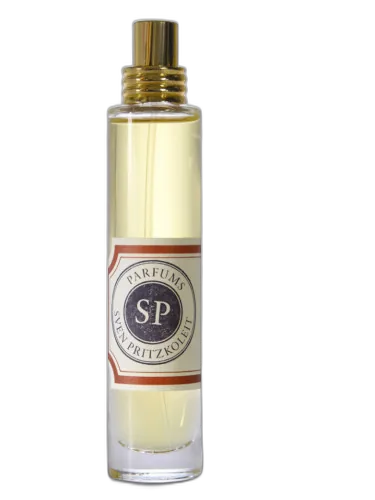
SP Parfums Sven Pritzkoleit
Liquorice Vetiver Sp Parfums Sven Pritzkoleit
Shared top notes: citruses, cypriol oil or nagarmotha, patchouli