


Divina Diana De Silva
At a glance
Is Divina Diana De Silva worth trying?
Divina by Diana de Silva is a Chypre Floral fragrance for women.
- Best match
- Evening wear in Fall
- Performance feel
- Very Good longevity with Moderate sillage
- Signature profile
- citrus, woody, white floral with Bergamot, Lemon, Mandarin Orange
The first impression
Divina by Diana de Silva is a Chypre Floral fragrance for women. Divina was launched in 1996. Top notes are Bergamot, Lemon, Mandarin Orange and Orange; middle notes are Lily-of-the-Valley, Rose, Violet, Black currant leaf, Ylang-Ylang, Jasmine and Tuberose; base notes are Oakmoss, Honey, Sandalwood, Patchouli and Cedar.
What shapes the scent
The perfumer behind it

Diana de Silva
Diana de Silva is a perfumer known for crafting elegant and timeless fragrances that evoke sophistication. Her work often blends rich florals with warm, sensual undertones, creating a harmonious balance. Divina Diana De Silva showcases her ability to design luxurious scents that resonate with modern sensibilities. Her compositions reflect a dedication to artistry and refinement.
Notes pyramid
Top Notes
First impression · 15-30 min
 Bergamot
 Lemon
Lemon
 Mandarin Orange
 Orange
Heart Notes
Core character · 2-4 hours
 Lily-of-the-Valley
 Rose
Rose
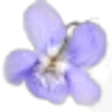 Violet
 Black currant leaf
 Ylang-Ylang
 Jasmine
 Tuberose
Base Notes
Lasting impression · 4+ hours
 Oakmoss
 Honey
Honey
 Sandalwood
 Patchouli
 Cedar
Cedar
The mood it creates
The Lover Archetype: Portrait of Divina Diana De Silva
Essence
To wear Divina Diana De Silva is to embrace an essence of allure, mystery, and refined sensuality. This fragrance-opulent yet delicate, floral yet subtly animalic-speaks to a soul who dwells in the realm of beauty, passion, and deep emotional currents. The archetype that most defines this person is The Lover, not in the trivial sense of romantic conquest, but in the Jungian sense-one who seeks unity, ecstasy, and the sublime in all aspects of existence.
This is a person for whom life is an aesthetic experience. They move through the world with an innate awareness of its textures, scents, and hidden harmonies. Their senses are finely tuned-they notice the way light catches the edge of a wine glass, the whisper of silk against skin, the fleeting sweetness of a ripe fig. They are not merely observers but participants in beauty, shaping their surroundings into something poetic.
Their philosophy is one of intensity tempered by refinement. They reject the vulgar and the crude, seeking instead the elegance that lies beneath the surface. They believe in the transformative power of love-not just romantic love, but love of art, of nature, of the divine spark in all things. Yet they are not naive; they understand that beauty often walks hand in hand with melancholy, that passion carries the risk of pain.
Style & Aesthetic
Their aesthetic is baroque minimalism-rich textures, deep colors, and intricate details balanced by clean lines and restraint. They might favor a tailored coat with an unexpected brooch, a silk blouse paired with structured trousers, or a single bold accessory that speaks volumes. Their home is a sanctuary of curated objects: an antique mirror, a well-worn leather-bound book, a single orchid in a black vase.
In art, they are drawn to the symbolists and the decadents-Klimt’s gold-leafed lovers, Baudelaire’s flowers of evil, the haunting melodies of Debussy. They appreciate the interplay of light and shadow, the tension between purity and corruption. Their taste in literature leans toward the poetic and the psychological-Rilke, Pessoa, perhaps even Nietzsche himself in his more lyrical moments.
Relationships
They are magnetic but selective, drawing others in with their quiet intensity. Their relationships are deep rather than numerous, built on mutual appreciation for the unspoken and the profound. They do not suffer fools gladly, but for those who earn their trust, they are fiercely loyal.
Romantically, they are both the seducer and the seduced. They crave connection that transcends the physical, seeking a partner who understands the language of glances, silences, and the spaces between words. Yet their shadow lurks here-they may idealize love to the point of disillusionment, or grow restless when the initial intensity fades. Their challenge is to embrace imperfection without losing their sense of wonder.
Shadow
Every archetype has its dark counterpart. For The Lover, the shadow manifests as hedonism, vanity, or emotional dependency. They may become lost in the pursuit of pleasure, mistaking sensation for meaning. At times, they may grow overly attached to their own image, valuing aesthetics over authenticity.
There is also the danger of melancholic withdrawal-when the world fails to meet their ideals, they may retreat into fantasy, becoming distant or even cynical. Their greatest test is to reconcile their longing for the sublime with the messy, imperfect reality of human existence.
Conclusion
When balanced, this person is a conduit of beauty and depth, reminding others of the richness hidden in everyday moments. They teach that love is not merely an emotion but a way of being-an openness to the world’s textures, its fleeting joys, and its inevitable sorrows.
They are not without flaws, but their flaws are the price of their intensity. To know them is to glimpse the world through a lens of heightened perception-where every scent, every glance, every touch carries the weight of something eternal.
If you like this, try these
Fragrances with a comparable profile - shared accords, notes, and character.

Natura
Frescor De Castanha Natura
Shared top notes: bergamot, lemon, mandarin orange

Acqua Reale
Gardenia Royal Acqua Reale
Shared top notes: bergamot, lemon, mandarin orange
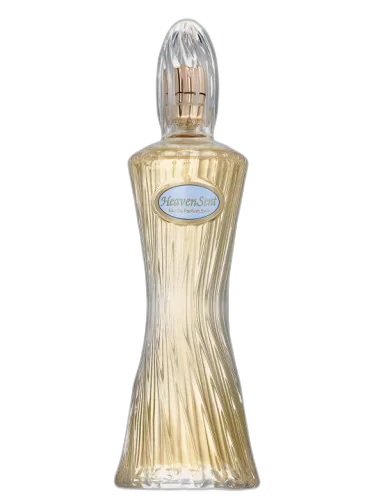
Dana
Heaven Sent Dana
Shared top notes: bergamot, mandarin orange

Mahogany
Make Me Fever Rose Mahogany
Shared top notes: bergamot, mandarin orange
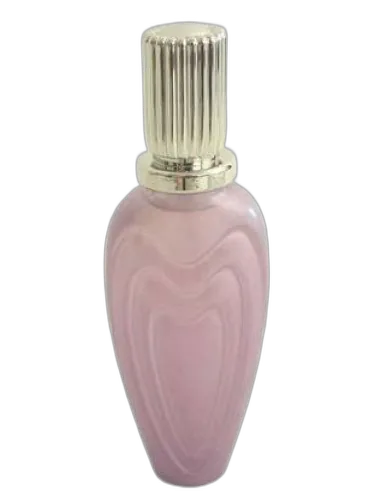
Escada
Escada Loving Bouquet Escada
Shared top notes: bergamot, lemon, mandarin orange