


Wildly Attractive Diana Vreeland
At a glance
Is Wildly Attractive Diana Vreeland worth trying?
Wildly Attractive by Diana Vreeland is a Oriental Floral fragrance for women.
- Best match
- Evening, Special Occasion wear in Spring
- Performance feel
- Good longevity with Moderate sillage
- Signature profile
- citrus, white floral, green with Petitgrain, Mandarin Orange, Orange Blossom
The first impression
Wildly Attractive by Diana Vreeland is a Oriental Floral fragrance for women. Wildly Attractive was launched in 2017. The nose behind this fragrance is Carlos Benaïm. Top notes are Petitgrain, Mandarin Orange and Orange Blossom; middle notes are Neroli and Jasmine Sambac; base notes are Musk and Agarwood (Oud).
What shapes the scent
The perfumer behind it

Carlos Benaïm
Carlos Benaïm is a perfumer with a diverse portfolio spanning A Lab on Fire, Alfred Dunhill, and Aramis. He created Liquidnight for A Lab on Fire and Century for Alfred Dunhill. His work also includes Quorum for Antonio Puig and Havana Pour Elle for Aramis.
Notes pyramid
Top Notes
First impression · 15-30 min
 Petitgrain
 Mandarin Orange
 Orange Blossom
Heart Notes
Core character · 2-4 hours
 Neroli
Jasmine Sambac
Neroli
Jasmine Sambac
Base Notes
Lasting impression · 4+ hours
 Musk
Musk
 Agarwood (Oud)
The mood it creates
The Diana Vreeland Devotee Archetype: Portrait of Wildly Attractive Diana Vreeland
Essence
The one who wears Wildly Attractive Diana Vreeland is ruled by the Enchantress archetype-a figure of magnetic charisma, theatricality, and seduction. Like the perfume itself, which blends bold florals with dark, animalic depth, this individual thrives on intensity, allure, and the power of transformation. The Enchantress does not merely exist in the world; she reshapes it through sheer presence.
Jung saw the Enchantress as a facet of the Anima, the feminine principle of allure and mystery. But where the Anima can be passive, the Enchantress is deliberate-she knows her power and wields it with precision. She is not content to be admired from afar; she demands engagement, provocation, even obsession.
Shadow
Yet the Enchantress has her demons. Her need for admiration can slip into narcissism; her love of drama, into manipulation. She may mistake attention for love, spectacle for substance. In darker moments, she fears being unseen-without an audience, who is she?
Her greatest flaw is her refusal of stillness. She avoids introspection, fearing that if she stops moving, the spell will break. Vulnerability is a threat; she would rather be dazzling than known. This can leave her isolated, surrounded by admirers but devoid of true intimacy.
Conclusion
Her tastes are extravagant but never vulgar. She prefers the dramatic-vintage Dior, Schiaparelli’s surrealism, the unapologetic glamour of old Hollywood. Her home is a curated stage: velvet drapes, gilded mirrors, a single black orchid in a Murano vase. She reads Colette and Mishima, listens to Maria Callas and Bowie, collects antique perfume bottles like sacred relics.
Philosophically, she rejects the mundane. To her, life is a grand performance, and authenticity is not about stripping away artifice but embracing it fully. "One must be interesting," she might say, echoing Diana Vreeland herself. She values passion over prudence, experience over safety, and would rather be unforgettable than universally liked.
In relationships, she is both captivating and demanding. She draws people in effortlessly, but few can match her intensity for long. Lovers are either elevated by her presence or consumed by it. Friendships are deep but conditional-she has little patience for timidity or banality.
If you like this, try these
Fragrances with a comparable profile - shared accords, notes, and character.
Guerlain
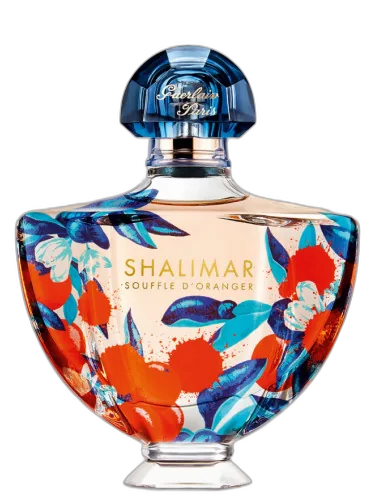
Shalimar Souffle D'oranger Guerlain
Shared top notes: mandarin orange, petitgrain
Jo Loves
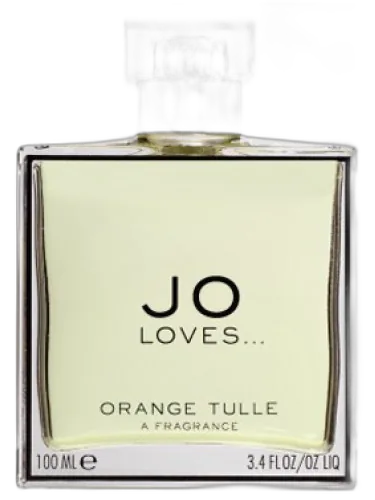
Orange Tulle Jo Loves
Shared top notes: mandarin orange, orange blossom
Atelier Oblique
White Light Atelier Oblique
Shared top notes: mandarin orange, petitgrain
Miller Harris
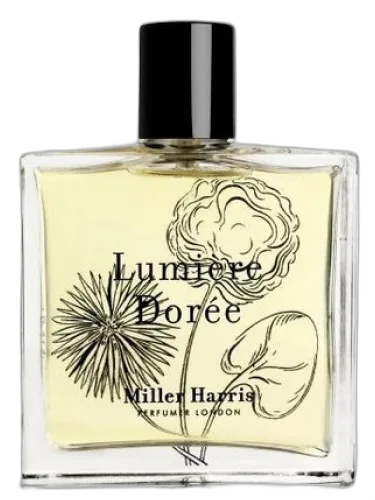
Lumière Dorée Miller Harris
Shared top notes: petitgrain
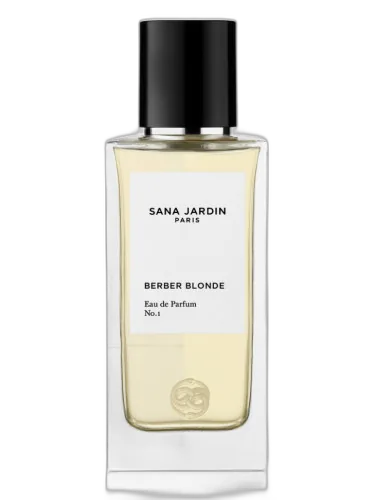
Sana Jardin
Berber Blonde Sana Jardin
Shared top notes: petitgrain