
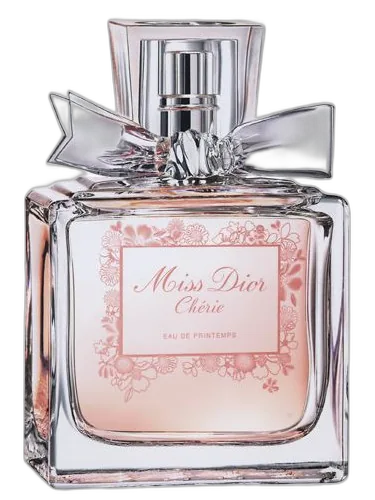

Miss Dior Cherie Eau De Printemps Dior
At a glance
Is Miss Dior Cherie Eau De Printemps Dior worth trying?
Miss Dior Cherie Eau de Printemps by Dior is a Chypre Floral fragrance for women.
- Best match
- Casual, Office wear in Spring, Summer
- Performance feel
- Moderate longevity with Moderate sillage
- Signature profile
- citrus, white floral, rose with Blood Orange, Bergamot, Rose
The first impression
Miss Dior Cherie Eau de Printemps by Dior is a Chypre Floral fragrance for women. Miss Dior Cherie Eau de Printemps was launched in 2008. The nose behind this fragrance is François Demachy. Top notes are Blood Orange and Bergamot; middle notes are Rose, Jasmine and Neroli; base note is Patchouli.
What shapes the scent
The perfumer behind it

François Demachy
François Demachy is a renowned French perfumer best known for his long tenure as the in-house perfumer for Dior, but he has also created extensively for Acqua di Parma. His work for Acqua di Parma includes the Blu Mediterraneo line, such as Arancia La Spugnatura and Mirto Di Panarea, as well as luxury leather and oud compositions. Demachy's style is characterized by classic elegance, natural ingredients, and a mastery of Mediterranean and woody accords.
Notes pyramid
Top Notes
First impression · 15-30 min
 Blood Orange
 Bergamot
Heart Notes
Core character · 2-4 hours
 Rose
Rose
 Jasmine
 Neroli
Base Notes
Lasting impression · 4+ hours
 Patchouli
The mood it creates
The Lover Archetype: Portrait of Miss Dior Cherie Eau De Printemps Dior
Essence
Miss Dior Chérie Eau de Printemps is a scent of delicate contrasts-fresh yet sweet, light yet lingering, playful yet refined. It carries the optimism of spring, the flirtation of youth, and the quiet confidence of a woman who knows her own charm. Strawberry leaves, green mandarin, and powdery florals create an aura of effortless femininity, suggesting a spirit that thrives on beauty, connection, and the pleasures of the senses.
The woman who chooses this fragrance is not merely drawn to its elegance; she embodies its philosophy. She is, at her core, a Lover-one of Jung’s fundamental archetypes, defined by passion, aestheticism, and a deep desire for intimacy in all forms.
Philosophy & Values
Her guiding principle is connection-to people, to nature, to the sublime. She believes in the transformative power of love, not just in the romantic sense, but as a force that shapes relationships, creativity, and self-discovery. She is not naive; she understands heartbreak, but she refuses to let it harden her. Instead, she sees vulnerability as strength, tenderness as courage.
Yet, this idealism has its shadow. She can become so absorbed in the pursuit of harmony that she avoids conflict, smoothing over disagreements rather than facing them. She may mistake aesthetic perfection for emotional fulfillment, believing that if something looks right, it is right. At times, she risks losing herself in the roles she plays-the enchanting hostess, the devoted friend, the muse-forgetting who she is when no one is watching.
Relationships
She is magnetic in social settings, not because she dominates conversation, but because she makes others feel seen. Her laughter is genuine, her listening attentive. Romantic partners are drawn to her warmth, her ability to make ordinary moments feel enchanted. Yet, she is selective-she does not give her heart lightly, for she knows its depth.
Her flaw here is her fear of abandonment. The Lover, when wounded, may cling too tightly or idealize partners beyond reason. She may mistake intensity for love, confusing drama for passion. If she is not careful, she can lose herself in another’s desires, molding herself to fit their expectations rather than asserting her own needs.
Shadow
Beneath her grace lies a quiet struggle-the fear of being ordinary. She dreads the thought of fading into the background, of love turning stale, of beauty becoming routine. This anxiety can drive her to seek constant validation, to measure her worth by the admiration she receives. In darker moments, she may indulge in vanity or manipulation, using charm as a shield against true vulnerability.
Yet, her redemption lies in self-awareness. When she learns that love does not require performance-that she is worthy even when unseen-she transcends the shadow. She discovers that the deepest beauty is not in being adored, but in loving without condition.
Conclusion
Her life is a carefully curated experience, not out of vanity, but because she believes beauty is a language. She surrounds herself with soft textures, pastel hues, and objects that evoke nostalgia-vintage teacups, pressed flowers in books, handwritten letters tucked away in drawers. Her style is romantic but never saccharine; she favors flowing silhouettes, delicate jewelry, and fabrics that move with her. There is an air of effortlessness, though she knows the power of presentation.
She is drawn to art that stirs emotion-Impressionist paintings, Chopin nocturnes, poetry that lingers on the tongue. She does not merely consume beauty; she seeks to create it, whether through arranging flowers, setting an exquisite table, or crafting moments of intimacy for those she loves.
If you like this, try these
Fragrances with a comparable profile - shared accords, notes, and character.
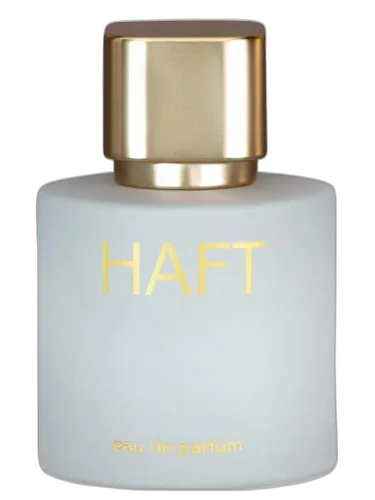
Mavemade
Haft Mavemade
Shared top notes: bergamot
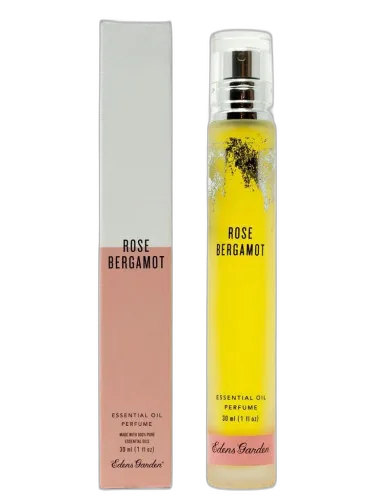
Edens Garden
Rose Bergamot Edens Garden
Shared top notes: bergamot
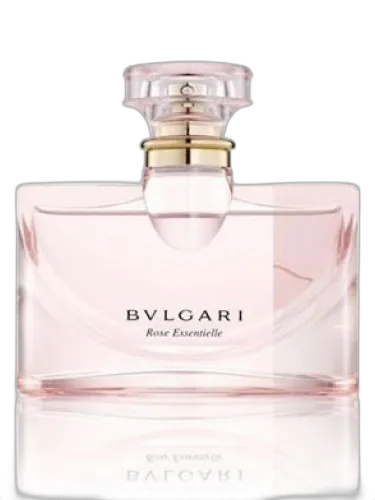
Bvlgari
Bvlgari Rose Essentielle Eau De Toilette Rosee Bvlgari
Shared top notes: bergamot
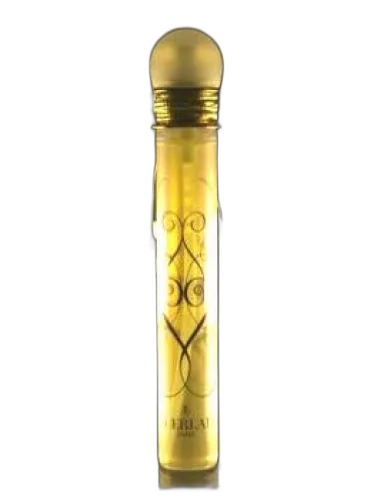
Guerlain
Philtre D'amour Guerlain
Shared top notes: bergamot
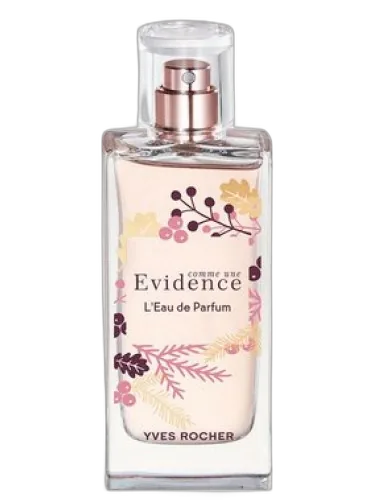
Yves Rocher
Comme Une Evidence Limited Edition 2019 Yves Rocher
Shared top notes: bergamot