
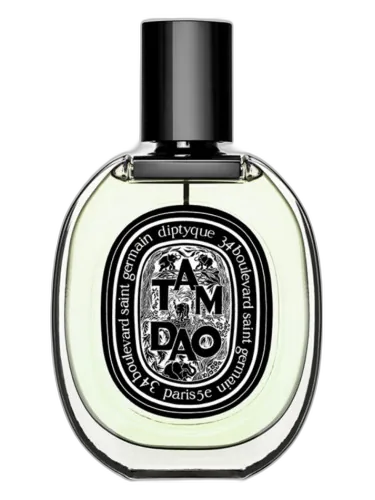

Tam Dao Eau De Parfum Diptyque
At a glance
Is Tam Dao Eau De Parfum Diptyque worth trying?
Tam Dao Eau de Parfum by Diptyque is a Woody fragrance for women and men.
- Best match
- Casual wear in Fall
- Performance feel
- Good longevity with Moderate sillage
- Signature profile
- woody, powdery, warm spicy with Sandalwood, Cedar, Amberwood
The first impression
Tam Dao Eau de Parfum by Diptyque is a Woody fragrance for women and men. Tam Dao Eau de Parfum was launched in 2013. The nose behind this fragrance is Daniel Moliere.
What shapes the scent
The perfumer behind it

Daniel Moliere
Daniel Moliere is a perfumer who created fragrances for major houses including Cartier's Santos De Cartier, Diptyque's Jardin Clos and Tam Dao Eau De Parfum, and Givenchy's Fleur D'interdit and Insense. He also worked on Chupa Chups' I Love Me Night Fever, Comptoir Sud Pacifique's Eau De Naphe, and Guy Laroche's Clandestine. His portfolio spans diverse styles from fresh to woody.
Notes pyramid
All Notes
Complete scent profile
 Sandalwood
 Cedar
Cedar
 Amberwood
 Coriander
 Musk
Musk
 Ginger
 Lime
Lime
 Vanilla
The mood it creates
The Sage Archetype: Portrait of Tam Dao Eau De Parfum Diptyque
Essence
The person who cherishes Tam Dao Eau de Parfum is most closely aligned with the Sage-a seeker of wisdom, drawn to the quiet depths of contemplation. The fragrance itself, with its meditative blend of sandalwood, cypress, and amber, evokes the stillness of an ancient temple or a mist-laden forest. This is not a scent for the restless or the performative; it is for those who find solace in the profound and the enduring. The Sage does not chase trends but seeks truth, and this person wears Tam Dao as an olfactory affirmation of their inner world.
Style & Aesthetic
Their aesthetic is one of quiet refinement-unfussy, timeless, with an undercurrent of warmth. They favor natural textures: linen, wool, aged leather. Their wardrobe is a neutral palette, not out of minimalism for its own sake, but because they see no need to shout. Their home, too, is a sanctuary-sparsely decorated but rich in meaning, filled with well-worn books, handmade ceramics, and perhaps a single incense burner.
They appreciate craftsmanship, not as a status symbol but as a testament to human patience and skill. They might collect fountain pens, rare editions of philosophy texts, or hand-carved wooden objects-things that bear the imprint of time and care.
Their days are structured but not rigid. They rise early, savoring the quiet hours with tea and a book. They may practice meditation or yoga, not as a trend but as a means of grounding. They enjoy travel, but not for spectacle-they seek places where history lingers, where the air itself feels heavy with stories.
Work, for them, must have meaning. They are drawn to professions that allow for deep focus-writing, academia, woodworking, or conservation. They are not motivated by wealth but by the freedom to think and create without interruption.
Philosophy & Values
Their philosophy is one of measured introspection. They believe in the slow accumulation of wisdom rather than the impulsive grasp for experience. Life, to them, is a text to be read deeply, not skimmed. They value authenticity above all-both in themselves and others-and have little patience for superficiality. Their moral compass is internal, shaped by reflection rather than dogma.
Yet, this inward focus can sometimes isolate them. They may mistake solitude for superiority, quietly dismissing those who do not share their depth. Their pursuit of wisdom can become a form of quiet elitism, an unspoken belief that they alone see the world clearly.
Relationships
They are not gregarious, but neither are they hermits. Their friendships are few but deep, built on mutual respect and intellectual exchange. They prefer one long conversation over a night of scattered small talk. In love, they seek a partner who understands their need for solitude, someone who does not mistake silence for indifference.
Yet, their reluctance to engage in trivialities can make them seem aloof. They may unintentionally hurt others by withdrawing too soon, assuming that depth is always preferable to lightness. Their shadow is a kind of intellectual pride-an assumption that their way of seeing the world is inherently superior.
Shadow
The Sage’s greatest flaw is their potential for detachment. In their quest for wisdom, they may forget that life is also meant to be lived, not just analyzed. Their introspection can curdle into self-absorption, their love of silence into a disdain for those who speak freely. They must guard against the belief that depth is the only virtue-that joy is somehow lesser because it is not examined.
Conclusion
Tam Dao is the scent of a mind at peace with its own depths. The person who wears it is not seeking to be understood by the many, but to understand themselves fully. They walk through life with the quiet confidence of one who knows that some truths are found only in stillness. Yet, they must remember that wisdom without warmth is merely knowledge-and the greatest sages are those who can step out of the forest, now and then, to share what they have learned.
If you like this, try these
Fragrances with a comparable profile - shared accords, notes, and character.

NEYDO
Wood Haze 01.11 Neydo
Shared top notes: coriander

Montale
Greyland Montale
Shared top notes: cedar, ginger, musk
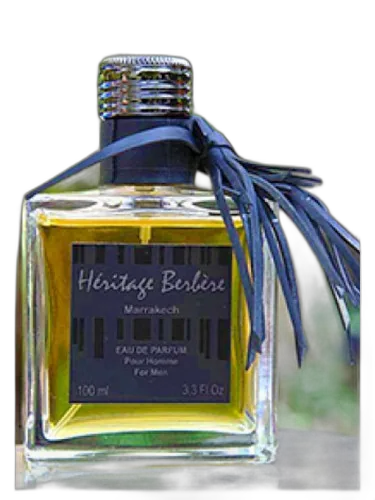
Héritage Berbère
Hb Homme 07 Héritage Berbère
Shared top notes: cedar, coriander, sandalwood

FL Parfums
Peau D'un Homme Fl Parfums
Shared top notes: cedar, sandalwood
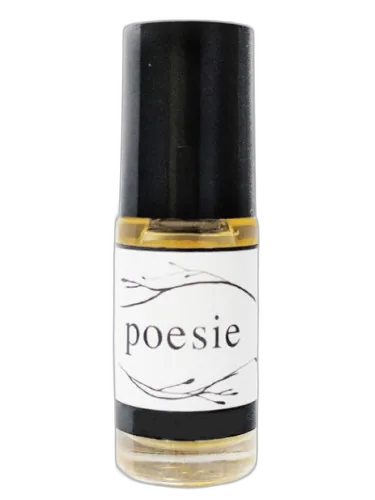
Poesie
Marlowe Poesie
Shared top notes: coriander, musk, sandalwood