


Willow Divona
At a glance
Is Willow Divona worth trying?
Willow by Divona is a Floral Woody Musk fragrance for women.
- Best match
- Casual wear in Spring
- Performance feel
- Good longevity with Moderate sillage
- Signature profile
- citrus, woody, ozonic with Frosted Berries, Ozonic notes, Grapefruit
The first impression
Willow by Divona is a Floral Woody Musk fragrance for women. Willow was launched in 2017. Top notes are Frosted Berries, Ozonic notes, Grapefruit, Green Notes and Bergamot; middle notes are Orchid and Tuberose; base notes are Vanilla, Sandalwood and Palisander Rosewood.
What shapes the scent
The perfumer behind it

Unknown Perfumer
Notes pyramid
Top Notes
First impression · 15-30 min
 Frosted Berries
Ozonic notes
Frosted Berries
Ozonic notes
 Grapefruit
 Green Notes
 Bergamot
Heart Notes
Core character · 2-4 hours
 Orchid
 Tuberose
Base Notes
Lasting impression · 4+ hours
 Vanilla
 Sandalwood
 Palisander Rosewood
The mood it creates
The Sage Archetype: Portrait of Willow Divona
Essence
The person who gravitates toward Willow Divona is, at their core, a Sage-a seeker of wisdom, a quiet observer, and a subtle influencer. This fragrance, with its delicate balance of green freshness and woody depth, mirrors their inner world: contemplative, refined, and attuned to the unseen currents of life. They are not the loudest voice in the room, but their presence lingers, like the scent itself-soft yet impossible to ignore.
They embody the Jungian archetype of the Wise Old Man/Woman, though not in the literal sense of age. Rather, they carry an old soul’s temperament, a knowingness that transcends experience. Their wisdom is intuitive, their insights often arriving before logic can justify them. They are drawn to the interplay of light and shadow, both in the world and within themselves.
Style & Aesthetic
Their style is understated elegance-natural fabrics, muted tones, pieces that suggest rather than declare. They prefer craftsmanship over trends, choosing objects that age gracefully, like well-worn leather or untreated wood. Their home is a sanctuary of curated simplicity: books arranged not by color but by thought, a single striking painting rather than cluttered walls, a vase of wild branches instead of ostentatious flowers.
In music, they favor melodies that breathe-ambient soundscapes, classical minimalism, or the raw intimacy of folk. Their taste in literature leans toward the introspective: Borges, Woolf, Pessoa-writers who explore the labyrinths of consciousness.
Their days are structured yet flexible, a balance between discipline and spontaneity. They rise early, not out of obligation but because dawn is when the world feels most alive to them. They may practice meditation, journaling, or long walks-rituals that ground them in the present.
Work is meaningful to them only if it aligns with their values. They might be drawn to teaching, writing, therapy, or environmental work-fields where insight and patience are rewarded. They are not ambitious in the conventional sense; they measure success by depth of impact, not breadth of recognition.
Philosophy & Values
For them, life is a text to be deciphered, not a race to be won. They value depth over speed, meaning over spectacle. Their philosophy is one of quiet resistance-against the noise of modern life, against the tyranny of superficiality. They believe in the power of subtlety, in the idea that truth often whispers rather than shouts.
They are not dogmatic but skeptical in the best sense-questioning assumptions, probing beneath appearances. Their morality is fluid, shaped by empathy rather than rigid rules. They abhor cruelty but understand complexity; they forgive human frailty but despise willful ignorance.
Relationships
They are selective in connection, valuing a few profound bonds over many shallow ones. Their friendships are built on mutual understanding, not obligation. They listen more than they speak, but when they do speak, their words carry weight.
Romantically, they seek a partner who respects their need for solitude, someone who understands that love is not possession but shared silence as much as shared laughter. They are slow to trust but fiercely loyal once they do. Their love is not possessive; it is a quiet fire, warming without burning.
Shadow
Yet, like all archetypes, the Sage has its shadow. Their greatest strength-detachment-can become a weakness. At times, they retreat too far into their own mind, becoming isolated, even melancholic. Their skepticism, if unchecked, can sour into cynicism, a belief that nothing truly changes.
They may struggle with indecision, endlessly weighing options without acting. Their love of subtlety can make them passive in conflict, avoiding confrontation until resentment festers. And their self-sufficiency, while admirable, can become a barrier-pride disguised as independence, keeping others at arm’s length.
The true mark of their evolution is learning when to step out of contemplation and into engagement. Wisdom, they must remember, is not just to be hoarded but shared. Their challenge is to trust the world as much as they trust their own mind-to let their insights breathe in the open air, even if they risk being misunderstood.
When they succeed, they become guides without pretension, offering clarity without dogma. Their presence, like their favored fragrance, is a quiet reminder that depth exists, that not all truths need to be loud to be heard.
In the end, the lover of Willow Divona is neither entirely of this world nor apart from it. They walk the line between observer and participant, their life a testament to the idea that the most profound revolutions begin in silence.
If you like this, try these
Fragrances with a comparable profile - shared accords, notes, and character.

Leonard
L'orchidée Leonard
Shared top notes: bergamot

Clash
Beautiful Lies Clash
Shared top notes: bergamot, grapefruit
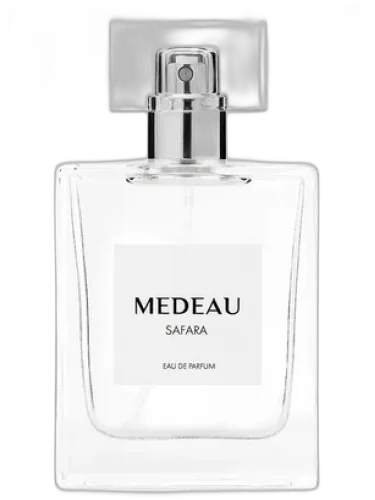
Medeau
Safara Medeau
Shared top notes: bergamot, grapefruit

Mahogany
Flor De Jade Mahogany
Shared top notes: bergamot

Byblos
Miss Byblos Special Edition Byblos
Shared heart notes: orchid, tuberose