


You Kill Me With Silence Ds&durga
At a glance
Is You Kill Me With Silence Ds&durga worth trying?
You Kill Me With Silence by DS&Durga is a Oriental Woody fragrance for women and men.
- Best match
- Evening wear in Fall
- Performance feel
- Good longevity with Moderate sillage
- Signature profile
- smoky, woody, fresh with Incense, Smoke, Woody Notes
The first impression
You Kill Me With Silence by DS&Durga is a Oriental Woody fragrance for women and men. You Kill Me With Silence was launched in 2018. The nose behind this fragrance is David Seth Moltz.
What shapes the scent
The perfumer behind it

David Seth Moltz
David Seth Moltz is the co-founder and perfumer of D.S. & Durga, a brand known for its conceptual and evocative scents. His catalog includes King Majesty Bergamot Chypre, Wipeout!, and historical-inspired pieces like 1538 Rheims and Amber Kiso. Moltz’s work often blends natural and synthetic materials to create immersive olfactory narratives.
Notes pyramid
All Notes
Complete scent profile
 Incense
 Smoke
Smoke
 Woody Notes
 Citruses
 Ice
Ice
The mood it creates
The One Who Wears You Kill Me Archetype: Portrait of You Kill Me With Silence Ds&durga
Essence
This person is most closely aligned with the Sage-the seeker of truth, the watcher, the one who understands before speaking. The Sage thrives in silence, not out of timidity, but because they know words often obscure more than they reveal. You Kill Me With Silence is their armor and their confession: a scent of dark woods, cold incense, and a quiet, almost eerie stillness. It is not a fragrance that begs for attention; it is one that commands it through absence.
The Sage does not rush into the world; they study it. They are drawn to the hidden, the enigmatic, the things that others overlook. Their silence is not emptiness-it is depth.
Shadow
Yet their strength is also their weakness. Their detachment can harden into coldness. They observe so much that they sometimes forget to participate. Their skepticism, while sharp, can curdle into cynicism, making them dismissive of those who operate on emotion rather than logic.
Their silence, which once felt like power, can become a barrier. They may withdraw too far, mistaking isolation for independence. The very clarity they pride themselves on can blind them to the messy, irrational beauty of human connection.
Conclusion
Their tastes are deliberate, refined, but never ostentatious. They prefer the weight of a well-bound book to the chatter of a crowded room. Their home is a sanctuary of minimalism-dark wood, clean lines, a single candle burning low. They do not decorate for others; they curate for themselves.
Philosophy is not an abstract interest for them-it is a way of navigating existence. They are drawn to thinkers like Nietzsche, Camus, or Pessoa, who dissect life with a surgeon’s precision. They do not believe in easy answers, only better questions. Their values are rooted in authenticity, but they are wary of those who claim to possess it too loudly.
In relationships, they are selective. They do not suffer fools, nor do they tolerate those who mistake noise for substance. Their love is quiet but intense-a slow burn rather than a wildfire. They do not give themselves easily, but when they do, it is with a depth that few can match.
If you like this, try these
Fragrances with a comparable profile - shared accords, notes, and character.
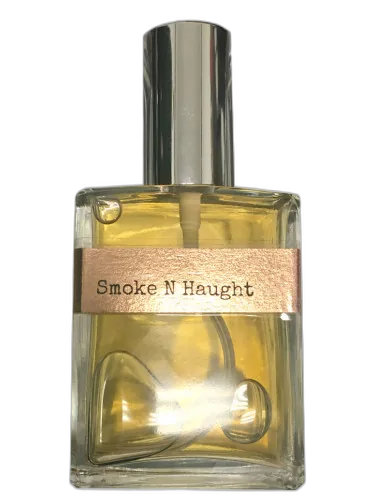
Haught Parfums
Smoke N Haught Haught Parfums
Shared top notes: incense, smoke, woody notes

A Wing & A Prayer Perfumes
Ginger Spice A Wing & A Prayer Perfumes
Shared top notes: citruses, woody notes
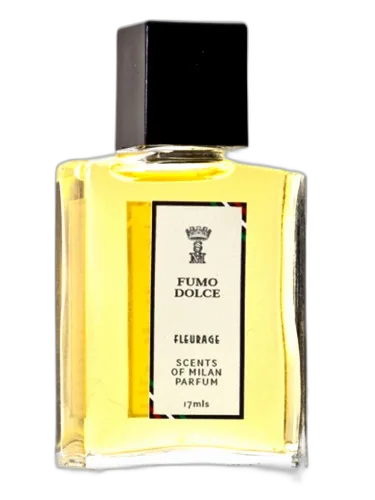
Fleurage
Fumo Dolce Fleurage
Shared top notes: incense, woody notes
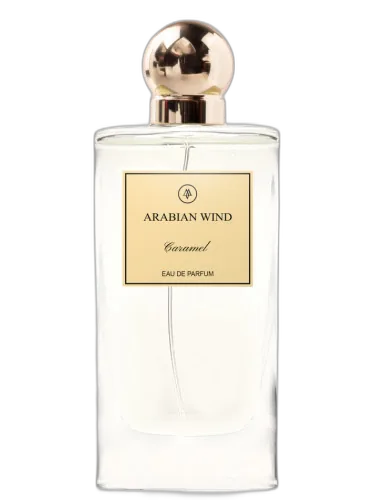
Arabian Wind
Caramel Arabian Wind
Shared top notes: citruses, woody notes

Fleurage
Origins Botanical Parfum Fleurage
Shared top notes: citruses