
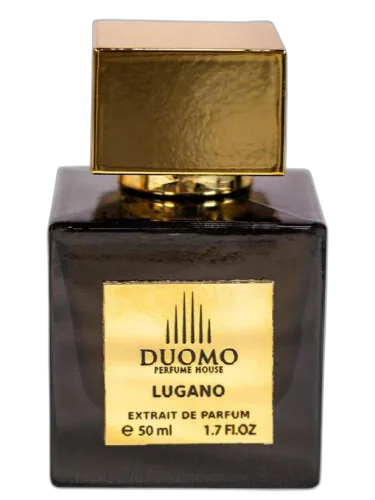

Lugano Duomo Perfume House
At a glance
Is Lugano Duomo Perfume House worth trying?
Lugano by Duomo Perfume House is a Oriental Vanilla fragrance for women and men.
- Best match
- Evening wear in Fall
- Performance feel
- Very Good longevity with Moderate sillage
- Signature profile
- woody, amber, musky with Black Currant, Ginger, Orris
The first impression
Lugano by Duomo Perfume House is a Oriental Vanilla fragrance for women and men. Lugano was launched in 2022. Lugano was created by Essa Bu-Abbas and Yaqoub Al-Attar. Top notes are Black Currant and Ginger; middle notes are Orris, Roots and Dark Chocolate; base notes are Iso E Super, Tobacco and Castoreum.
What shapes the scent
The perfumer behind it

Essa Bu-Abbas
Essa Bu-Abbas is a perfumer associated with Duomo Perfume House, where he has created a range of fragrances inspired by Italian cities and classic themes. His work includes compositions such as Como, Lugano, Seravalle, Venezia, and Oudh 25. These scents reflect a focus on regional character and refined olfactory storytelling.
Notes pyramid
Top Notes
First impression · 15-30 min
 Black Currant
 Ginger
Heart Notes
Core character · 2-4 hours
 Orris
Orris
 Roots
Roots
 Dark Chocolate
Base Notes
Lasting impression · 4+ hours
 Iso E Super
 Tobacco
 Castoreum
The mood it creates
The Archetype Archetype: Portrait of Lugano Duomo Perfume House
Essence
The person who gravitates toward Lugano Duomo is defined by the Sage archetype, a seeker of wisdom, refinement, and timeless elegance. Like the cathedral from which the fragrance draws its name, they are drawn to grandeur-not the loud, ostentatious kind, but the quiet, enduring kind. They are a thinker, a curator of beauty, and a believer in the power of subtlety. The Sage does not chase trends; they discern what is meaningful and let the rest fade into irrelevance.
Style & Aesthetic
Their tastes are deliberate, almost ritualistic. They prefer minimalism with depth-clean lines in architecture, well-tailored but understated clothing, and art that rewards contemplation. Their home is not cluttered, but neither is it sterile; every object has been chosen with care, as if each holds a silent dialogue with history. They might favor Italian design, Japanese ceramics, or Scandinavian furniture-not for the label, but for the philosophy behind them.
In fragrance, Lugano Duomo appeals to them because it is structured yet enigmatic, a balance of citrus, woods, and something faintly sacred, like incense lingering in an ancient chapel. They do not wear scent to be noticed; they wear it as an extension of their inner world.
Their days are structured but not rigid. They rise early, not out of obligation but because they cherish the quiet hours. They may practice meditation, journaling, or long walks-rituals that ground them in presence. Work is not merely a means to an end but a vocation, something aligned with their values. They might be an architect, a professor, a perfumer, or a curator-any role where knowledge and aesthetics intersect.
Leisure is equally intentional. They prefer slow travel, immersing themselves in a place rather than skimming its surface. A weekend for them might mean reading in a sunlit library, visiting a museum alone, or preparing a meal with deliberate attention to each ingredient.
Philosophy & Values
They believe in depth over speed, substance over spectacle. Their philosophy is one of intentional living-they reject the modern obsession with constant stimulation, preferring instead to savor moments, ideas, and relationships. They are drawn to Stoicism, Zen Buddhism, or perhaps the writings of Marcus Aurelius, not as dogmas but as tools for cultivating clarity.
Their values revolve around authenticity and mastery. They respect those who have honed their craft, whether it be a winemaker, a calligrapher, or a philosopher. Superficiality repels them; they can detect falseness in a glance, a phrase, or a poorly made object.
Relationships
They do not collect friends; they cultivate them. Their circle is small but enduring, built on mutual respect and intellectual exchange. They are the confidant who listens deeply and offers advice only when asked-never unsolicited. Romantic partners must engage their mind as much as their heart; they are drawn to those who challenge them, who bring new perspectives without demanding conformity.
Yet, their selectivity can become a shadow of isolation. They may dismiss others too quickly, mistaking simplicity for shallowness. Their standards, though noble, can harden into elitism if left unchecked.
Shadow
The Sage’s greatest flaw is intellectual pride. They may grow impatient with those who do not share their depth, dismissing emotions as irrational or art as frivolous if it does not meet their standards. Their love of solitude can calcify into emotional detachment, making them seem cold or aloof even to those who care for them.
At their worst, they may overanalyze life rather than live it, turning every experience into an intellectual exercise. They must remember that wisdom without warmth is sterile-that even the grandest cathedral is meant to be entered, not merely admired from afar.
Conclusion
Lugano Duomo is more than a fragrance to them-it is a symbol of their inner world: layered, contemplative, and built to endure. They are not perfect, nor do they seek to be. Their journey is one of balance-between thought and feeling, solitude and connection, the timeless and the present moment.
In the end, they are like the cathedral itself: a structure of quiet grandeur, standing firm against the noise of the world, inviting those who seek meaning to step inside.
If you like this, try these
Fragrances with a comparable profile - shared accords, notes, and character.
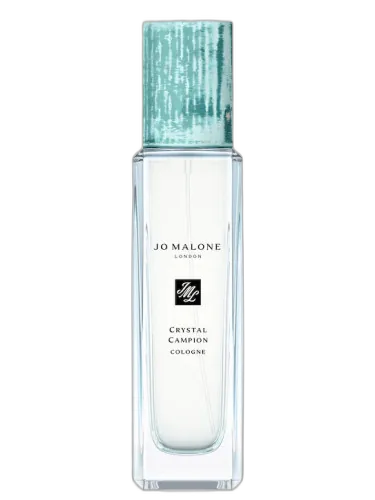
Jo Malone London
Crystal Campion Cologne Jo Malone London
Shared top notes: black currant
VLH
V Vlh
Shared top notes: black currant
MetaScent
Knight Iv Metascent
Shared top notes: black currant
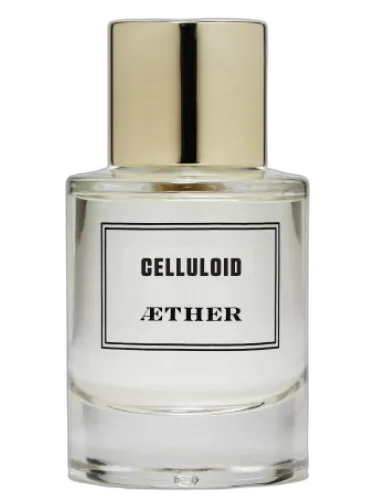
Aether
Celluloid Aether
Shared heart notes: orris
Banana Republic
Tuberose Overdose Banana Republic
Shared top notes: black currant, ginger