


Maestro Dzintars
At a glance
Is Maestro Dzintars worth trying?
Maestro by Dzintars is a Aromatic fragrance for men.
- Best match
- Office wear in Spring
- Performance feel
- Moderate longevity with Moderate sillage
- Signature profile
- aromatic, woody, citrus with Lemon, Bergamot, Petitgrain
The first impression
Maestro by Dzintars is a Aromatic fragrance for men. Maestro was launched in 1985. The nose behind this fragrance is Antonina Vitkovskaya. Top notes are Lemon, Bergamot, Petitgrain and Lavender; middle notes are Vetiver, Patchouli, Clary Sage and Geranium; base notes are Juniper, Sandalwood, Leather and Musk.
What shapes the scent
The perfumer behind it

Antonina Vitkovskaya
Antonina Vitkovskaya was a prominent Soviet and Latvian perfumer, best known for her long tenure at the Dzintars perfume factory in Riga. Her olfactory style balanced bold, floral compositions with subtle woody and amber undertones, creating accessible yet sophisticated fragrances. She created numerous iconic Dzintars scents, including Allegro (1981) and Briga (1982), which became beloved staples in Eastern Europe.
Notes pyramid
Top Notes
First impression · 15-30 min
 Lemon
Lemon
 Bergamot
 Petitgrain
 Lavender
Heart Notes
Core character · 2-4 hours
 Vetiver
 Patchouli
 Clary Sage
 Geranium
Base Notes
Lasting impression · 4+ hours
 Juniper
 Sandalwood
 Leather
 Musk
Musk
The mood it creates
The Lover Archetype: Portrait of Maestro Dzintars
Essence
To wear Maestro Dzintars is to embrace a fragrance that is both bold and enigmatic-a scent that lingers in the air like an unanswered question. The person who chooses this fragrance is not one for fleeting impressions; they seek depth, transformation, and the hidden alchemy of existence. Their soul resonates most closely with the Alchemist archetype, the eternal seeker who transmutes the ordinary into gold, both within and without.
They are drawn to the mystery of things-the way light filters through old glass, the texture of aged paper, the scent of spices left too long in a wooden drawer. Their mind is a crucible where ideas, emotions, and sensations are distilled into something richer. They do not merely experience life; they interrogate it, turning each moment into an experiment in meaning.
Their tastes are eclectic yet deliberate. They might favor dark, earthy colors-deep greens, burnt umbers, the occasional flash of gold-but never without intention. Their home is a carefully curated museum of oddities: antique books, handcrafted ceramics, a collection of stones gathered from forgotten places. They do not follow trends; they create their own.
Philosophy is not an abstract exercise for them but a lived reality. They believe in the hidden connections between all things-that a scent can evoke a memory, a memory can shape a destiny, and destiny itself is something to be forged, not merely accepted. They are drawn to esoteric traditions, not out of superstition, but because they sense that truth often lies in the margins.
Shadow
Yet, the Alchemist is not without their darkness. Their relentless pursuit of meaning can become a labyrinth-they may lose themselves in abstraction, mistaking obsession for wisdom. They are prone to melancholy, for they see the fragility of beauty too clearly. At times, they withdraw too far, becoming hermits in their own minds.
Their idealism can curdle into disillusionment. When the world fails to match their vision-when people prove shallow, when their experiments fail-they may retreat into cynicism or despair. They struggle with impatience, both with themselves and others, for they know how much more everything could be.
Their greatest danger is the temptation to live only in the realm of symbols, neglecting the raw, unrefined mess of reality. They must remember that even gold was once ordinary ore, and that transformation requires friction as much as vision.
Conclusion
They possess an almost preternatural ability to see potential where others see only the mundane. A discarded object becomes a relic; a chance encounter, a sign. This gift for transformation extends to people-they have a way of drawing out the hidden brilliance in others, of making them feel seen in ways they never expected.
Their relationships are deep but few. They do not scatter their energy; they invest it. When they love, it is with intensity, a devotion that borders on the sacred. Their friendships are built on mutual fascination-they seek those who, like them, are unafraid of the shadows.
They live deliberately, rejecting the tyranny of haste. Their lifestyle is one of slow pleasures: brewing tea with ritualistic care, walking without destination, savoring silence as much as conversation. They are not afraid of solitude; in fact, they require it, for it is in stillness that their alchemy takes place.
If you like this, try these
Fragrances with a comparable profile - shared accords, notes, and character.

Jacomo
Eau Cendree Jacomo
Shared top notes: bergamot, lavender, lemon

Antonio Banderas
Diavolo Antonio Banderas
Shared top notes: bergamot

Yves Saint Laurent
Yves Saint Laurent Pour Homme Yves Saint Laurent
Shared top notes: bergamot, lavender, lemon

Thera Cosméticos
Céos Thera Cosméticos
Shared top notes: bergamot, lavender, lemon
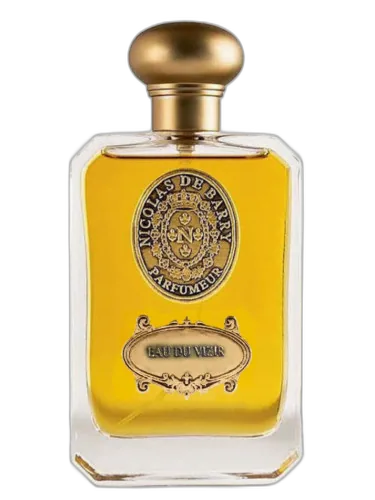
Maison Nicolas de Barry
Eau Du Vizir Maison Nicolas De Barry
Shared top notes: bergamot, lemon