
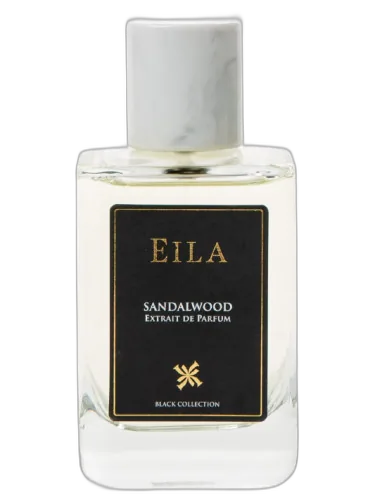

Sandalwood Eila
At a glance
Is Sandalwood Eila worth trying?
Sandalwood by Eila is a Oriental Woody fragrance for women and men.
- Best match
- Evening wear in Fall
- Performance feel
- Good longevity with Moderate sillage
- Signature profile
- woody, musky, amber with Nutmeg, Saffron, Rose
The first impression
Sandalwood by Eila is a Oriental Woody fragrance for women and men. This is a new fragrance. Sandalwood was launched in 2022. The nose behind this fragrance is Angéline Leporini. Top notes are Nutmeg, Saffron and Rose; middle notes are Cashmere Wood, Sandalwood and Jasmine; base notes are Amber, Musk and Vetiver.
What shapes the scent
The perfumer behind it

Angéline Leporini
Angéline Leporini is a French perfumer known for her work with major houses like Amouage and Ajmal. Her style balances fresh, citrusy accords with deeper woody and oriental notes, as seen in 4711 Acqua Colonia Yuzu & Cedarwood and Epic Woman. She also creates complex, opulent compositions such as Qasida Dahabia and the green, modern twist of 4711 Remix Green Oasis.
Notes pyramid
Top Notes
First impression · 15-30 min
 Nutmeg
 Saffron
 Rose
Rose
Heart Notes
Core character · 2-4 hours
 Cashmere Wood
 Sandalwood
 Jasmine
Base Notes
Lasting impression · 4+ hours
 Amber
Amber
 Musk
Musk
 Vetiver
The mood it creates
The Sage Archetype: Portrait of Sandalwood Eila
Essence
To wear Sandalwood Eila is to carry the scent of ancient wisdom, of quiet contemplation, of something both grounding and transcendent. This fragrance-warm, woody, subtly resinous-speaks of a person who seeks depth in a world that often skims the surface. They are not merely drawn to sandalwood; they resonate with it, as though the scent were an extension of their inner world.
Shadow
But every archetype has its shadow, and the Sage is no exception. Their strength-objectivity-can become a weakness when it turns into emotional detachment. They may rationalize their feelings rather than experience them fully, retreating into thought when confronted with chaos or passion.
Their love of wisdom can also harden into dogmatism. Having spent years refining their worldview, they may dismiss perspectives that challenge it, mistaking skepticism for discernment. At their worst, they can become aloof, so accustomed to observing life that they forget to participate in it.
And then there is the danger of over-intellectualization-turning every experience into an idea rather than living it. They might analyze a sunset instead of feeling it, or dissect a relationship instead of surrendering to its unpredictability.
Conclusion
This person is, above all, a Sage-one who values knowledge, reflection, and the steady pursuit of truth. The Sage does not rush; they observe, analyze, and distill meaning from experience. Their presence is calming, not because they are passive, but because they have cultivated an inner stillness that others instinctively lean into.
Yet the Sage is not merely a scholar or a detached thinker. They are drawn to meaning, not just facts. They might be the friend who offers the perfect book recommendation, the mentor who sees potential before it is realized, or the quiet figure in the corner of the room who speaks only when their words carry weight.
If you like this, try these
Fragrances with a comparable profile - shared accords, notes, and character.
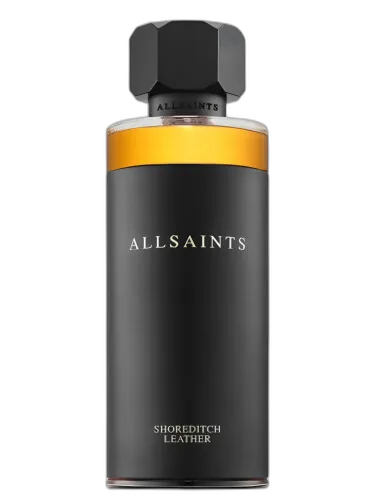
Allsaints
Shoreditch Leather Allsaints
Shared top notes: rose, saffron
Loewe
Tras La Tormenta En El Jardín Botánico Loewe
Shared top notes: rose, saffron

Natura
Humor A Dois Natura
Shared heart notes: jasmine
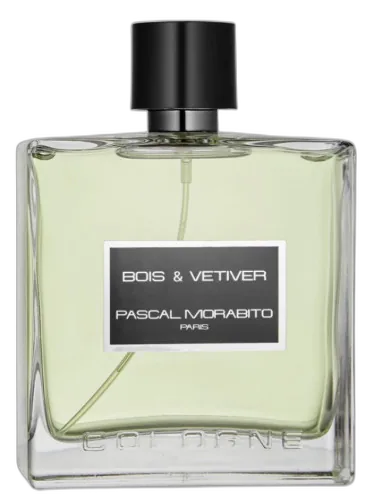
Pascal Morabito
Bois & Vetiver Pascal Morabito
Shared heart notes: jasmine

Bejar
Shadow Bejar
Shared top notes: nutmeg, saffron