


White Tea Elizabeth Arden
At a glance
Is White Tea Elizabeth Arden worth trying?
White Tea by Elizabeth Arden is a Woody Floral Musk fragrance for women.
- Best match
- Casual wear in Spring, Summer
- Performance feel
- Moderate longevity with Moderate sillage
- Signature profile
- aromatic, green, marine with Sea Notes, Fern, Mandarin Orange
The first impression
White Tea by Elizabeth Arden is a Woody Floral Musk fragrance for women. White Tea was launched in 2017. White Tea was created by Rodrigo Flores-Roux, Guillaume Flavigny and Caroline Sabas. Top notes are Sea Notes, Fern, Mandarin Orange and Clary Sage; middle notes are White Tea, White Iris and Mate; base notes are Exotic Woods, Ambrette (Musk Mallow), Tonka Bean and Amber.
What shapes the scent
The perfumer behind it

Caroline Sabas
Caroline Sabas is a prolific perfumer with a portfolio that includes Animale Instinct Homme Animale, Avon Luck Eau So Free Avon, and Badgley Mischka Couture Badgley Mischka. She has created numerous scents for Avon, such as Far Away Dreams and Little Sequin Dress. Her work also extends to Anthropologie's A Rather Novel Collection.
Notes pyramid
Top Notes
First impression · 15-30 min
Sea Notes
 Fern
Fern
 Mandarin Orange
 Clary Sage
Heart Notes
Core character · 2-4 hours
White Tea
White Iris
 Mate
Mate
Base Notes
Lasting impression · 4+ hours
Exotic Woods
 Ambrette (Musk Mallow)
 Tonka Bean
 Amber
Amber
The mood it creates
The Sage Archetype: Portrait of White Tea Elizabeth Arden
Essence
Aromatic Essence & Archetypal Alignment
The fragrance White Tea by Elizabeth Arden is an understated yet profound composition-light, clean, and contemplative, with whispers of bergamot, musk, and a quiet floral warmth. It does not demand attention but lingers with quiet assurance. The person who chooses this scent is not one for ostentation; they are drawn to refinement without excess, elegance without burden. Their soul resonates most closely with the Sage archetype, the seeker of wisdom, the observer who values clarity, simplicity, and depth.
They are not the boisterous philosopher declaiming truths in the marketplace but the quiet thinker who absorbs the world before speaking. Their presence is like the fragrance itself-unobtrusive yet impossible to ignore once noticed.
Style & Aesthetic
Their wardrobe is a study in deliberate restraint-neutral tones, clean lines, fabrics that move with ease rather than constrain. They favor garments that feel like a second skin, never stiff or performative. Their home mirrors this philosophy: uncluttered, airy, with carefully chosen objects that serve both function and beauty.
They are drawn to Japanese design, Scandinavian minimalism, or the quiet luxury of linen and unpolished wood. Their taste in art leans toward the abstract, the kind that invites interpretation rather than dictates it. They dislike gaudiness, seeing it as a failure of discernment.
But here, too, lies a shadow. Their pursuit of simplicity can become sterility, an aversion to color and warmth that borders on emotional austerity. They may mistake emptiness for purity, forgetting that life thrives in the interplay of chaos and order.
Their days are structured but not rigid. They rise early, savoring the quiet hours with tea, a book, or a walk. They work with focus but refuse to be enslaved by productivity; they understand the value of pauses, of empty spaces where ideas can breathe.
They may be drawn to writing, meditation, or professions that reward patience and insight-psychology, editing, design, or academia. They are not workaholics, but they take pride in craftsmanship, in doing things well rather than quickly.
Their shadow here is passivity. Their love of contemplation can become an excuse for inaction, a retreat from the world’s demands. They may rationalize detachment as wisdom when, in truth, they fear the mess of engagement.
Philosophy & Values
Their worldview is shaped by a preference for distillation rather than accumulation. They believe in the elegance of essential truths, stripping away the unnecessary to reveal what is pure. They may be drawn to Zen philosophy, minimalist aesthetics, or Stoic principles-systems that prize inner stillness over external chaos.
They value knowledge, but not for its own sake; they seek understanding that can be applied with subtlety. They are not the scholar buried in dusty tomes but the one who reads selectively, absorbing only what sharpens their perception. Their mind is a well-ordered library, not a hoarder’s attic.
Yet this very clarity can become a shadow. Their distaste for excess may harden into disdain for those who indulge, a quiet arrogance toward those who find meaning in abundance. They may mistake their restraint for superiority, forgetting that wisdom also requires the humility to accept life’s messiness.
Relationships
They are not the life of the party, nor do they wish to be. Their friendships are few but deep, built on mutual respect and intellectual exchange. They prefer conversations that unfold like slow-brewed tea-measured, rich, with layers to uncover. Romantic partners are drawn to their calm, their ability to listen without rushing to fill silence.
Yet their reluctance to engage in trivialities can be mistaken for coldness. They may withdraw from emotional displays, seeing them as inelegant, and in doing so, they risk becoming distant even to those who love them. Their greatest challenge is learning that wisdom without warmth is merely cleverness, not true understanding.
If you like this, try these
Fragrances with a comparable profile - shared accords, notes, and character.
Elizabeth Arden
White Tea Eau De Parfum Elizabeth Arden
Shared top notes: clary sage, sea notes

Van Cleef & Arpels
In New York Van Cleef & Arpels
Shared top notes: mandarin orange, sea notes
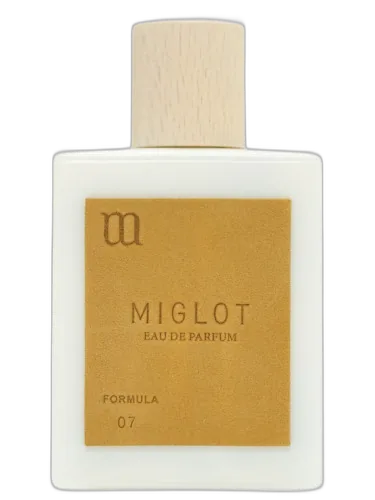
Miglot
Formula 07 Miglot
Shared top notes: mandarin orange

Anima Vinci
Neroli Wisdom Anima Vinci
Shared top notes: mandarin orange
Nobile 1942
Vespri Esperidati Nobile 1942
Shared top notes: mandarin orange