


Vivara (2007) Emilio Pucci
At a glance
Is Vivara (2007) Emilio Pucci worth trying?
Vivara (2007) by Emilio Pucci is a Chypre Floral fragrance for women.
- Best match
- Casual wear in Summer
- Performance feel
- Good longevity with Moderate sillage
- Signature profile
- green, aromatic, white floral with Galbanum, Amaretto, Bergamot
The first impression
Vivara (2007) by Emilio Pucci is a Chypre Floral fragrance for women. Vivara (2007) was launched in 2007. Vivara (2007) was created by François Demachy, Natalie Gracia-Cetto and Marie-Aude Couture. Top notes are Galbanum, Amaretto and Bergamot; middle notes are Narcissus, Orange Blossom and Jasmine; base notes are Vetiver, Patchouli and Iris.
What shapes the scent
The perfumer behind it

François Demachy
François Demachy is a renowned French perfumer best known for his long tenure as the in-house perfumer for Dior, but he has also created extensively for Acqua di Parma. His work for Acqua di Parma includes the Blu Mediterraneo line, such as Arancia La Spugnatura and Mirto Di Panarea, as well as luxury leather and oud compositions. Demachy's style is characterized by classic elegance, natural ingredients, and a mastery of Mediterranean and woody accords.
Notes pyramid
Top Notes
First impression · 15-30 min
 Galbanum
 Amaretto
 Bergamot
Heart Notes
Core character · 2-4 hours
 Narcissus
 Orange Blossom
 Jasmine
Base Notes
Lasting impression · 4+ hours
 Vetiver
 Patchouli
 Iris
Iris
The mood it creates
The Lover Archetype: Portrait of Vivara (2007) Emilio Pucci
Essence
To wear Vivara by Emilio Pucci is to embrace a fragrance that is luminous, vibrant, and unapologetically free-a scent that captures the essence of sunlit citrus, tropical florals, and the salty whisper of the sea. The person who chooses this fragrance is not one to be confined by convention; they are drawn to the horizon, to the uncharted, to the intoxicating thrill of discovery. They embody the Explorer archetype, the restless seeker who finds meaning in movement, novelty, and the sensory richness of life.
Shadow
Yet, for all their brilliance, the Explorer has a shadow-one that whispers of rootlessness, of an insatiable hunger that can never be satisfied. Their aversion to stagnation can become a form of avoidance; they may flee from emotional depth, mistaking intimacy for confinement. They might romanticize the next destination, the next lover, the next thrill, believing that fulfillment lies just beyond the horizon.
This restlessness can lead to a paradoxical loneliness-surrounded by people, yet never fully known. They may struggle with self-doubt when the adventures cease, for without movement, they fear they are nothing. Their greatest challenge is learning that true freedom is not just in the wandering, but in the ability to be still, to sit with oneself and find meaning in the quiet moments.
Conclusion
This is a person who thrives on spontaneity, their spirit untamed by routine. Their life is a mosaic of experiences-perhaps they have lived in different cities, collected languages like souvenirs, or pursued careers that allow for reinvention. They are drawn to careers in travel, design, or the arts, where creativity and mobility are paramount. Their home is eclectic, filled with treasures from distant places: a Moroccan rug, a Venetian mask, a stack of well-worn passports.
Their style is effortlessly bold, favoring flowing fabrics, bright colors, and statement pieces that suggest a life less ordinary. They reject the mundane, preferring garments that feel alive-linen that moves with the wind, silk that catches the light. Their philosophy is simple yet profound: Life is not meant to be endured, but experienced. They believe in the transformative power of beauty, in the way a scent, a landscape, or a conversation can alter one’s trajectory.
In relationships, they are magnetic but elusive. They love deeply but resist possession, for their heart, like their mind, is nomadic. They seek partners who are equally independent, who understand that love is not a cage but an open sky. Their friendships are rich and varied, spanning continents and cultures, yet they may struggle with the weight of long-term commitments.
If you like this, try these
Fragrances with a comparable profile - shared accords, notes, and character.
Emilio Pucci
Vivara Silver Edition Emilio Pucci
Shared top notes: bergamot, galbanum
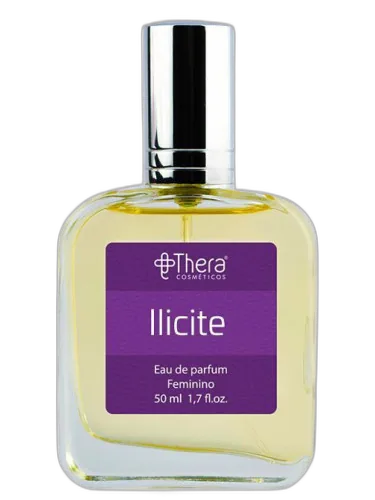
Thera Cosméticos
Ilicite Thera Cosméticos
Shared top notes: bergamot
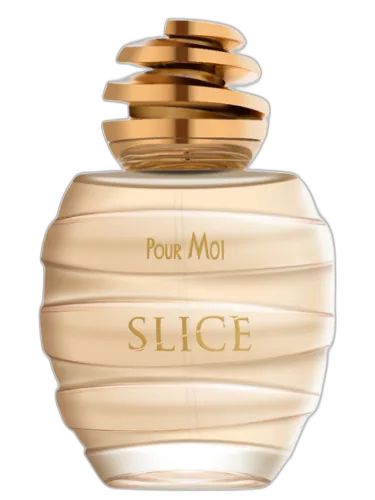
PourMoi
Slice Pourmoi
Shared top notes: bergamot

Ciclo Cosméticos
Animal Pink Ciclo Cosméticos
Shared top notes: bergamot

Frederic Haldimann
Eau Fraiche De Frederic Frederic Haldimann
Shared top notes: bergamot