
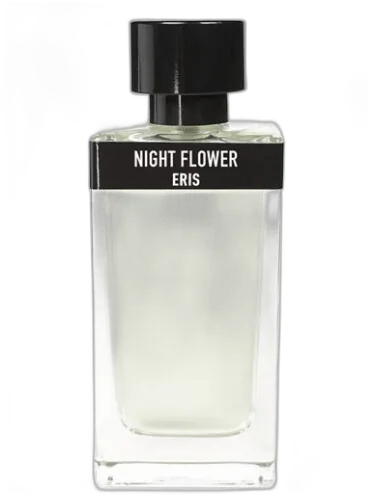

Night Flower Eris Parfums
At a glance
Is Night Flower Eris Parfums worth trying?
Night Flower by Eris Parfums is a Floral Woody Musk fragrance for women and men.
- Best match
- Evening wear in Fall
- Performance feel
- Very Good longevity with Strong sillage
- Signature profile
- warm spicy, leather, musky with Cardamom, Birch, Bergamot
The first impression
Night Flower by Eris Parfums is a Floral Woody Musk fragrance for women and men. Night Flower was launched in 2016. The nose behind this fragrance is Antoine Lie. Top notes are Cardamom, Birch and Bergamot; middle notes are Suede, Indian Tuberose and Cinnamon; base notes are Tonka Bean, Patchouli and Musk.
What shapes the scent
The perfumer behind it

Antoine Lie
Antoine Lie is a French perfumer trained at Givaudan and known for his work with brands like Burberry and Avon. His style often blends bold contrasts, pairing fresh or woody accords with unexpected gourmand or metallic touches. He created the earthy, resinous Sequoia for Abbott New York City and the spicy, incense-laced Sword for CZAR, showcasing his skill with complex, atmospheric compositions.
Notes pyramid
Top Notes
First impression · 15-30 min
 Cardamom
 Birch
Birch
 Bergamot
Heart Notes
Core character · 2-4 hours
 Suede
Suede
 Indian Tuberose
 Cinnamon
Base Notes
Lasting impression · 4+ hours
 Tonka Bean
 Patchouli
 Musk
Musk
The mood it creates
The Lover Archetype: Portrait of Night Flower Eris Parfums
Essence
To wear Night Flower by Eris Parfums is to embrace the twilight-the liminal space where mystery and allure intertwine. This fragrance, with its intoxicating blend of dark florals, smoky resins, and a whisper of spice, is not for the faint of heart. It is chosen by those who dwell in the in-between, who find power in shadows, and who understand that beauty often wears a veil.
The dominant archetype here is the Enchantress-a figure of magnetic charm, depth, and seduction, not merely in the carnal sense, but in the way she bewitches the mind and stirs the soul. Like Circe or a modern-day sibyl, she understands the alchemy of influence, drawing others into her orbit with an effortless, almost unconscious power. She does not seek to dominate, but to fascinate.
Yet, the Enchantress is not without her shadow. Where there is allure, there may also be manipulation; where there is mystery, there may be evasion. She walks the fine line between enchantment and deception, between drawing others in and keeping them at arm’s length.
Relationships
She does not give herself freely. Relationships with her are a dance-sometimes a tango, sometimes a waltz, but always requiring rhythm and intuition. She attracts lovers and friends who are drawn to her enigmatic nature, but few ever feel they truly know her. This is not out of cruelty, but out of self-preservation. To be fully seen is to be vulnerable, and vulnerability is a currency she spends sparingly.
Her closest bonds are with those who appreciate nuance, who do not demand explanations for her silences or her sudden retreats. She is fiercely loyal but expects the same in return-betrayal cuts deeper for her than for most, and she does not forgive easily.
Shadow
The Enchantress’s greatest strength is also her greatest weakness. Her ability to captivate can slip into a need for control-over situations, over people, over her own image. She may withhold affection as a test, or use her charm as a weapon when threatened. At her worst, she becomes a phantom, present but never truly there, leaving others longing for something just out of reach.
There is also the risk of isolation. By guarding her depths too closely, she may find herself surrounded by admirers but devoid of true companions. The very mystery that makes her fascinating can become a cage.
Conclusion
Her tastes are refined but never obvious. She prefers the richness of burgundy over the starkness of black, the texture of velvet over the coldness of leather. In art, she is drawn to the chiaroscuro of Caravaggio, where light and darkness wrestle for dominance. In music, she favors the sultry melancholy of jazz or the haunting melodies of darkwave-sounds that mirror the complexity of her inner world.
Her philosophy is one of depth over surface. She believes truth is layered, that people reveal themselves in fragments, and that the most profound connections are those that unfold slowly. She does not trust easy answers or hollow charm, and she despises the trivial.
If you like this, try these
Fragrances with a comparable profile - shared accords, notes, and character.
Michele Bianchi
Žasmin Michele Bianchi
Shared top notes: bergamot
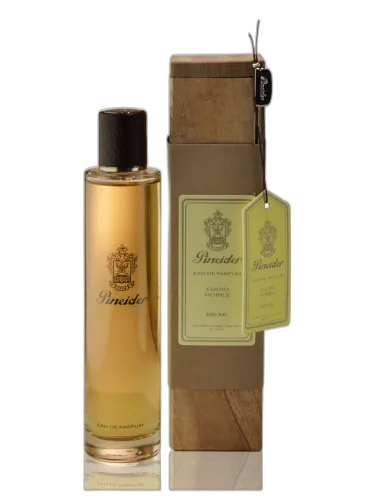
Pineider
Cuoio Nobile Pineider
Shared top notes: bergamot

Faberlic
The Best Bro's One Way Faberlic
Shared top notes: bergamot, cardamom
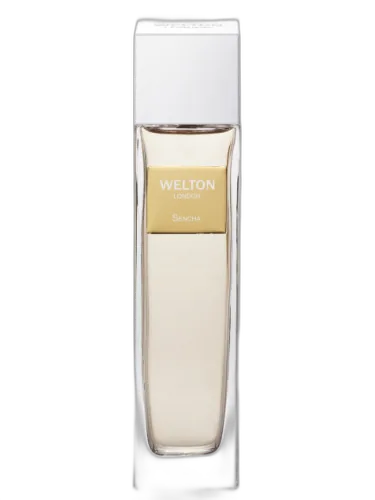
Welton London
Sencha Eau De Parfum Welton London
Shared top notes: bergamot, cardamom
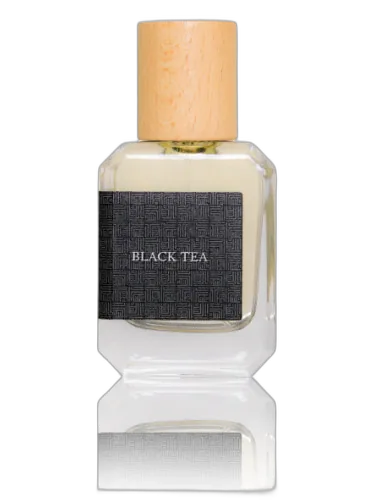
Proad
Black Tea Proad
Shared top notes: bergamot, cardamom