
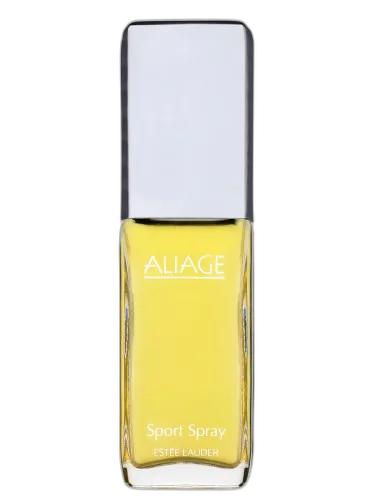

Aliage Estée Lauder
Fragrance Story
Aliage by Estée Lauder is a Chypre Floral fragrance for women. Aliage was launched in 1972. Aliage was created by Francis Camail and Bernard Chant. Top notes are Citruses and Jasmine; middle notes are Artemisia, Nutmeg and Rose; base notes are Oakmoss, Vetiver and Cedar.
Composition Profile
About the Perfumer

Bernard Chant
Bernard Chant is a renowned perfumer known for iconic creations such as Aramis, Devin, Gold, and Jhl for Aramis, as well as Aromatics Elixir for Clinique, Imprevu for Coty, and Aliage for Estée Lauder. His work also includes Antonia's Flowers for Antonia's Flowers. Chant's style is marked by bold, complex compositions that have become classics in modern perfumery.
Fragrance Notes
Top Notes
First impression · 15-30 min
 Citruses
 Jasmine
Heart Notes
Core character · 2-4 hours
 Artemisia
 Nutmeg
 Rose
Rose
Base Notes
Lasting impression · 4+ hours
 Oakmoss
 Vetiver
 Cedar
Cedar
Aliage Estée Lauder by Estée Lauder offers a distinctive olfactory experience that stands out from other fragrances in its category.
Crafted with the finest ingredients and a blend of traditional and modern perfumery techniques, this fragrance represents the pinnacle of the perfumer's art.
Aliage Estée Lauder embodies the distinctive style of Estée Lauder while adding a unique chapter to their fragrance portfolio.
Character Profile
The Sage Archetype: Portrait of Aliage Estée Lauder
Essence
The person who cherishes Aliage by Estée Lauder is most closely aligned with the Wise Woman archetype-a figure of natural wisdom, self-possession, and quiet authority. This is not the flamboyant enchantress nor the brooding mystic, but rather a woman who understands the rhythms of life with an almost botanical precision. Aliage, with its verdant, mossy-green freshness, speaks of deep forests and sunlit clearings-an olfactory metaphor for her essence. She is rooted, yet never stagnant; alive with the vitality of growth, yet tempered by the patience of seasons.
Shadow
Yet wisdom, when untempered by warmth, can harden into aloofness. At times, she withdraws too far into her own mind, becoming a spectator rather than a participant in life. Her self-sufficiency, while admirable, can border on emotional isolation-she may rationalize detachment as wisdom when, in truth, it is fear.
There is also the risk of rigidity. The same discernment that allows her to see truth can calcify into stubbornness. She may dismiss new ideas too quickly, mistaking her experience for infallibility. And though she values authenticity, she sometimes confuses cynicism with insight, looking for hidden motives where none exist.
Conclusion
Her tastes are refined but never ostentatious. She prefers natural fabrics-linen, wool, raw silk-in muted earth tones, with occasional flashes of deep green or warm amber. Her home is an extension of her spirit: uncluttered, filled with books, dried herbs, and perhaps a well-worn leather armchair by a window where she reads. She surrounds herself with objects that have history-antique inkwells, hand-thrown pottery, a Persian rug passed down through generations.
Her philosophy is one of harmony over conquest. She does not seek to dominate life but to understand it, to move with its currents rather than against them. She values intelligence but distrusts arrogance; she admires passion but recoils from recklessness. Her relationships are few but profound-she is not one for frivolous socializing, yet those who earn her trust find her loyalty unshakable.
Similar Fragrances
Fragrances with a comparable profile - shared accords, notes, and character.

Wild Coast Perfumery
Carmanah Wild Coast Perfumery
Shared accords: aromatic, citrus, earthy

Bahoma London
Vitality Bahoma London
Shared accords: aromatic, citrus, earthy

Lorenzo Villoresi
Vintage Collection Vetiver Lorenzo Villoresi
Shared accords: aromatic, citrus, earthy

M8 Moods
Lemoncello M8 Moods
Shared accords: aromatic, citrus, earthy

Lancôme
Ô De Lancôme Lancôme
Shared accords: aromatic, citrus, earthy