
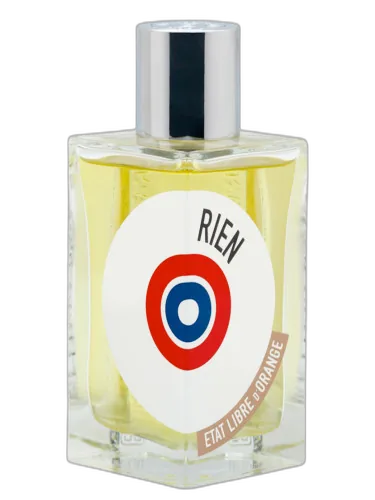
Rien Etat Libre D'orange
Fragrance Story
Rien by Etat Libre d'Orange is a Woody Chypre fragrance for women and men. Rien was launched in 2006. The nose behind this fragrance is Antoine Lie.
Composition Profile
About the Perfumer

Antoine Lie
Antoine Lie is a French perfumer trained at Givaudan and known for his work with brands like Burberry and Avon. His style often blends bold contrasts, pairing fresh or woody accords with unexpected gourmand or metallic touches. He created the earthy, resinous Sequoia for Abbott New York City and the spicy, incense-laced Sword for CZAR, showcasing his skill with complex, atmospheric compositions.
Fragrance Notes
All Notes
Complete scent profile
 Leather
 Incense
 Aldehydes
 Styrax
 Patchouli
 Oakmoss
 Amber
Amber
 Labdanum
 Iris
Iris
 Cumin
Cumin
 Black Pepper
 Rose
Rose
Rien Etat Libre D'orange by Etat Libre d'Orange offers a distinctive olfactory experience that stands out from other fragrances in its category.
Crafted with the finest ingredients and a blend of traditional and modern perfumery techniques, this fragrance represents the pinnacle of the perfumer's art.
Rien Etat Libre D'orange embodies the distinctive style of Etat Libre d'Orange while adding a unique chapter to their fragrance portfolio.
Character Profile
The Archetype Archetype: Portrait of Rien Etat Libre D'orange
Essence
The one who chooses Rien-a fragrance that boldly declares itself as "Nothing" yet is anything but-embodies the Alchemist archetype. This is a soul who transforms the mundane into the extraordinary, who seeks meaning in paradox, and who thrives in the tension between presence and absence. The Alchemist is not content with surface appearances; they must deconstruct, experiment, and reassemble reality to uncover hidden truths. Rien, with its stark name and complex composition (leather, incense, aldehydes, and a metallic edge), mirrors this relentless pursuit of depth beneath the illusion of simplicity.
Style & Aesthetic
Their aesthetic is deliberately enigmatic, a blend of minimalism and provocation. They might dress in structured, almost austere silhouettes-sharp tailoring, monochrome palettes-but with a single disruptive element: a piece of jewelry that seems out of place, a fabric that shouldn’t work but does. Like Rien, their style is both stark and intricate, refusing to be pinned down.
They are drawn to art that challenges, whether it’s avant-garde cinema, abstract expressionism, or literature that bends reality (Borges, Pessoa, or Clarice Lispector). Music is likely experimental-industrial, post-punk, or ambient soundscapes that evoke tension rather than resolution.
Their daily life is a ritual of deliberate choices. They may keep odd hours, finding the night more conducive to thought. Their home is a sanctuary-spare but not sterile, with carefully chosen objects that carry personal significance. They might collect rare books, obscure vinyl, or artifacts that seem meaningless to others but hold symbolic weight for them.
Work is either a creative pursuit or a means to fund their intellectual and aesthetic explorations. They are not careerists in the traditional sense; they seek vocations that allow for autonomy and self-expression. If trapped in conventional employment, they will subvert it in subtle ways-reframing mundanity as an experiment in endurance.
Philosophy & Values
To wear Rien is to embrace contradiction. This person rejects the notion that things must be easily categorized-they find beauty in ambiguity, in the space between extremes. Their philosophy is one of radical authenticity, though not in the sentimentalized way often preached. For them, authenticity is not about being "true to oneself" in a static sense, but about the constant act of self-creation and dissolution. They believe in the fluidity of identity, that one can be many things at once, and that meaning is not found but forged.
They value intellectual independence, often resisting dogma in favor of personal inquiry. Yet, they are not nihilists-they simply demand that meaning be earned, not inherited. Their moral compass is self-defined, sometimes to the point of defiance. They would rather be misunderstood than conform to expectations.
Relationships
In relationships, they are intensely magnetic but not always easy. They attract others with their depth and originality, but their refusal to simplify themselves can be alienating. They do not suffer fools, and their standards for connection are high-they crave stimulating minds, not just warm bodies.
Romantically, they are drawn to partners who are equally self-possessed, who do not seek completion in love but rather mutual expansion. However, their shadow emerges here: their love of complexity can become emotional aloofness, a tendency to intellectualize feelings rather than surrender to them. They may struggle with vulnerability, mistaking detachment for strength.
Friendships are curated, not collected. They have few close confidants, but those who earn their trust find a fiercely loyal, if occasionally critical, ally. They despise small talk and prefer conversations that spiral into the existential.
Shadow
The Alchemist’s brilliance comes at a cost. Their love of depth can become solipsism, a retreat into the self so complete that they lose touch with the tangible world. They may grow cynical, mistaking their own detachment for superiority. At their worst, they become the Hermit, so consumed by their inner world that they forget how to be present with others.
Their intellectual rigor can harden into dogmatism of the unconventional-they reject mainstream ideas not because they’ve examined them, but simply because they are mainstream. They risk becoming a parody of their own complexity, performing depth rather than living it.
Conclusion
The wearer of Rien is neither nihilist nor romantic. They are a philosopher of the self, an architect of meaning in a world that often refuses to provide it. They embrace the void not with despair, but with curiosity-knowing that within nothingness, everything is possible.
Their life is a work in progress, an ongoing experiment in how much one can hold contradictions without collapsing into simplicity. They are flawed, yes-prone to isolation, arrogance, overthinking-but they are also uniquely alive, a mind that refuses to sleepwalk.
In the end, they do not wear Rien-Rien wears them. It is not a scent, but a manifesto.
Similar Fragrances
Fragrances with a comparable profile - shared accords, notes, and character.
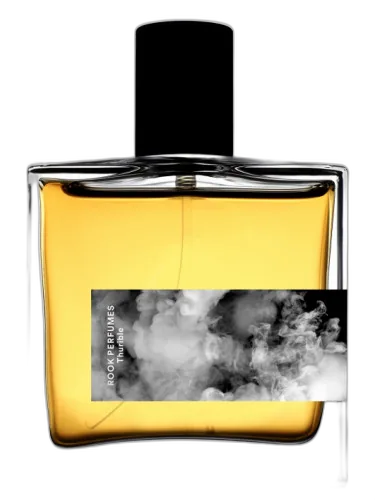
Rook Perfumes
Thurible Rook Perfumes
Shared accords: amber, animalic, balsamic

Miller Harris
Étui Noir Miller Harris
Shared accords: amber, animalic, balsamic
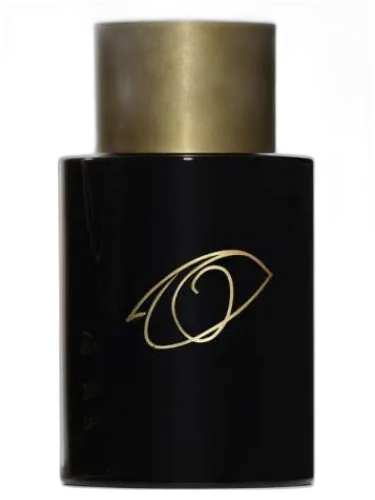
Frederic Malle
Superstitious Frederic Malle
Shared accords: aldehydic, amber, balsamic
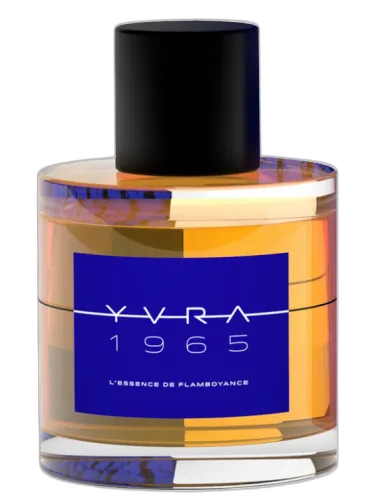
YVRA
1965 - L'essence De Flamboyance Yvra
Shared accords: amber, animalic, balsamic

Guerlain
Encens Mythique D'orient Guerlain
Shared accords: aldehydic, amber, animalic