
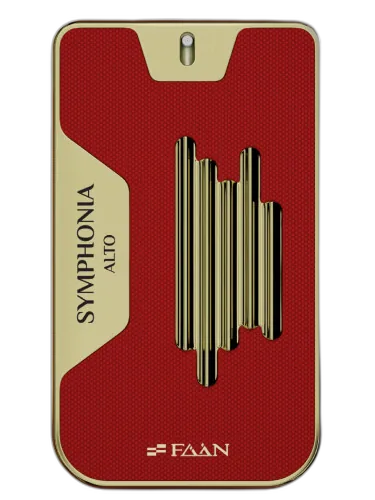

Symphonia Alto Faan
At a glance
Is Symphonia Alto Faan worth trying?
Symphonia Alto by FAAN is a Aromatic fragrance for women and men.
- Best match
- Evening wear in Fall
- Performance feel
- Very Good longevity with Strong sillage
- Signature profile
- white floral, woody, warm spicy with Blood Orange, Ginger, Tuberose
The first impression
Symphonia Alto by FAAN is a Aromatic fragrance for women and men. This is a new fragrance. Symphonia Alto was launched in 2024. Top notes are Blood Orange and Ginger; middle notes are Tuberose, Jasmine and Pimento Leaf; base notes are Sandalwood, Patchouli and Vetiver.
What shapes the scent
The perfumer behind it

Unknown Perfumer
Notes pyramid
Top Notes
First impression · 15-30 min
 Blood Orange
 Ginger
Heart Notes
Core character · 2-4 hours
 Tuberose
 Jasmine
 Pimento Leaf
Base Notes
Lasting impression · 4+ hours
 Sandalwood
 Patchouli
 Vetiver
The mood it creates
The Lover Archetype: Portrait of Symphonia Alto Faan
Essence
To wear Symphonia Alto Faan is to embrace transformation-not as a mere aesthetic choice, but as a declaration of one’s inner alchemy. This fragrance, with its interplay of dark resins, luminous florals, and smoky depths, mirrors the soul of someone who seeks to transmute the raw materials of existence into something transcendent. The Alchemist archetype defines them: a seeker of hidden truths, a weaver of meaning, and a restless experimenter with life itself.
They are not content with surface pleasures; they crave the layered, the paradoxical, the sublime. Like the fragrance they adore, they are both magnetic and elusive, drawing others in with their depth while remaining just out of reach. Their presence is a slow revelation, unfolding in stages-first intriguing, then intoxicating, finally unforgettable.
Shadow
Yet, the Alchemist’s greatest strength is also their flaw: their relentless pursuit of depth can become a form of evasion. They may grow impatient with the mundane, dismissing ordinary joys as beneath them. Their search for the perfect moment, the perfect understanding, can leave them paralyzed-always refining, never arriving.
At their worst, they become the Hermit who refuses to engage, or the Trickster who plays with others’ emotions in the name of "exploration." They may romanticize suffering, mistaking intensity for truth. Their relationships can suffer from their tendency to intellectualize emotion, leaving partners feeling like specimens under glass rather than equals in love.
Conclusion
Their tastes are deliberate, almost ritualistic. They surround themselves with objects of beauty that tell a story-antique books with cracked spines, handcrafted ceramics that bear the marks of the maker, a wardrobe of rich textures and muted tones that suggest history rather than trend. They prefer the weight of linen, the depth of aged leather, the whisper of silk.
Philosophy is not an abstract exercise for them but a lived experience. They might be drawn to the mysticism of Jung, the existential intensity of Nietzsche, or the poetic logic of Heraclitus. They believe in the fluidity of identity, the necessity of reinvention, and the power of symbols. Their values are rooted in authenticity, but not in the simplistic sense-they see authenticity as a process, a continuous refinement of the self through experience.
Their relationships are deep but few, for they demand a meeting of minds as much as hearts. They are drawn to those who can match their intellectual curiosity, who are unafraid of shadows and contradictions. Yet, they can be frustratingly enigmatic, revealing themselves in fragments, testing the patience of those who seek straightforward connection.
If you like this, try these
Fragrances with a comparable profile - shared accords, notes, and character.
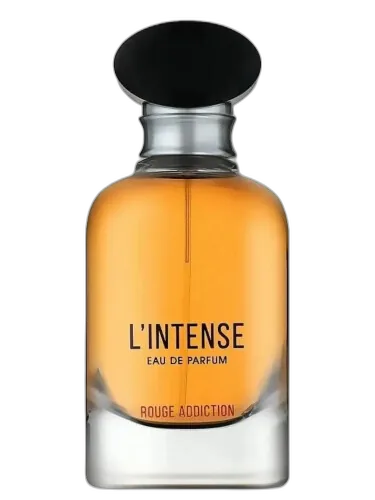
Maison Alhambra
L'intense Rouge Addiction Maison Alhambra
Shared top notes: blood orange, ginger
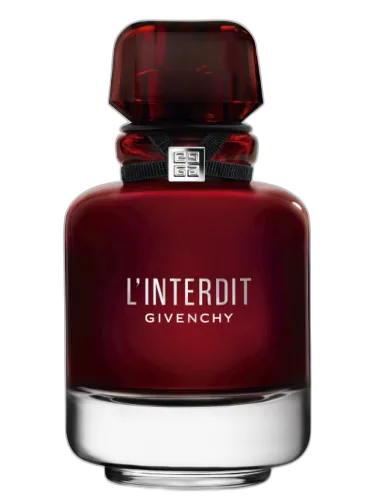
Givenchy
L'interdit Eau De Parfum Rouge Givenchy
Shared top notes: blood orange, ginger
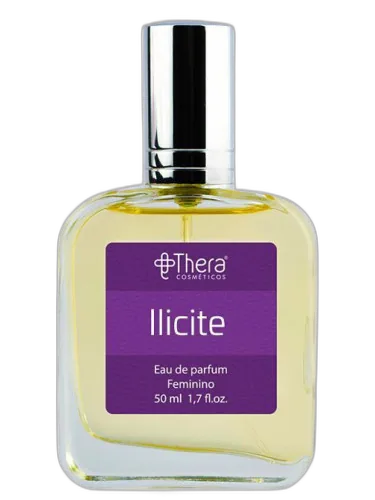
Thera Cosméticos
Ilicite Thera Cosméticos
Shared top notes: ginger

Kismet Olfactive
Tuberose Tantra Kismet Olfactive
Shared top notes: ginger
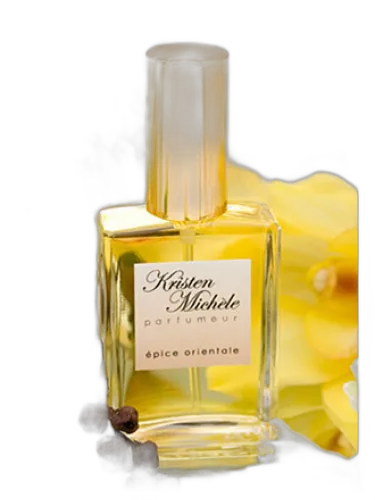
Kristen Michele
Epice Orientale Kristen Michele
Shared top notes: blood orange