

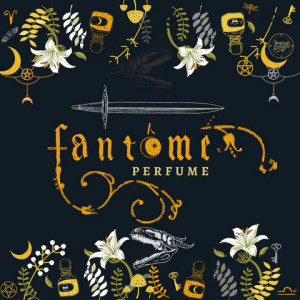
Parlour Fantôme
Fragrance Story
Parlour by Fantôme is a Woody Aromatic fragrance for women and men.
Composition Profile
About the Perfumer

Unknown Perfumer
Fragrance Notes
All Notes
Complete scent profile
 Mahogany
 Incense
 Palisander Rosewood
 Vetiver
Character Profile
The Mystic Archetype: Portrait of Parlour Fantôme
Essence
The person who gravitates toward Parlour Fantôme is not one who seeks the obvious or the overt. This fragrance-haunting, enigmatic, layered with whispers of the past-resonates with those who dwell in the liminal spaces between reality and reverie. They are the Mystic, an archetype defined by their pursuit of hidden truths, their fascination with the unseen, and their ability to perceive depth where others see only surface.
The Mystic is not content with mere existence; they seek meaning in the intangible-the scent of old books, the flicker of candlelight, the quiet hum of forgotten stories. They are drawn to the spectral beauty of things that linger just beyond the grasp of ordinary perception.
Style & Aesthetic
Their tastes are an extension of their inner world-darkly romantic, textured with history, and tinged with melancholy. They prefer the muted elegance of antique velvets, the weight of aged silver, the soft decay of dried flowers pressed between pages. Their home is a sanctuary of shadows and candlelight, where every object holds a story.
In art, they favor the Pre-Raphaelites, the Symbolists, the dreamlike works of Odilon Redon. Their music is equally atmospheric-Chopin’s nocturnes, the haunting melodies of Dead Can Dance, the whispered poetry of Leonard Cohen. They do not consume culture passively; they absorb it, letting it seep into their psyche like ink into parchment.
They move through life with a quiet deliberateness, avoiding the clamor of crowds. They prefer solitary walks at dusk, the hush of libraries, the dim glow of late-night cafés. Their work, if they have found their calling, is something that allows for introspection-writing, painting, psychotherapy, perhaps even the restoration of old artifacts.
Yet, their shadow is their tendency toward escapism. The Mystic can become lost in their own mind, neglecting the practicalities of life. Bills go unpaid, appointments are forgotten, and the real world fades behind the veil of their imagination.
Philosophy & Values
The Mystic does not believe in absolute answers-only in the endless unfolding of questions. They are drawn to esoteric traditions, alchemy, the tarot, the writings of Jung and the mystics. Their spirituality is not dogmatic but deeply personal, a quiet dialogue with the unseen.
They value intuition over logic, depth over speed, silence over noise. They are wary of the modern obsession with productivity, seeing it as a distraction from the soul’s true work-contemplation, understanding, the slow unraveling of the self.
Yet, this very depth can isolate them. They may struggle to articulate their inner world to those who do not share their vision, leading to a quiet loneliness.
Relationships
The Mystic does not love lightly. Their relationships are intense, layered with unspoken understandings and silent exchanges. They are drawn to those who mirror their own complexity-artists, poets, fellow seekers.
But their shadow emerges here: they can be elusive, retreating into their inner world when emotions become too raw. They may idealize love from a distance, preferring the safety of longing over the vulnerability of true intimacy. Their partners may feel as though they are chasing a ghost-always present, yet never fully grasped.
Shadow
The greatest danger for the Mystic is the temptation to live entirely within the unseen. Reality, with its mundane demands, can feel like an intrusion. They may grow resentful of those who pull them into the daylight, seeing them as crude or uncomprehending.
Their introspection, if unchecked, can curdle into self-absorption. They may mistake their withdrawal for wisdom, their melancholy for profundity. The true challenge for the Mystic is to bridge the gap between the ethereal and the earthly-to bring their visions into the world without losing themselves in the process.
Conclusion
Parlour Fantôme is not a scent for those who wish to be understood at a glance. It is for those who find beauty in the half-remembered, the almost-forgotten. The Mystic who wears it does not seek to dominate a room; they seek to haunt it, leaving traces of their presence long after they have gone.
They are both the observer and the observed, the dreamer and the dreamed. And in their quiet way, they remind us that the most profound truths are often those that linger just beyond words.
Similar Fragrances
Fragrances with a comparable profile - shared accords, notes, and character.
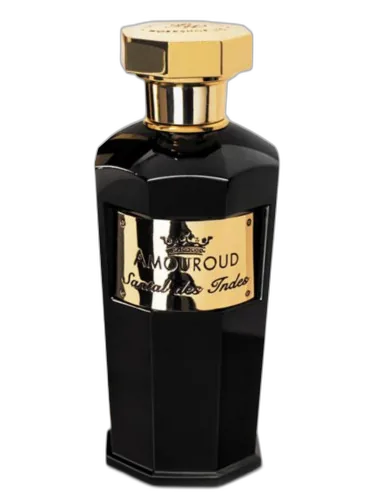
Amouroud
Santal Des Indes Amouroud
Shared accords: amber, aromatic, balsamic
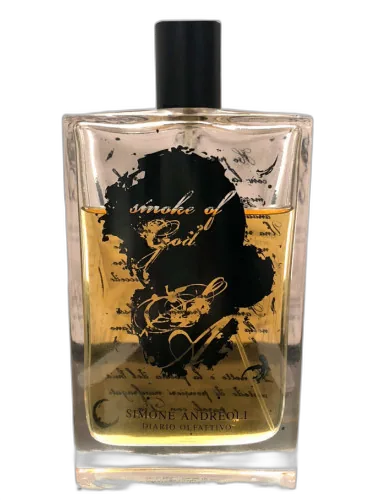
Simone Andreoli
Smoke Of God Simone Andreoli
Shared accords: amber, aromatic, balsamic
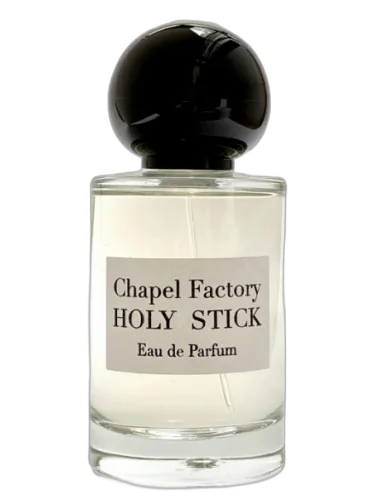
Chapel Factory
Holy Stick Chapel Factory
Shared accords: amber, aromatic, balsamic
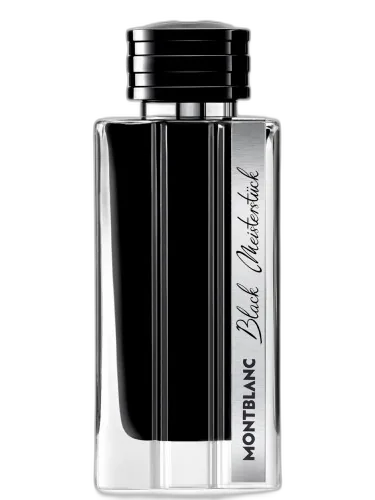
Montblanc
Black Meisterstuck Montblanc
Shared accords: amber, aromatic, balsamic

Comme des Garcons
Comme Des Garcons Series 3 Incense: Kyoto Comme Des Garcons
Shared accords: amber, aromatic, balsamic