


Pink Moon Farmhouse Fresh
At a glance
Is Pink Moon Farmhouse Fresh worth trying?
Pink Moon by Farmhouse Fresh is a Floral fragrance for women.
- Best match
- Casual wear in Spring
- Performance feel
- Moderate longevity with Moderate sillage
- Signature profile
- sweet, powdery, vanilla with Sugar, Shea Nuts, Powdery Notes
The first impression
Pink Moon by Farmhouse Fresh is a Floral fragrance for women. Pink Moon was launched in 2019.
What shapes the scent
The perfumer behind it

Farmhouse Fresh
Farmhouse Fresh focuses on natural, farm-to-bottle fragrances with a rustic charm. Their scents often feature garden-fresh florals, herbs, and fruits for a wholesome feel. The brand emphasizes simplicity and purity, avoiding synthetic overloads. Their creations evoke the warmth and authenticity of countryside living.
Notes pyramid
All Notes
Complete scent profile
 Sugar
Sugar
 Shea Nuts
 Powdery Notes
 Licorice
The mood it creates
The Innocent Archetype: Portrait of Pink Moon Farmhouse Fresh
Essence
At the core of this person’s being lies the Innocent archetype, a soul untouched by cynicism, seeking purity, simplicity, and a return to something elemental. The fragrance Pink Moon Farmhouse Fresh-with its notes of wildflowers, sun-warmed wood, and crisp linen-speaks to their deep yearning for an unspoiled world, one where beauty is gentle and life moves at the pace of seasons rather than screens.
The Innocent is not naive in the pejorative sense; they are instead deliberately hopeful, choosing to see the world through a lens of optimism. They believe in goodness, in the restorative power of nature, in the quiet magic of small moments. Yet, like all archetypes, this one casts a shadow-one of fragility, avoidance, and at times, a reluctance to face the darker complexities of existence.
Relationships
In love and friendship, they are gentle presences, listeners more than speakers, offering comfort without demand. Their relationships thrive on sincerity; they have little patience for posturing or games. Yet, their aversion to conflict can make them passive, allowing resentment to simmer beneath a serene surface. They may struggle to voice their needs, fearing that doing so will disrupt the harmony they so cherish.
They are drawn to kindred spirits-those who share their appreciation for stillness, for the poetry of everyday life. But they may also unconsciously seek out stronger personalities, those who can anchor them when their idealism falters. In their shadow, they risk becoming dependent, mistaking their longing for simplicity for a need to be shielded from life’s inevitable storms.
Shadow
The Innocent’s greatest weakness is their fear of corruption. They recoil from harsh truths, from the messiness of human nature. When reality fails to match their vision-when friendships sour, when love betrays, when the world proves indifferent to their ideals-they may retreat further into fantasy, into a curated existence where nothing is allowed to stain their perfect stillness.
This avoidance can render them fragile, ill-equipped to navigate adversity. Their optimism, once a strength, becomes a defense mechanism, a way to deny the necessity of struggle. They must learn that purity is not the absence of darkness but the courage to face it-that true resilience is not found in escape, but in integration.
Conclusion
Their home is a sanctuary of soft textures, muted colors, and carefully chosen objects-each carrying meaning. Worn books with dog-eared pages, hand-thrown pottery, dried wildflowers in glass jars. They prefer natural materials, things that age gracefully, that bear the marks of time without losing their essence. Their wardrobe leans toward linen, cotton, and loose silhouettes-nothing constricting, nothing overly adorned.
They are drawn to slow living, to rituals that ground them: morning tea in a favorite mug, evening walks where they memorize the shapes of clouds. They may keep a garden, even if only a few pots of herbs on a windowsill, because tending to living things satisfies a primal need to nurture. Their philosophy is not one of grand manifestos but of quiet resistance-against haste, against excess, against the erosion of wonder.
If you like this, try these
Fragrances with a comparable profile - shared accords, notes, and character.

Bath & Body Works
Happy Birthday Frosted Vanilla Bath & Body Works
Shared accords: powdery, sweet, vanilla
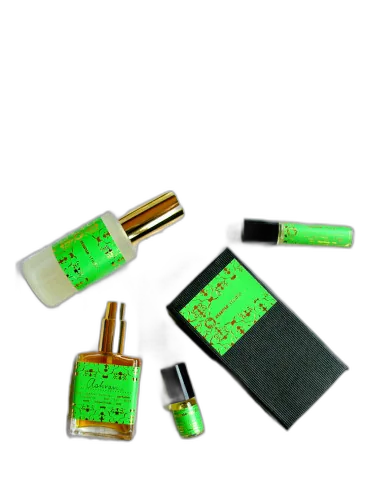
DSH Perfumes
Cotton Candy Dsh Perfumes
Shared accords: powdery, sweet, vanilla

Il Profumiere
Vaniglia 07 Il Profumiere
Shared accords: powdery, sweet, vanilla

Parfums et Senteurs du Pays Basque
Madeleine Parfums Et Senteurs Du Pays Basque
Shared top notes: sugar

Air & Weather
Spilled Milk Air & Weather
Shared top notes: sugar