


Maggie’s Last Party Filigree & Shadow
Fragrance Story
Maggie’s Last Party by Filigree & Shadow is a fragrance for women and men. This is a new fragrance. Maggie’s Last Party was launched in 2024. The nose behind this fragrance is James Elliott.
Composition Profile
About the Perfumer

James Elliott
James Elliott is a perfumer associated with the niche house Filigree & Shadow, where he crafted a range of evocative scents. His creations include A Single Wish, A Way To Say Goodbye, and Aeon, among others. Elliott's work often explores abstract and emotional themes through fragrance.
Fragrance Notes
All Notes
Complete scent profile
 Tobacco
 latex
latex
 Animal notes
 Leather
Character Profile
The Lover Archetype: Portrait of Maggie’s Last Party Filigree & Shadow
Essence
At their core, this individual embodies the Lover archetype, though not in its simplistic, romanticized form. Their love is not merely for people but for experience itself-for the textures of life, the poetry of moments, the way a scent can unravel memory. They seek intensity in all things, whether in art, conversation, or solitude. Yet, like all archetypes, the Lover has its shadow: a tendency toward indulgence, a fear of banality, and a hunger that can never be fully sated.
Style & Aesthetic
Their aesthetic is one of curated decadence-vintage velvet paired with modern minimalism, a bookshelf lined with both French decadent poetry and stark existential philosophy. They prefer dim lighting, not to hide but to reveal depth. Their wardrobe is a study in textures: silk that whispers, leather that remembers, linen that breathes. They collect objects not for their utility but for their resonance-a cracked porcelain teacup, a faded postcard from a city they’ve never visited.
Music is an intimate companion, ranging from the mournful strings of Arvo Pärt to the feverish pulse of Nick Cave. They do not merely listen; they dissolve into sound. Their taste in literature leans toward the lyrical and the tragic-Marguerite Duras, Yukio Mishima, Fernando Pessoa-writers who understand that beauty and sorrow are inseparable.
They live deliberately, though not always wisely. Mornings might begin with black coffee and Nietzsche, evenings with absinthe and Debussy. They are capable of monastic focus when working on a creative project, yet equally capable of losing themselves in a night of reckless abandon.
Their home is a sanctuary, a carefully constructed world where every object tells a story. They are not materialistic in the conventional sense-they care little for status symbols-but they are deeply sensual, surrounding themselves with things that stir the soul.
Philosophy & Values
For them, life is not about happiness in the conventional sense but about meaning through sensation. They believe in the sacredness of the ephemeral-the way a glance, a scent, or a line of poetry can contain an entire universe. They are drawn to the idea that existence is both absurd and achingly beautiful, and they navigate this paradox with a mixture of hedonism and melancholy.
They value authenticity, but not in the crude sense of mere honesty. To them, authenticity is the courage to embrace one’s contradictions-to be both fragile and fierce, to revel in excess while yearning for purity. They despise mediocrity, not out of arrogance, but because they see it as a betrayal of life’s potential.
Relationships
Their relationships are intense, layered, and often fleeting. They do not love lightly, but neither do they love predictably. They are drawn to people who mirror their own complexity-those who can discuss Rilke at midnight and then laugh at something utterly frivolous. Their romantic entanglements are marked by passion, but also by an unspoken understanding that nothing lasts.
Friendship, for them, is a form of communion. They collect souls like rare wines, savoring each for its distinct flavor. Yet, they are not sentimental; they accept that some bonds are meant to dissolve, leaving only a lingering trace, like perfume on a pillow.
Shadow
The Lover’s greatest strength-their capacity for deep feeling-is also their greatest vulnerability. Their hunger for intensity can lead to self-destruction, a chasing of sensation that leaves them empty. They may romanticize melancholy to the point of paralysis, or indulge in escapism under the guise of "living deeply."
Their disdain for the mundane can make them impatient with ordinary life, leading to a restlessness that never finds peace. They may also struggle with commitment, not out of coldness, but because they fear that stability will dull their senses.
Conclusion
This is a person who lives at the edges-of emotion, of experience, of thought. They are neither fully hedonist nor ascetic, but something in between: a soul who understands that life’s richest moments are often its most fleeting. Their flaw is their excess; their gift is their depth.
They do not seek answers so much as they seek the right questions-the ones that make the heart tremble. And in the end, perhaps that is enough.
Similar Fragrances
Fragrances with a comparable profile - shared accords, notes, and character.
Filigree & Shadow
Maggie’s Last Party Filigree & Shadow
Shared accords: animalic, leather, musky
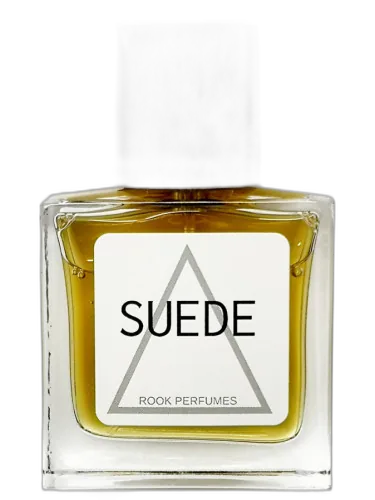
Rook Perfumes
Suede Rook Perfumes
Shared accords: animalic, leather, musky

enSoie
1990 Ensoie
Shared accords: animalic, leather, musky

UNTITLED
Untitled No.8 By Brent Leonesio Untitled
Shared accords: animalic, leather, musky

Pure Sense
Inlove Pure Sense
Shared accords: animalic, leather, musky