
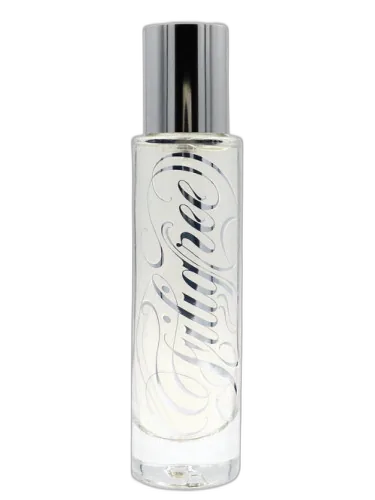

Sui Generis Filigree & Shadow
At a glance
Is Sui Generis Filigree & Shadow worth trying?
SUI GENERIS by Filigree & Shadow is a fragrance for women and men.
- Best match
- Evening wear in Fall
- Performance feel
- Good longevity with Moderate sillage
- Signature profile
- leather, animalic, rose with Bubble Gum, Metallic notes, Rose
The first impression
SUI GENERIS by Filigree & Shadow is a fragrance for women and men. SUI GENERIS was launched in 2015. The nose behind this fragrance is James Elliott. Top notes are Bubble Gum and Metallic notes; middle note is Rose; base notes are Leather and Rubber.
What shapes the scent
The perfumer behind it

James Elliott
James Elliott is a perfumer associated with the niche house Filigree & Shadow, where he crafted a range of evocative scents. His creations include A Single Wish, A Way To Say Goodbye, and Aeon, among others. Elliott's work often explores abstract and emotional themes through fragrance.
Notes pyramid
Top Notes
First impression · 15-30 min
 Bubble Gum
 Metallic notes
Heart Notes
Core character · 2-4 hours
 Rose
Rose
Base Notes
Lasting impression · 4+ hours
 Leather
 Rubber
The mood it creates
The Sui Generis Filigree Archetype: Portrait of Sui Generis Filigree & Shadow
Essence
To wear Sui Generis Filigree & Shadow is to embrace contradiction-a fragrance that is at once delicate and dark, intricate yet elusive. The person who chooses this scent is not one for simple categorizations; they dwell in the liminal spaces between light and shadow, structure and chaos. Their essence is best captured by the Archetype of the Mystic, the seeker who navigates the unseen, the symbolic, and the profoundly personal.
Shadow
Yet every archetype has its shadow, and the Mystic is no exception. Their preference for the unseen can sometimes become a retreat from the tangible world. They may struggle with periods of profound isolation, not because they dislike people, but because they find the surface-level exchanges of daily life exhausting. At their worst, they slip into melancholy, romanticizing their own sadness as a form of depth.
Their resistance to structure can also manifest as self-sabotage. They may abandon practical responsibilities in favor of chasing ephemeral inspirations, leaving unfinished projects in their wake. Their disdain for convention can harden into cynicism, making them dismissive of those who find comfort in simplicity.
And then there is the danger of the labyrinth-their own mind. The same intuition that guides them can become a hall of mirrors, where every thought leads to another, and reality blurs into abstraction. Without grounding, they risk losing themselves in their own mythology.
The lover of Filigree & Shadow is neither wholly of this world nor entirely apart from it. They are the quiet observer at the edge of the party, the one who leaves just before dawn, their absence more palpable than their presence. Their life is a tapestry of contradictions-beauty and decay, clarity and obscurity, connection and solitude.
They do not seek to resolve these tensions. Instead, they live within them, finding meaning not in answers but in the act of questioning. To know them is to understand that some truths are not meant to be spoken-only sensed, like the lingering trace of a fragrance long after its wearer has gone.
Conclusion
This individual moves through the world with a quiet intensity, their presence felt more in silence than in speech. They are drawn to the enigmatic-poetry that resists easy interpretation, music that lingers in minor keys, art that suggests rather than declares. Their taste is refined but never ostentatious; they prefer textures that whisper-aged velvet, oxidized silver, parchment-thin paper. Their wardrobe is a study in restrained elegance, favoring deep hues and subtle layering, as if they are always half-concealed, half-revealed.
Philosophy, for them, is not an abstract exercise but a lived experience. They are drawn to thinkers who embrace paradox-Nietzsche’s eternal recurrence, Jung’s union of opposites, the Taoist balance of yin and yang. They believe that truth is not found in absolutes but in the tension between them. Their values are rooted in authenticity, though their version of it is deeply personal-they reject dogma, preferring instead to construct their own meaning from fragments of wisdom gathered across cultures and eras.
If you like this, try these
Fragrances with a comparable profile - shared accords, notes, and character.

Zara
Leather Jardin Zara
Shared heart notes: rose
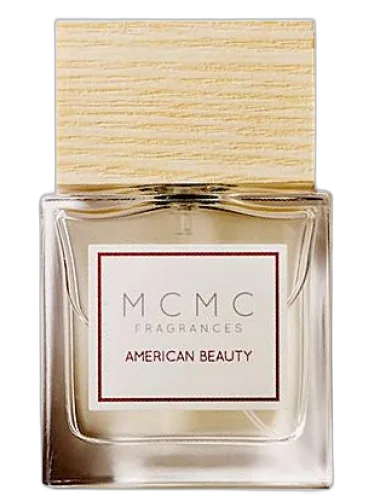
MCMC Fragrances
American Beauty Mcmc Fragrances
Shared heart notes: rose
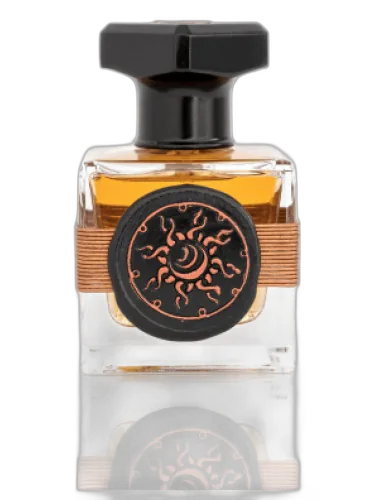
Bale Perfumes
The White Flame (biały Płomień) Bale Perfumes
Shared top notes: metallic notes

Neil Morris
Rose Tattoo Neil Morris
Shared heart notes: rose

Terry de Gunzburg
Bleu Paradis Terry De Gunzburg
Shared heart notes: rose