
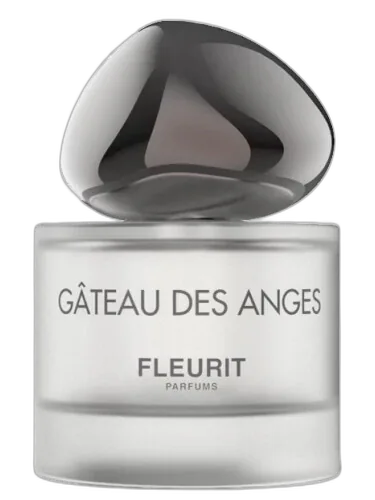

Gâteau Des Anges Fleurit Parfums
Fragrance Story
Gâteau des Anges by Fleurit Parfums is a Oriental Vanilla fragrance for women and men. This is a new fragrance. Gâteau des Anges was launched in 2024. The nose behind this fragrance is Maud Chabanis. Top notes are Butter, Peach, Lemon and Whiskey; middle notes are Caramel, Milk and Honeysuckle; base notes are Vanilla, Gourmand Accord and Tuberose.
Composition Profile
About the Perfumer

Maud Chabanis
Maud Chabanis is a French perfumer whose work spans multiple brands, including Anconu, Fleurit Parfums, and Free Yourself. Her catalog features diverse creations such as Ladan Dusk, Rosebud Moss, and Fleurs De Déesse, often highlighting floral and gourmand notes. Chabanis is known for her ability to craft both delicate and rich olfactory experiences.
Fragrance Notes
Top Notes
First impression · 15-30 min
 Butter
 Peach
Peach
 Lemon
Lemon
 Whiskey
Heart Notes
Core character · 2-4 hours
 Caramel
 Milk
Milk
 Honeysuckle
Base Notes
Lasting impression · 4+ hours
 Vanilla
 Gourmand Accord
 Tuberose
Gâteau Des Anges Fleurit Parfums by Fleurit Parfums offers a distinctive olfactory experience that stands out from other fragrances in its category.
Crafted with the finest ingredients and a blend of traditional and modern perfumery techniques, this fragrance represents the pinnacle of the perfumer's art.
Gâteau Des Anges Fleurit Parfums embodies the distinctive style of Fleurit Parfums while adding a unique chapter to their fragrance portfolio.
Character Profile
The Lover Archetype: Portrait of Gâteau Des Anges Fleurit Parfums
Essence
This person is most closely aligned with the Innocent archetype-a soul who seeks purity, simplicity, and a return to beauty untouched by cynicism. Yet, theirs is not a naive innocence, but one that has consciously chosen to preserve wonder in a world that often rewards hardness. The fragrance they adore, Gâteau Des Anges Fleurit, is a delicate blend of sugared florals and soft vanilla, evoking an ethereal sweetness-like the memory of childhood bliss, but refined into something more knowing, more intentional.
Philosophy & Values
They believe in kindness as a discipline, not just a reflex. Their morality is not dogmatic but intuitive-they recoil from cruelty, not out of moral superiority, but because it feels like a violation of some deeper harmony. They are drawn to philosophies that emphasize the interconnectedness of life, perhaps dipping into Zen Buddhism or the writings of Rilke.
Yet, their idealism is not without tension. They know the world is not as soft as they wish it to be, and this knowledge creates a quiet melancholy beneath their serene exterior. They may privately struggle with disillusionment when reality fails to match their inner vision.
Relationships
In love and friendship, they are warm but guarded-not out of fear, but from a desire to preserve the sacredness of connection. They do not give their trust lightly, but once given, it is deep and enduring. Their relationships are built on shared moments of tenderness: handwritten letters, picnics in golden-hour light, the ritual of tea shared in silence.
Yet, their shadow emerges here-sometimes, their need for harmony makes them avoid conflict. They may swallow grievances to keep the peace, only to later resent the weight of unspoken words. Their partners or friends might mistake their gentleness for passivity, not realizing the quiet strength it takes to maintain such grace in an ungraceful world.
Shadow
The Innocent’s greatest weakness is the temptation to retreat entirely into the beautiful illusion. When life becomes too harsh, they may withdraw into fantasy, refusing to engage with necessary struggles. Their avoidance can manifest as procrastination, daydreaming, or even a subtle manipulation of circumstances to maintain their bubble of serenity.
At their worst, they risk becoming fragile-not because they are weak, but because they have not fully integrated the darker aspects of existence. Their challenge is to learn that true innocence is not ignorance, but the courage to face the world and still choose sweetness.
Conclusion
Their life is a carefully curated refuge from the abrasive edges of modernity. They surround themselves with textures that comfort-cashmere throws, linen dresses, porcelain teacups with faint floral motifs. Their home is a place of soft light, pastel hues, and the faint scent of baked goods, even if they never bake. There is an intentionality to their aesthetic, a resistance to the chaotic and the harsh. They do not deny the existence of suffering, but they refuse to let it define their personal cosmos.
Their taste in art leans toward the impressionistic-Monet’s water lilies, Chagall’s floating lovers. Music is often gentle, melodic, perhaps a touch nostalgic: Debussy, Cocteau Twins, or the quieter moments of Sufjan Stevens. They do not scorn depth, but they prefer it wrapped in beauty rather than exposed in raw, jagged forms.
Similar Fragrances
Fragrances with a comparable profile - shared accords, notes, and character.
Fleurit Parfums
Gâteau Des Anges Fleurit Parfums
Shared accords: caramel, fruity, lactonic

Pacifica
Hardcore Happy Pacifica
Shared accords: lactonic, powdery, sweet
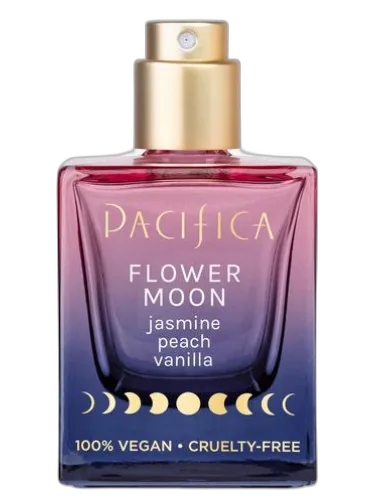
Pacifica
Flower Moon Pacifica
Shared accords: fruity, powdery, sweet

Faberlic
Beauty Cafe Delice Faberlic
Shared accords: fruity, lactonic, powdery

All Good Scents
Miss Diva Fashionista All Good Scents
Shared accords: fruity, lactonic, powdery