


Lisianthus Flora Pura
At a glance
Is Lisianthus Flora Pura worth trying?
Lisianthus by Flora Pura is a Floral fragrance for women.
- Best match
- Casual wear in Spring
- Performance feel
- Good longevity with Moderate sillage
- Signature profile
- citrus, white floral, rose with Tangerine, Bergamot, Eustoma | Lisianthus
The first impression
Lisianthus by Flora Pura is a Floral fragrance for women. This is a new fragrance. Lisianthus was launched in 2022. The nose behind this fragrance is Edison Fujita. Top notes are Tangerine and Bergamot; middle notes are Eustoma | Lisianthus, Grasse Rose and Jasmine Sambac; base notes are Musk, Vetiver, Sandalwood and Patchouli.
What shapes the scent
The perfumer behind it

Edison Fujita
Edison Fujita is a Brazilian perfumer with a diverse portfolio spanning multiple brands, including Ana Hickmann's Donna Bouquet and Avatim's Amaú, Boníssimo Black, Gigi Lazuli, Seleto, Seleto Herbo, and Sublime. He also created Betty Boop Cute for the Betty Boop line. Fujita's work ranges from playful and floral to sophisticated and woody.
Notes pyramid
Top Notes
First impression · 15-30 min
 Tangerine
 Bergamot
Heart Notes
Core character · 2-4 hours
 Eustoma | Lisianthus
 Grasse Rose
Jasmine Sambac
Grasse Rose
Jasmine Sambac
Base Notes
Lasting impression · 4+ hours
 Musk
Musk
 Vetiver
 Sandalwood
 Patchouli
The mood it creates
The Lover Archetype: Portrait of Lisianthus Flora Pura
Essence
The one who chooses Lisianthus Flora Pura is not merely drawn to a fragrance-they are drawn to an essence, a distilled vision of purity, softness, and quiet radiance. Their soul aligns most closely with The Innocent, an archetype defined by optimism, idealism, and a deep longing for harmony. The Innocent does not merely hope for beauty-they expect it, as if the world owes them a certain grace. Their faith in goodness is both their greatest strength and their most fragile illusion.
Shadow
But purity, when untested, is merely naivety. The Innocent’s greatest flaw is their refusal to see the world as it is-not as they wish it to be. When reality contradicts their ideals, they do not adapt-they retreat. Betrayal, cruelty, or even simple indifference can shatter them in ways that more resilient souls would absorb. Their optimism, once a strength, becomes a defense mechanism, a way to avoid the necessary friction of growth.
They may grow resentful when others fail to meet their expectations, yet they rarely voice this resentment directly. Instead, it simmers beneath the surface, emerging as passive-aggressive sighs, sudden withdrawals, or a quiet martyrdom. They fear confrontation, not out of weakness, but because it forces them to acknowledge that their perfect world does not-cannot-exist.
The lover of Lisianthus Flora Pura is neither wholly naive nor entirely fragile. Their idealism is not weakness-it is a choice, a stubborn insistence on seeing beauty even when it is not readily apparent. But they must learn that true grace is not the absence of darkness, but the ability to hold both light and shadow without breaking.
They will never be cynics, nor should they be. But if they can temper their idealism with wisdom-if they can love the world despite its flaws rather than denying them-they will find a deeper, more enduring kind of purity. One that is not easily shattered. One that is real.
Conclusion
Their world is one of delicate aesthetics-soft fabrics, muted colors, spaces where sunlight filters through sheer curtains. They prefer the understated over the ostentatious, the whisper over the shout. Their taste leans toward the ethereal: pastel watercolors, the poetry of Rilke, the quiet melancholy of Debussy’s Clair de Lune. They are drawn to things that seem untouched by cynicism, as if they are curating a sanctuary from life’s harsher edges.
Philosophically, they believe in kindness as a first principle. They do not merely practice it-they need it to be true, as if the alternative would unravel something fundamental in them. Their values are rooted in fairness, gentleness, and an almost childlike trust in the inherent decency of people. They are the friend who remembers birthdays with handwritten notes, who brings tea to a grieving companion without needing to be asked.
In relationships, they seek depth without conflict, intimacy without demands. They are drawn to people who mirror their own idealism, who share their belief in love as something sacred and uncomplicated. Their love is tender, devoted-but it can also be fragile, expecting too much of others while offering too little room for human flaws.
If you like this, try these
Fragrances with a comparable profile - shared accords, notes, and character.

Hors La Monde
Lady Shiloh Hors La Monde
Shared top notes: bergamot, tangerine

La Rive
My Delicate La Rive
Shared top notes: bergamot, tangerine
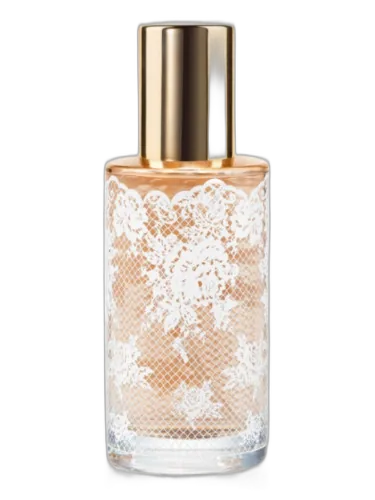
Faberlic
O Feerique Emotionelle Faberlic
Shared top notes: bergamot, tangerine
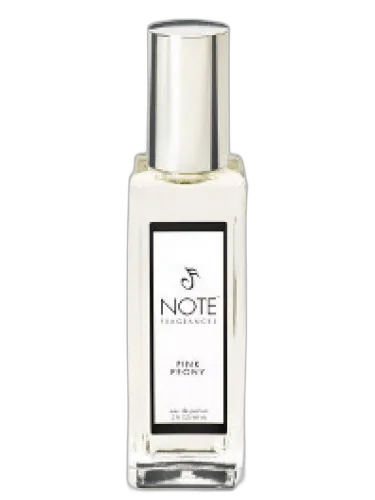
Note Fragrances
Pink Peony Note Fragrances
Shared top notes: bergamot, tangerine

Alviero Martini
Geo Donna Alviero Martini
Shared top notes: bergamot, tangerine