
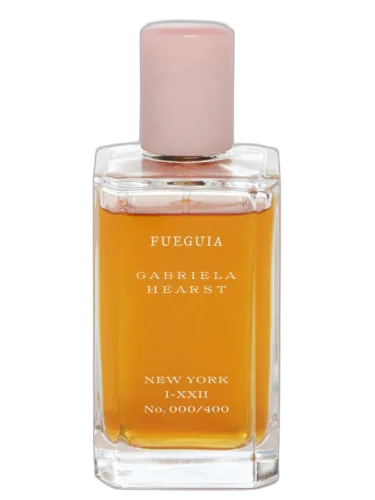
New York (gabriela Hearst) Fueguia 1833
At a glance
Is New York (gabriela Hearst) Fueguia 1833 worth trying?
New York (Gabriela Hearst) by Fueguia 1833 is a Woody fragrance for women and men.
- Best match
- Evening wear in Fall
- Performance feel
- Very Good longevity with Moderate sillage
- Signature profile
- woody, fresh spicy, floral with Nutmeg, Balsam Fir, Black Pepper
The first impression
New York (Gabriela Hearst) by Fueguia 1833 is a Woody fragrance for women and men. This is a new fragrance. New York (Gabriela Hearst) was launched in 2023. The nose behind this fragrance is Julian Bedel. Top notes are Nutmeg, Balsam Fir and Black Pepper; middle notes are Tobacco, Cherry Blossom and Rose; base notes are Woody Notes, Maple, Palo Santo, Virginian Cedar, Patchouli, Musk, Vanilla, Tonka and Jacaranda.
What shapes the scent
The perfumer behind it

Julian Bedel
Julian Bedel is a perfumer for Fueguia 1833, an Argentine niche fragrance house. His catalog includes Acacia, Agua De Gardenia, and Agua Magnoliana, as well as Aguila De Ambar, Alba, Alhambra, Alma, and Amalia Gourmand. His compositions often draw from natural ingredients and South American inspirations.
Notes pyramid
Top Notes
First impression · 15-30 min
 Nutmeg
 Balsam Fir
 Black Pepper
Heart Notes
Core character · 2-4 hours
 Tobacco
 Cherry Blossom
 Rose
Rose
Base Notes
Lasting impression · 4+ hours
 Woody Notes
 Maple
Maple
 Palo Santo
Virginian Cedar
Palo Santo
Virginian Cedar
 Patchouli
 Musk
Musk
 Vanilla
Tonka
Vanilla
Tonka
 Jacaranda
The mood it creates
The Alchemist Archetype: Portrait of New York (gabriela Hearst) Fueguia 1833
Essence
This person is, above all, a seeker of knowledge-not in the dry, academic sense, but in the way of one who distills wisdom from experience. The Sage archetype dominates their psyche, manifesting as an insatiable curiosity, a love for the esoteric, and an almost alchemical ability to transform the mundane into the profound. New York (Gabriela Hearst) Fueguia 1833, with its blend of smoky leather, warm spices, and delicate florals, mirrors their essence: complex, refined, and layered with hidden meaning.
Style & Aesthetic
Their wardrobe is an exercise in controlled elegance. They favor structured silhouettes-tailored coats, sharp blazers, fine knits-but with an undercurrent of sensuality, perhaps a silk scarf or a piece of antique jewelry. Their style is not ostentatious, but it is deliberate. Every item is chosen for its narrative, its texture, its quiet power.
In art and literature, they are drawn to works that demand engagement: Borges’ labyrinths, Tarkovsky’s lingering cinematography, the dissonant harmonies of Arvo Pärt. They have little patience for the obvious or the sentimental. Their taste in fragrance reflects this-New York is not a scent that announces itself loudly, but one that lingers, revealing its secrets slowly.
They inhabit cities like New York, London, or Berlin-places dense with history and possibility. Their home is a sanctuary of books, art, and carefully curated objects. They might keep a journal, not for recording daily events, but for tracing the evolution of their thoughts.
They are likely to have a disciplined routine-morning coffee with a book, long walks to observe the world, evenings spent in deep conversation or solitary reflection. They may practice a craft-writing, photography, even perfumery-as a way to externalize their inner world.
Philosophy & Values
They believe the world is a text to be deciphered, and they move through it with the quiet intensity of an interpreter. Their philosophy is one of synthesis-they reject binary thinking, preferring instead to find the third, hidden option that reconciles contradictions. They value intelligence, but not mere cleverness; what they admire is depth, the kind that comes from sustained reflection.
Materialism, in its crassest forms, repels them, yet they are not ascetics. They appreciate beauty, craftsmanship, and the tactile pleasure of well-made things. Their ethics are rooted in a kind of aesthetic morality: they believe that how one lives-the grace, restraint, and intention behind one’s choices-matters as much as what one achieves.
Relationships
They are not gregarious, but neither are they reclusive. Their friendships are few but deep, built on mutual respect and intellectual sparring. They attract admirers but are wary of shallow adoration-what they crave is the rare mind that can challenge them.
Romantically, they are drawn to those who possess an inner fire, someone whose passion matches their own intensity. Yet, their shadow emerges here: their love of complexity can make them impatient with simplicity, and their analytical nature sometimes leads them to overthink intimacy, turning love into a puzzle rather than a surrender.
Shadow
The Sage’s greatest strength-their intellect-can also become their prison. Their relentless analysis sometimes distances them from raw emotion, leading to a kind of emotional austerity. They may mistake understanding for experience, believing that to name a feeling is to have fully lived it.
Their disdain for the superficial can harden into elitism, a quiet contempt for those who do not share their depth. And their love of complexity may cause them to dismiss simple truths, searching endlessly for nuance where none is needed.
Conclusion
This person is, in essence, an urban alchemist-one who transforms the base metals of everyday life into gold through perception and thought. Their scent, New York, is their emblem: a fragrance that is at once cerebral and sensual, structured yet mysterious.
They walk the line between observer and participant, always slightly apart, always watching. Their challenge is not to lose themselves in the labyrinth of their own mind-to remember that wisdom, in the end, must be lived, not merely contemplated.
If you like this, try these
Fragrances with a comparable profile - shared accords, notes, and character.

Love Republic
Shadow Love Republic
Shared top notes: black pepper
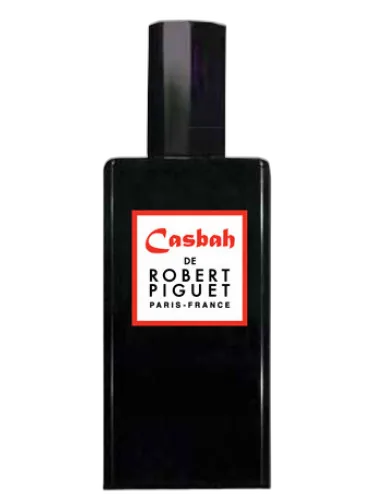
Robert Piguet
Casbah Robert Piguet
Shared top notes: black pepper, nutmeg

O Boticário
Alchemists Oud O Boticário
Shared heart notes: rose, tobacco
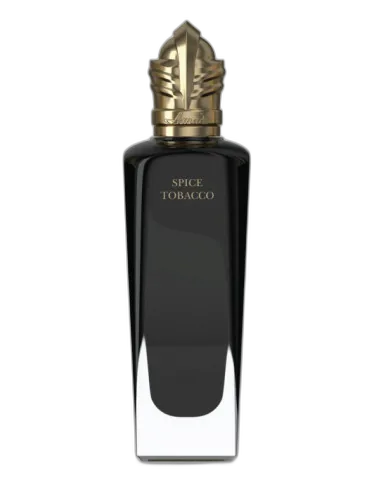
Amado
Spice Tobacco Amado
Shared heart notes: rose, tobacco
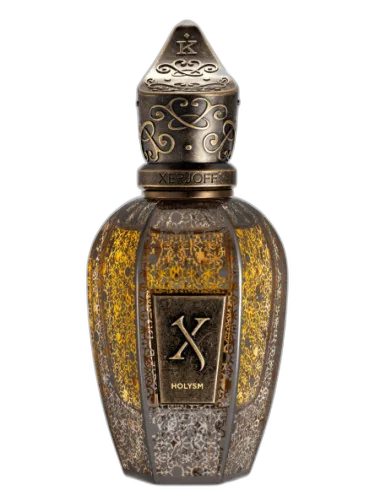
Xerjoff
Holysm Xerjoff
Shared top notes: balsam fir