


Yaken Fueguia 1833
At a glance
Is Yaken Fueguia 1833 worth trying?
Yaken by Fueguia 1833 is a Aromatic Green fragrance for women and men.
- Best match
- Evening wear in Fall
- Performance feel
- Good longevity with Moderate sillage
- Signature profile
- aromatic, amber, yellow floral with Ambergris, Sideritis, Mountain Tea, St. John's Wort
The first impression
Yaken by Fueguia 1833 is a Aromatic Green fragrance for women and men. Yaken was launched in 2015. The nose behind this fragrance is Julian Bedel. Top note is Ambergris; middle note is Sideritis, Mountain Tea; base note is St. John's Wort.
What shapes the scent
The perfumer behind it

Julian Bedel
Julian Bedel is a perfumer for Fueguia 1833, an Argentine niche fragrance house. His catalog includes Acacia, Agua De Gardenia, and Agua Magnoliana, as well as Aguila De Ambar, Alba, Alhambra, Alma, and Amalia Gourmand. His compositions often draw from natural ingredients and South American inspirations.
Notes pyramid
Top Notes
First impression · 15-30 min
 Ambergris
Heart Notes
Core character · 2-4 hours
 Sideritis, Mountain Tea
Base Notes
Lasting impression · 4+ hours
 St. John's Wort
The mood it creates
The Alchemist Archetype: Portrait of Yaken Fueguia 1833
Essence
This person is, above all, a seeker-a modern alchemist who transforms the ephemeral into the eternal through scent. They are not merely a wearer of fragrance but a philosopher of olfaction, drawn to the intellectual and sensory mysteries of Yaken Fueguia 1833. The Sage archetype fits them perfectly, for they are driven by curiosity, wisdom, and an unquenchable thirst for meaning. Like Jung’s archetypal Sage, they value knowledge-not as cold fact, but as lived experience, distilled into the very essence they chooses to embody.
Shadow
Yet the Sage’s wisdom can curdle into isolation. Their reverence for depth sometimes becomes disdain for the mundane. They may dismiss those who don’t share their tastes as "unrefined," forgetting that not everyone has the luxury of such contemplation. Their pursuit of the perfect scent, the perfect idea, can become a form of escapism-a way to avoid the messiness of ordinary life.
In relationships, their need for intellectual stimulation can make them impatient with emotional vulnerability. They may rationalize feelings rather than feel them, retreating into analysis when confronted with raw human need. Their love of solitude, while nourishing, can harden into loneliness if left unchecked.
Conclusion
Their tastes are deliberate, almost ritualistic. They do not follow trends but instead curate a world of textures, scents, and ideas that resonate with their inner vision. Their wardrobe is understated yet precise-linen, wool, and perhaps a single piece of antique jewelry, each item carrying intention. They are drawn to the arts, but not in a passive way; they study the brushstrokes of a painting, the cadence of a poem, the way light falls on a vintage bottle of perfume.
Philosophy is not an abstract exercise for them but a lens through which they interpret life. They might be drawn to Stoicism for its discipline, or to Eastern thought for its embrace of impermanence. Yet they are no ascetic-they believe beauty is necessary, even sacred. Their home reflects this: a blend of minimalism and warmth, where every object has been chosen with care.
If you like this, try these
Fragrances with a comparable profile - shared accords, notes, and character.
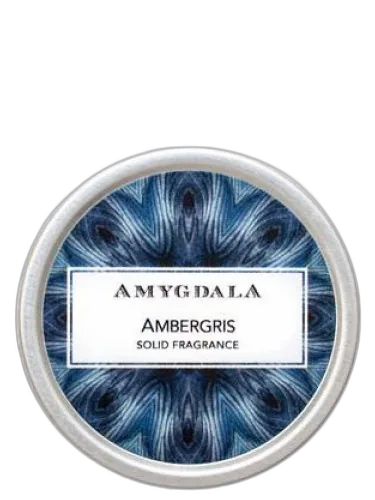
Amygdala
Ambergris Amygdala
Shared top notes: ambergris

Serra & Fonseca
Eau De Moi Serra & Fonseca
Shared top notes: ambergris

Stéphane Humbert Lucas 777
O Hira Stéphane Humbert Lucas 777
Shared top notes: ambergris

Filigree & Shadow
Tell Me About The Forest (you Once Called Home) Filigree & Shadow
Shared top notes: ambergris

Areej Le Doré
Al Ambar Areej Le Doré
Shared top notes: ambergris