
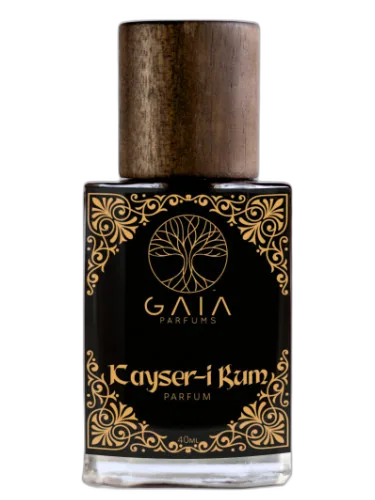

Kayser-i Rum Gaia Parfums
At a glance
Is Kayser-i Rum Gaia Parfums worth trying?
Kayser-i Rum by Gaia Parfums is a Woody fragrance for women and men.
- Best match
- Evening wear in Fall
- Performance feel
- Excellent longevity with Strong sillage
- Signature profile
- woody, animalic, musky with Civet, Cambodian Oud, Resins
The first impression
Kayser-i Rum by Gaia Parfums is a Woody fragrance for women and men. Kayser-i Rum was launched in 2021. The nose behind this fragrance is Anas Sabrani.
What shapes the scent
The perfumer behind it

Anas Sabrani
Anas Sabrani is a perfumer known for his work with Gaia Parfums, where he creates fragrances that often draw on historical and cultural themes. His style blends rich, evocative notes with a sense of narrative, as seen in creations like Al-quds, Babur's Legacy, and Marrakesh Nights. Sabrani’s approach emphasizes storytelling through scent, crafting compositions that transport the wearer to specific places and eras.
Notes pyramid
All Notes
Complete scent profile
 Civet
Civet
 Cambodian Oud
 Resins
 Damask Rose
 Rose
Rose
 Sandalwood
 Patchouli
 Cypriol Oil or Nagarmotha
 Musk
Indian Jasmine
Musk
Indian Jasmine
The mood it creates
The Lover Archetype: Portrait of Kayser-i Rum Gaia Parfums
Essence
At the core of this person’s being lies the Earth Mother archetype-a figure of nurturing depth, sensual wisdom, and primal connection. They are drawn to the scent of Kayser-i Rum Gaia not for its fleeting allure but for its grounding, almost mystical earthiness. This fragrance, with its whispers of damp soil, ancient resins, and quiet warmth, mirrors their soul: rooted in the tangible yet touched by the sacred.
They do not merely wear the scent; they commune with it. It is an extension of their philosophy-that beauty is found in the raw, the unrefined, the things that grow slowly and endure. They are not a creature of artifice but of essence.
Style & Aesthetic
They dress in textures that tell stories-linen that wrinkles with life, wool that carries the memory of sheep and pasture, leather worn smooth by time. Their aesthetic is not minimalist but elemental. They prefer muted tones-ochres, moss greens, deep browns-colors that belong to the earth rather than the neon glare of modernity.
Their presence is calm but magnetic. They do not dominate a room; they alter its atmosphere. When they speak, their words carry weight, not because they are loud, but because they are considered. Silence does not unsettle them-they understand its language.
Philosophy & Values
Their life is a deliberate dance between the wild and the cultivated. They may live in a city, but their home is filled with dried herbs, rough-hewn wood, and stones collected from forgotten places. Their taste in art leans toward the organic-ceramics with imperfect glazes, textiles woven by hand, paintings that evoke landscapes rather than define them.
Philosophically, they reject the modern obsession with speed and disposability. They believe in cycles-growth, decay, rebirth. Their values are anchored in sustainability, not as a trend but as a sacred duty. They are the kind of person who repairs rather than replaces, who listens to the wind as much as they listen to people.
Yet, this reverence for nature is not passive. They are fiercely protective of what they love, whether it be a patch of land, a tradition, or a person. Their loyalty is deep, but it is not blind-they expect reciprocity.
Relationships
In love and friendship, they seek bonds that are nourishing rather than dazzling. They are not impressed by grand gestures but by consistency, by the quiet ways someone shows up day after day. Their relationships are built on trust that is earned slowly, like the layers of sediment in a riverbed.
They are a healer by instinct, often the one friends turn to in crisis. But this strength has its shadow-they can become a reservoir for others’ pain, absorbing too much without replenishing themselves. Their greatest fear is being drained dry by those who take but do not give.
Shadow
For all their nurturing grace, the Earth Mother has a darker aspect. When betrayed or exhausted, their warmth hardens into something immovable. They do not rage; they withdraw. Their silence becomes a wall, their kindness a weapon of absence.
They may also struggle with stagnation. Their love for the enduring can become resistance to change. They might cling to relationships, habits, or ideals long after they have ceased to serve them, mistaking endurance for virtue.
Conclusion
This person is not a wanderer but a guardian-of land, of memory, of the slow, sacred pulse of life. They are both gentle and unyielding, a reminder that the deepest strength is often the quietest.
Their flaw is their virtue taken to excess: their patience can become passivity, their depth can become isolation. But in balance, they are a rare force-a human embodiment of the earth itself, at once fertile and unshakable.
To know them is to understand that some things cannot be rushed, only revered.
If you like this, try these
Fragrances with a comparable profile - shared accords, notes, and character.

PK Perfumes
Dirty Rose Pk Perfumes
Shared top notes: musk, patchouli, rose

JoAnne Bassett
Intimacy Joanne Bassett
Shared top notes: musk, patchouli, rose
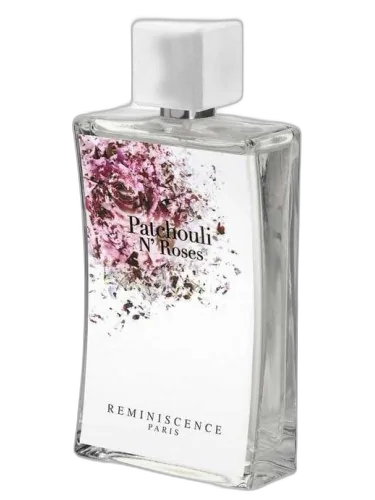
Reminiscence
Patchouli N' Roses Reminiscence
Shared top notes: damask rose, musk, patchouli

Place des Lices
Musc Rose Place Des Lices
Shared top notes: musk, patchouli, rose

SP Parfums Sven Pritzkoleit
Lignum Vitae Forte Sp Parfums Sven Pritzkoleit
Shared top notes: cypriol oil or nagarmotha, musk, patchouli