
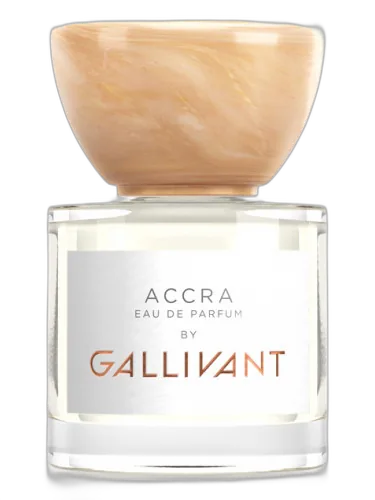

Accra Gallivant
At a glance
Is Accra Gallivant worth trying?
Accra by Gallivant is a Leather fragrance for women and men.
- Best match
- Evening wear in Fall
- Performance feel
- Good longevity with Moderate sillage
- Signature profile
- warm spicy, woody, leather with Chili Pepper, Cognac, Eucalyptus
The first impression
Accra by Gallivant is a Leather fragrance for women and men. This is a new fragrance. Accra was launched in 2023. The nose behind this fragrance is Stephanie Bakouche. Top notes are Chili Pepper, Cognac, Eucalyptus, Papaya, Carrot Seeds, Davana, Mango and Passionfruit; middle notes are Tobacco, Saffron, Cacao, Coffee CO2 and Styrax; base notes are Leather, Patchouli, Vinyl, Cedarwood, Liatrix and Musk.
What shapes the scent
The perfumer behind it

Stephanie Bakouche
Stephanie Bakouche is a versatile perfumer whose work spans multiple brands, including Azaleo, Cloon Keen Atelier, Comporta Perfumes, and Fiilit. Her creations range from Bois Bohème and Sun To Soul to Bataille De Fleurs and Saudade - Amazonia. Bakouche's style often explores floral, woody, and aquatic themes with a refined touch.
Notes pyramid
Top Notes
First impression · 15-30 min
 Chili Pepper
 Cognac
 Eucalyptus
 Papaya
 Carrot Seeds
 Davana
 Mango
Mango
 Passionfruit
Heart Notes
Core character · 2-4 hours
 Tobacco
 Saffron
Cacao
Saffron
Cacao
 Coffee CO2
 Styrax
Base Notes
Lasting impression · 4+ hours
 Leather
 Patchouli
 Vinyl
Cedarwood
Vinyl
Cedarwood
 Liatrix
 Musk
Musk
The mood it creates
The Sage Archetype: Portrait of Accra Gallivant
Essence
To love Accra by Gallivant is to embrace the scent of sun-warmed earth, salty ocean air, and the faintest whisper of spice-an olfactory map of a place both foreign and familiar. The person who wears this fragrance is not merely a traveler but a seeker, one who moves through the world with quiet curiosity, collecting experiences like scattered shells along a shoreline. Their archetype is the Wanderer, though not in the restless, aimless sense-rather, they are a modern-day philosopher-nomad, drawn to the edges of the known, where wisdom lingers in the spaces between departure and arrival.
Style & Aesthetic
Their style is effortless, a blend of the practical and the poetic. Linen shirts that breathe in the heat, well-worn leather sandals, a single piece of jewelry-perhaps a talisman from a distant journey. They prefer textures that tell a story: fabrics that soften with time, objects that bear the marks of use. Their home, if they have one, is not cluttered but curated-a few books, a handful of meaningful artifacts, a scent diffuser with oils reminiscent of places they’ve loved.
They are drawn to art that evokes movement-the blurred edges of an impressionist painting, the rhythm of jazz improvisation, the cadence of free verse. Their taste in literature leans toward the introspective and the existential: Camus, Borges, Woolf. They do not consume culture passively but absorb it, allowing it to reshape them.
Philosophy & Values
For them, life is not a fixed point but a series of unfolding encounters. They are drawn to the transient-the way light shifts over a city at dusk, the fleeting warmth of a stranger’s smile in a marketplace, the impermanence of a scent that fades by afternoon. Their philosophy is one of fluidity: they resist dogma, preferring instead the open-ended question to the rigid answer. They might quote Heraclitus-No man ever steps in the same river twice-not as a platitude, but as a lived truth. Their mind is a mosaic of influences: fragments of poetry, half-remembered conversations in foreign tongues, the textures of landscapes they’ve passed through.
Yet this love of movement is not mere escapism. They do not run from commitment but rather redefine it-loyalty, for them, is not bound to place but to essence. A friend met once in a coastal town may remain closer to them than a neighbor of years. They value depth in brief connections, believing that intensity of experience outweighs duration.
Shadow
But the Wanderer’s strength is also their flaw. Their aversion to stagnation can become a reluctance to plant roots, even when stability might serve them. They may struggle with the mundane, dismissing routine as a kind of death, when in truth, some of life’s deepest revelations come from staying still. Their relationships may suffer from their transience-lovers may feel like waystations, friends like fellow passengers on a train that never stops.
There is also the danger of romanticizing detachment. They might mistake avoidance for enlightenment, believing themselves above the petty concerns of those who stay put. At their worst, they become the eternal outsider, observing life rather than living it, mistaking motion for meaning.
Conclusion
Yet when balanced, the Wanderer is not a ghost but a guide. They remind others that the world is vast and that one’s perspective is always partial. They teach the art of presence-how to be fully in a moment precisely because it will not last. Their gift is the ability to find home in the act of seeking, to make belonging not a fixed address but a state of mind.
And so they walk, bottle of Accra in their bag, leaving traces of salt and warmth wherever they go-not running from anything, but moving toward the next fragment of understanding, the next fleeting proof that to be alive is to be in motion.
If you like this, try these
Fragrances with a comparable profile - shared accords, notes, and character.
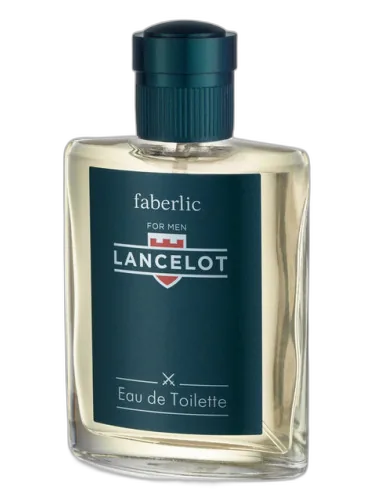
Faberlic
Lancelot Faberlic
Shared base notes: cedarwood, leather, musk

CoSTUME NATIONAL
Secret Woods Costume National
Shared heart notes: saffron, styrax
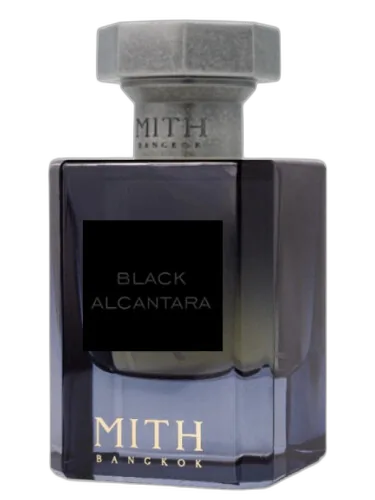
Mith
Black Alcantara Mith
Shared base notes: cedarwood, leather, musk

Ahmed Mahsoub KARIZMA
African Jungle Ahmed Mahsoub Karizma
Shared heart notes: saffron
FELISA
Velvet Tobacco Felisa
Shared heart notes: cacao, tobacco