
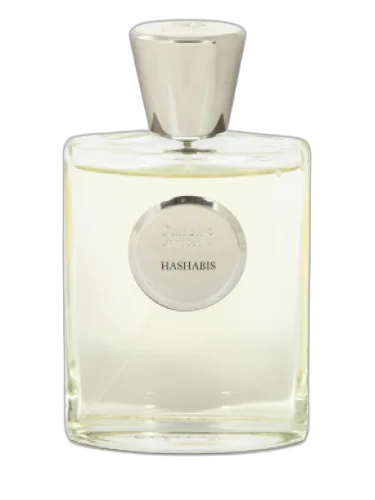

Hashabis Giardino Benessere
At a glance
Is Hashabis Giardino Benessere worth trying?
Hashabis by Giardino Benessere is a Aromatic fragrance for women and men.
- Best match
- Casual wear in Spring
- Performance feel
- Good longevity with Moderate sillage
- Signature profile
- green, cannabis, aromatic with Green Notes, Red Fruits, cannabis
The first impression
Hashabis by Giardino Benessere is a Aromatic fragrance for women and men. Hashabis was launched in 2019. The nose behind this fragrance is Paolo Terenzi. Top notes are Green Notes and Red Fruits; middle notes are cannabis and Red Fruits; base notes are Cedar and Musk.
What shapes the scent
The perfumer behind it

Paolo Terenzi
Paolo Terenzi is a perfumer known for his work with Antonio Croce, creating a range of fragrances including Ardente, Incantevole, Meraviglia, Perfetta, Sofisticata, Straordinaria, and Unica. He also composed 1+7 Extrait De Parfum for D'OTTO. Terenzi's style is characterized by bold, opulent compositions that often feature rich florals and warm resins.
Notes pyramid
Top Notes
First impression · 15-30 min
 Green Notes
 Red Fruits
Heart Notes
Core character · 2-4 hours
 cannabis
Red Fruits
cannabis
Red Fruits
Base Notes
Lasting impression · 4+ hours
 Cedar
Cedar
 Musk
Musk
The mood it creates
The Hashabis Giardino Benesser Archetype: Portrait of Hashabis Giardino Benessere
Essence
This person is most closely aligned with the Sage, an archetype devoted to wisdom, introspection, and the pursuit of harmony. The Sage seeks not just knowledge, but an embodied understanding of balance-between mind and body, self and world. Hashabis Giardino Benessere, with its herbal freshness and tranquil green notes, mirrors this archetype’s essence: a fragrance that evokes the quietude of a secluded garden, a sanctuary where one retreats to reflect and restore.
Style & Aesthetic
Their aesthetic is one of quiet elegance-linen draping effortlessly, unpolished wood, the muted palette of stone and moss. They prefer natural textures, organic shapes, and spaces that breathe. Their home is not a showpiece but a retreat: books on botany and philosophy, a well-worn armchair by a window, perhaps a small, meticulously kept herb garden.
In fashion, they favor simplicity with depth-a cashmere wrap, a perfectly tailored but unstructured blazer, leather shoes that age gracefully. They dislike trends, instead curating a wardrobe that feels timeless, almost monastic in its restraint.
Their taste in art and music leans toward the meditative-ambient soundscapes, Renaissance polyphony, the subdued brushstrokes of Morandi. They are drawn to works that invite contemplation rather than demand reaction.
Their days are structured around rituals-morning tea in silence, evening walks, the careful preparation of meals with seasonal ingredients. They are drawn to practices that merge discipline with pleasure: yoga, journaling, the slow unfurling of a well-aged wine.
Work, for them, must have meaning beyond profit. They thrive in roles that allow autonomy and intellectual engagement-perhaps as a curator, a landscape designer, a therapist, or a writer. They are not ambitious in the conventional sense, but they are deeply committed to mastery in their chosen craft.
Yet, their love of routine can harden into rigidity. When unbalanced, they may resist spontaneity, clinging to control as a substitute for true peace. The Sage’s wisdom, if unchecked, can curdle into dogmatism-an insistence that their way is the only enlightened path.
Philosophy & Values
For them, life is an exercise in refinement-not in the ostentatious sense, but in the cultivation of inner equilibrium. They are drawn to philosophies that emphasize presence, whether through Zen mindfulness, Stoic detachment, or the slow, deliberate rituals of Italian dolce far niente. They believe in the intelligence of nature, the wisdom of restraint, and the necessity of solitude. Their values are not rigid moral codes but fluid principles-adaptability, discernment, and a quiet reverence for beauty in its most understated forms.
Yet, this pursuit of serenity can sometimes slip into detachment, the Sage’s shadow. They may withdraw too far, mistaking isolation for enlightenment, or become overly critical-discerning to the point of dissatisfaction. Their love of harmony can make conflict unbearable, leading them to avoid necessary confrontations in favor of artificial peace.
Relationships
They are not a social butterfly, but neither are they a recluse. Their friendships are few but profound, built on mutual respect for depth and silence as much as conversation. They dislike small talk, preferring exchanges that meander into philosophy, art, or the quiet observations of daily life.
Romantically, they seek a partner who understands their need for solitude, someone who does not mistake their introspection for coldness. Their love is steady, patient, but never effusive-more a slow-burning ember than a wildfire.
The shadow here is emotional reserve. Their devotion to inner peace can make them seem distant, even to those who love them. They may struggle with vulnerability, rationalizing their emotions rather than fully feeling them.
Conclusion
At their best, they are a grounding force-a person whose presence alone seems to slow time, whose insights are offered gently, without pretension. They embody the grace of someone who has learned to live with themselves fully, neither indulging nor denying their nature.
At their worst, they become the Hermit, mistaking solitude for superiority, wisdom for finality. Their aversion to chaos may render them passive in the face of necessary upheaval, and their love of harmony may blind them to the vitality of discord.
But in balance, they are a rare kind of soul-one who does not seek to conquer the world, but to understand it, to walk through it with quiet reverence, leaving behind the faint, green trace of serenity.
If you like this, try these
Fragrances with a comparable profile - shared accords, notes, and character.

Maracujá Brasil
Frutas Vermelhas & Vetiver Maracujá Brasil
Shared top notes: green notes, red fruits

Dailus Lab
Nº 37 Dailus Lab
Shared top notes: green notes
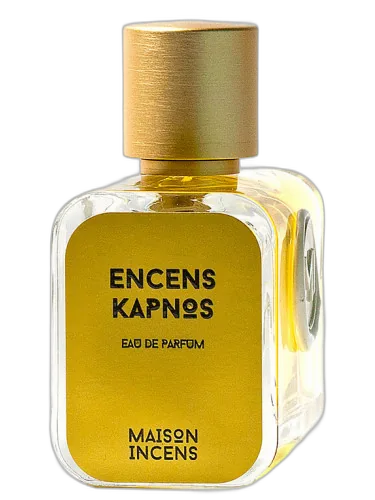
Maison Incens
Encens Kapnos Maison Incens
Shared top notes: green notes, red fruits

Mine Perfume Lab
Cedrum Wood Mine Perfume Lab
Shared heart notes: red fruits

Boitown 冰希黎
L’eau De L’eau Boitown 冰希黎
Shared top notes: green notes