
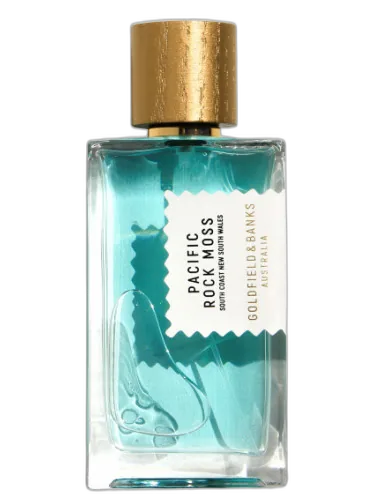

Pacific Rock Moss Goldfield & Banks Australia
At a glance
Is Pacific Rock Moss Goldfield & Banks Australia worth trying?
Pacific Rock Moss by Goldfield & Banks Australia is a Aromatic Aquatic fragrance for women and men.
- Best match
- Casual wear in Summer
- Performance feel
- Good longevity with Moderate sillage
- Signature profile
- aromatic, citrus, herbal with Italian Lemon, Sage, Moss
The first impression
Pacific Rock Moss by Goldfield & Banks Australia is a Aromatic Aquatic fragrance for women and men. Pacific Rock Moss was launched in 2016. Pacific Rock Moss was created by Francois Merle-Baudoin and Hamid Merati-Kashani.
What shapes the scent
The perfumer behind it

Francois Merle-Baudoin
Francois Merle-Baudoin has created fragrances for Fragrance Du Bois and Goldfield & Banks Australia. His portfolio includes Heritage, London Oud, and Blue Cypress. He is known for blending exotic ingredients with modern sensibilities. His work often explores the intersection of tradition and innovation.
Notes pyramid
All Notes
Complete scent profile
 Italian Lemon
 Sage
Moss
Virginia Cedar
Sage
Moss
Virginia Cedar
 Geranium
The mood it creates
The Archetype Archetype: Portrait of Pacific Rock Moss Goldfield & Banks Australia
Essence
To wear Pacific Rock Moss by Goldfield & Banks is to embody a paradox-a soul drawn to the untamed edges of the world yet refined enough to carry its essence into civilization. This fragrance, with its marine freshness, mineral depth, and green vitality, speaks of someone who thrives where land meets sea, where wildness meets sophistication. Their archetype is unmistakable: The Explorer, but not in the restless, wandering sense-rather, one who seeks the sublime in nature’s untouched sanctuaries and translates it into their daily existence.
This person is not content with the mundane. Their spirit craves the salt-kissed air of coastal cliffs, the quiet majesty of moss-covered stones, the invigorating rawness of the ocean. They are drawn to places where nature asserts its dominance, yet they do not merely observe-they absorb, they integrate. Their philosophy is one of harmonious contrast: they believe in the marriage of refinement and wildness, structure and spontaneity.
Their tastes reflect this duality. They prefer minimalist yet tactile aesthetics-linen and raw silk, unpolished wood, ceramics that retain the imprint of the maker’s hand. Their home is a sanctuary of organic textures, where every object feels as though it was found rather than bought. They read poetry that evokes landscapes, listen to music that breathes like the tide-ambient, fluid, never static.
Shadow
Yet, no archetype is without its darkness. The Explorer’s shadow is rootlessness-a reluctance to commit, a fear of stagnation that can border on restlessness. They may struggle with permanence, mistaking routine for imprisonment. Relationships may suffer if they retreat too often into solitude, leaving loved ones to wonder if they are merely a waystation in an endless journey.
There is also the risk of aesthetic detachment-a preference for beauty over depth. They may curate their life so meticulously that it becomes a museum piece, admired but untouched. At worst, they may romanticize hardship, mistaking discomfort for enlightenment, forgetting that true wisdom comes not just from observing the wild but from engaging with the human.
Conclusion
Their greatest strength is their ability to find beauty in desolation. Where others see barren rocks, they see sculptural forms shaped by time. They are drawn to the liminal-dawn and dusk, the shifting tides, the moment before a storm breaks. This sensitivity makes them magnetic; they possess an aura of quiet intensity, as though they carry a secret knowledge of the earth’s whispers.
In relationships, they are not clingers but companions-people are drawn to their self-possession, their ability to be fully present without demanding possession. They love deeply but without desperation, for they understand that all connections, like the sea, must ebb and flow. Their friendships are built on shared wonder-hiking at dawn, swimming in cold waters, long conversations under open skies.
Professionally, they thrive in fields that allow them to merge creativity with exploration-environmental design, photography, sustainable fashion, even marine biology. They are not corporate climbers; they seek vocations that align with their reverence for the natural world.
If you like this, try these
Fragrances with a comparable profile - shared accords, notes, and character.

Toni Cabal
302m - Cedar & Moss Toni Cabal
Shared top notes: geranium, moss, virginia cedar
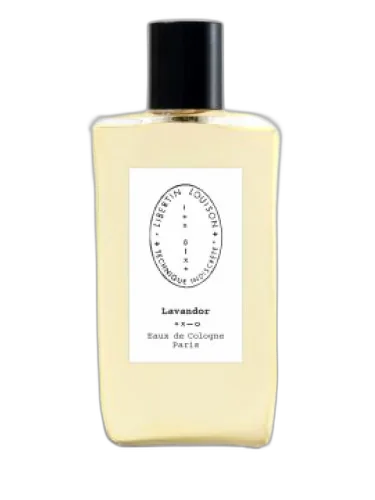
Libertin Louison Technique Indiscrete
Lavandor Libertin Louison Technique Indiscrete
Shared top notes: italian lemon, sage
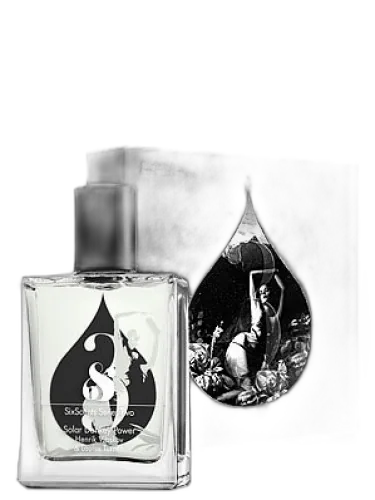
Six Scents
Six Scents Series Two 3 Henrik Vibskov: Solar Donkey Power Six Scents
Shared top notes: geranium, sage

Caswell Massey
Mammoth Fragrance Tonic Caswell Massey
Shared top notes: sage
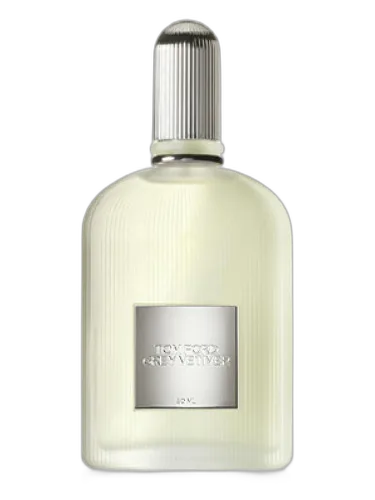
Tom Ford
Grey Vetiver Tom Ford
Shared top notes: sage