
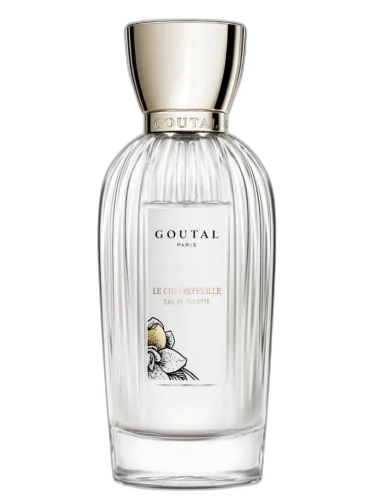

Le Chevrefeuille Goutal
At a glance
Is Le Chevrefeuille Goutal worth trying?
Le Chevrefeuille by Goutal is a Floral Green fragrance for women.
- Best match
- Casual wear in Spring
- Performance feel
- Moderate longevity with Moderate sillage
- Signature profile
- white floral, citrus, green with Honeysuckle, Lemon, Green Notes
The first impression
Le Chevrefeuille by Goutal is a Floral Green fragrance for women. Le Chevrefeuille was launched in 2002. Le Chevrefeuille was created by Isabelle Doyen and Camille Goutal.
What shapes the scent
The perfumer behind it

Camille Goutal
Camille Goutal is a perfumer associated with the Goutal brand, continuing its legacy of artistic fragrances. She has created notable scents such as Ambre Fétiche, Bois D'hadrien, and La Violette. Her work often emphasizes natural floral and amber notes with a refined sensibility.
Notes pyramid
All Notes
Complete scent profile
 Honeysuckle
 Lemon
Lemon
 Green Notes
 Petitgrain
 Jasmine
 Narcissus
The mood it creates
The Innocent Archetype: Portrait of Le Chevrefeuille Goutal
Essence
To wear Le Chevrefeuille by Goutal is to carry the scent of sunlit mornings, dewy grass, and the delicate sweetness of honeysuckle winding through a forgotten garden. This person is not merely drawn to fragrance-they are drawn to the memory of fragrance, the way it evokes an untouched world, pure and untroubled. Their soul resonates with the Innocent archetype, one who seeks harmony, simplicity, and the unspoiled beauty of life.
They are not naive, though some mistake them for it. Rather, they have chosen to cultivate a space where optimism is a philosophy, not an accident. Their presence is soft yet magnetic, like the quiet persistence of vines climbing a trellis-unassuming, yet impossible to ignore.
Style & Aesthetic
Their aesthetic is one of effortless grace-linen dresses, loose cotton shirts, straw hats that seem to have been kissed by the sun. They prefer muted earth tones, the kind that blend into a summer meadow rather than demand attention. Their home is filled with wildflowers in mismatched vases, well-worn books with dog-eared pages, and the faint hum of a record player spinning folk melodies from another era.
They believe in the goodness of people, not out of ignorance, but as an act of defiance against cynicism. Their philosophy is simple: life is too short to dwell in bitterness. They find joy in small rituals-morning tea in a chipped porcelain cup, handwritten letters sent for no reason, the way light filters through leaves in the late afternoon.
Yet, this idealism is not without its cost. They sometimes mistake avoidance for peace, turning away from conflict rather than facing it. Their shadow whispers that if they ignore the darkness long enough, it will cease to exist.
Relationships
In love, they are tender but guarded. They give affection freely but hesitate to let others see their thorns-the moments of doubt, the fear that their optimism is a fragile illusion. They attract those who long for warmth, but they struggle with partners who mistake their gentleness for weakness.
Friends cherish them for their unwavering kindness, yet some grow frustrated when they refuse to engage in life’s harsher truths. They are the confidante who listens without judgment, the one who brings soup when you are ill, the voice that reminds you, "It will be alright." But they rarely allow themselves the same vulnerability.
Shadow
Their greatest strength-their ability to see beauty where others see none-can also be their downfall. When reality becomes too sharp, they retreat into daydreams, into the safety of nostalgia. They may cling to relationships or situations long past their natural end, fearing that letting go means surrendering to disillusionment.
At their worst, they risk becoming passive, allowing life to happen to them rather than shaping it. Their avoidance of pain can leave them stagnant, like a flower that refuses to wilt but never fully blooms.
Conclusion
To grow, they must learn that true innocence is not ignorance-it is the courage to face the world and still choose hope. They must reconcile their love of beauty with the understanding that life is not always sweet. When they do, they become not just a dreamer, but a quiet force of resilience-a reminder that even in the harshest soil, something tender can take root.
They are the honeysuckle in the cracks of an old stone wall: fragile in appearance, yet stubborn in its will to live.
If you like this, try these
Fragrances with a comparable profile - shared accords, notes, and character.

Shay & Blue London
Unicorn Tears Shay & Blue London
Shared top notes: honeysuckle, lemon
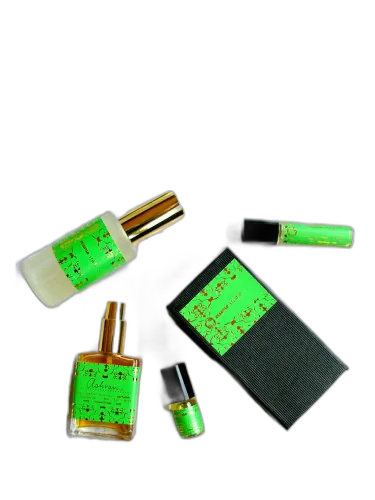
DSH Perfumes
Sunny Yellow Dsh Perfumes
Shared top notes: green notes, lemon

Brocard
Blooming Lemon (цветущий Лимон) Brocard
Shared top notes: lemon, petitgrain

Caswell Massey
Honeysuckle Caswell Massey
Shared top notes: green notes, honeysuckle

Azzaro
Orange Tonic Azzaro
Shared top notes: green notes, lemon